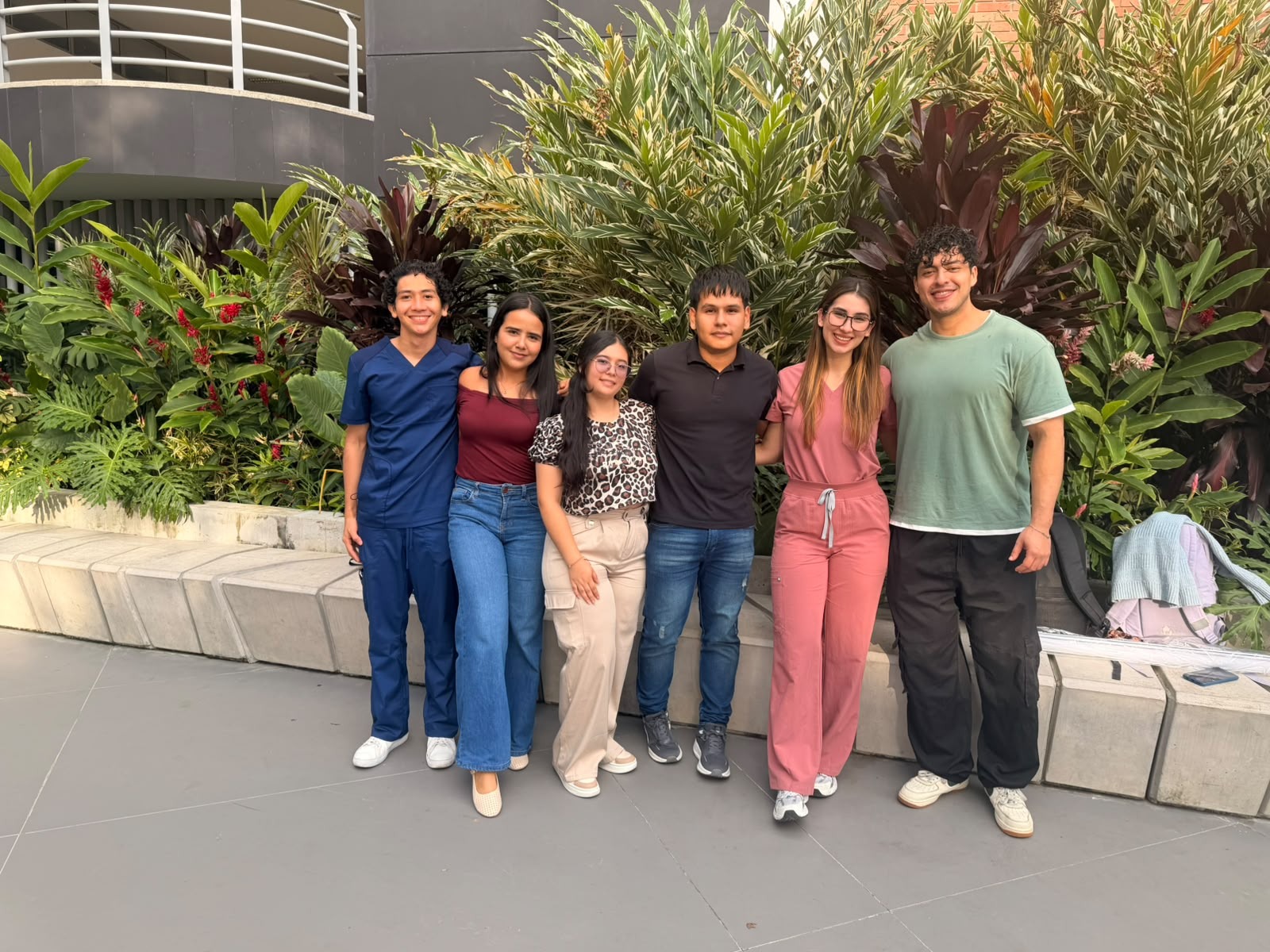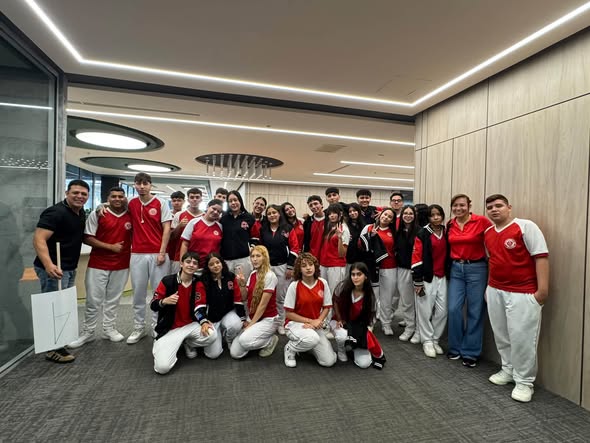

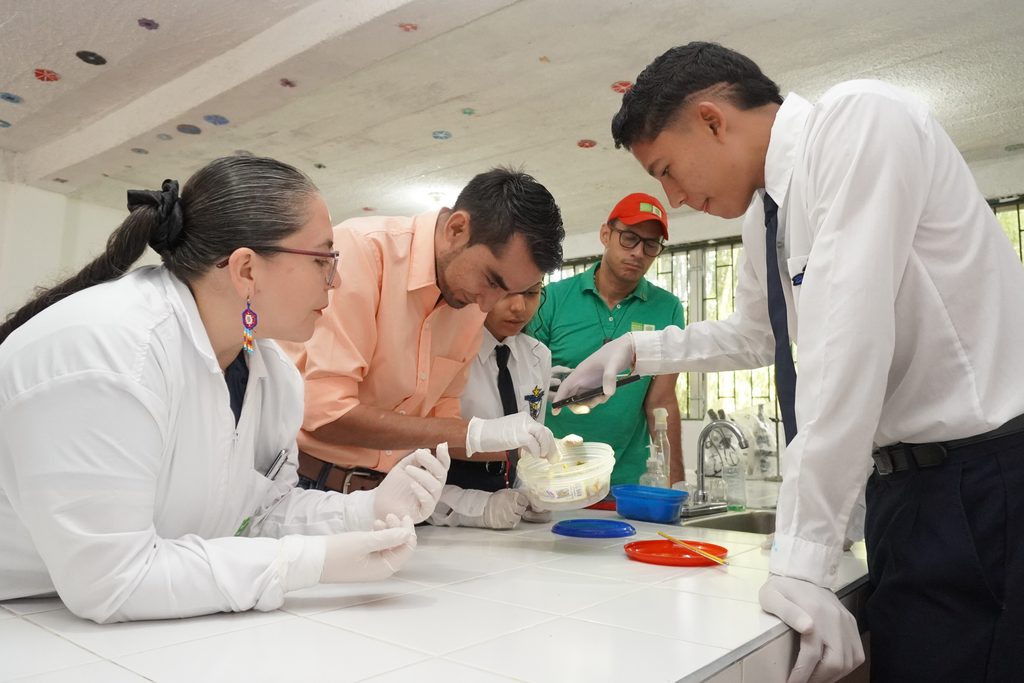
A collaborative project between the UIS Socorro Campus, the Luis Alberto Acuña Educational Institution in Suaita, and the community of the municipality of Simacota transforms organic waste into an opportunity to learn, conduct research, and develop alternative uses.
The initiative is being led by a group of UIS faculty members from the campus in the municipal capital, including Pilar Guauque: “The opportunity to teach at both institutions opened up the possibility of working together and focusing our resources and pedagogical approach on making use of the waste coming from the school cafeteria,” explained Guauque.
The project began after they identified that approximately 200 kilograms of organic matter were generated every 15 days. Faced with this reality, the teachers found composting to be an alternative way to repurpose this waste and, at the same time, create a learning space for the students.
The program involves students in grades 7 through 11, who explore various scientific concepts through the operation of the compost bin. Each group carries out activities related to topics
such as bioindicators, pH, temperature, humidity, fats, gravity, and forces, in accordance with the basic learning standards.
In this way, the compost bin has become a space where students can observe biological processes, analyze variables, and connect the knowledge they’ve acquired in class to a real-world situation in their environment. The black soldier fly, a species native to the area that aids in the decomposition of organic matter, also plays a role in the process.
For Valentina Cadena, a tenth-grade student, the initiative provided a solution to the unpleasant odors generated by the restaurant’s waste: “We decided to build a compost bin to eliminate the bad smells. Thanks to this, some flies called black soldier flies arrived; they help us break down the waste and reduce the bad smell,” she explained. The student also noted that the process requires specific care, such as controlling moisture levels and avoiding excessive exposure to the sun.
Every day, between 11 and 14 kilograms of waste are taken directly to the compost bin, preventing this waste from ending up mixed with other trash and allowing it to be reused.
For Óscar Mujica Bernal, principal of the Luis Alberto Acuña Educational Institution, the experience helps connect academic education with a real-world issue: “It’s a project coordinated by the UIS that focuses on the circular economy and is linked to our institution’s efforts to use organic waste as a way to improve the economy and have a positive impact on the environment,” he said.
Knowledge Reaches the Community
The initiative has also sparked interest in rural areas. In the village of San Pedro, in the municipality of Simacota, Hugo Cala, a farmer, learned about the process and saw opportunities to apply it on his farm: “Every day we’re learning new things. We didn’t know that before; we’ve been learning, and I think it’s wonderful because organic fertilizer can be used on citrus trees, in gardens, on plants, and on pastures.”
This collaboration between the UIS Socorro Campus, the educational institution, and the community can turn an everyday problem into an opportunity for learning, research, and environmental transformation: waste that ceases to be trash and becomes a resource and knowledge at the service of the region.