

Bringing science and engineering into the classroom is the goal of the UIS MóviLab initiative in public schools, a strategy that continues to be implemented in educational institutions across Santander, promoting hands-on learning experiences for high school students.
As part of this initiative, the Experimental Kit was delivered to the Miguel Sánchez Hinestrosa Institute in the village of Acapulco (Girón), targeting administrators, teachers, and students in the 10th and 11th grades. This tool brings elements typical of a science lab into the classroom, facilitating active learning, critical thinking, and problem-solving through a STEM approach.


MóviLab UIS brings the university closer to the local community
During the workshop, participants were introduced to the materials and activities of the mobile lab, which is designed to create meaningful experiences that bridge theory and practice.
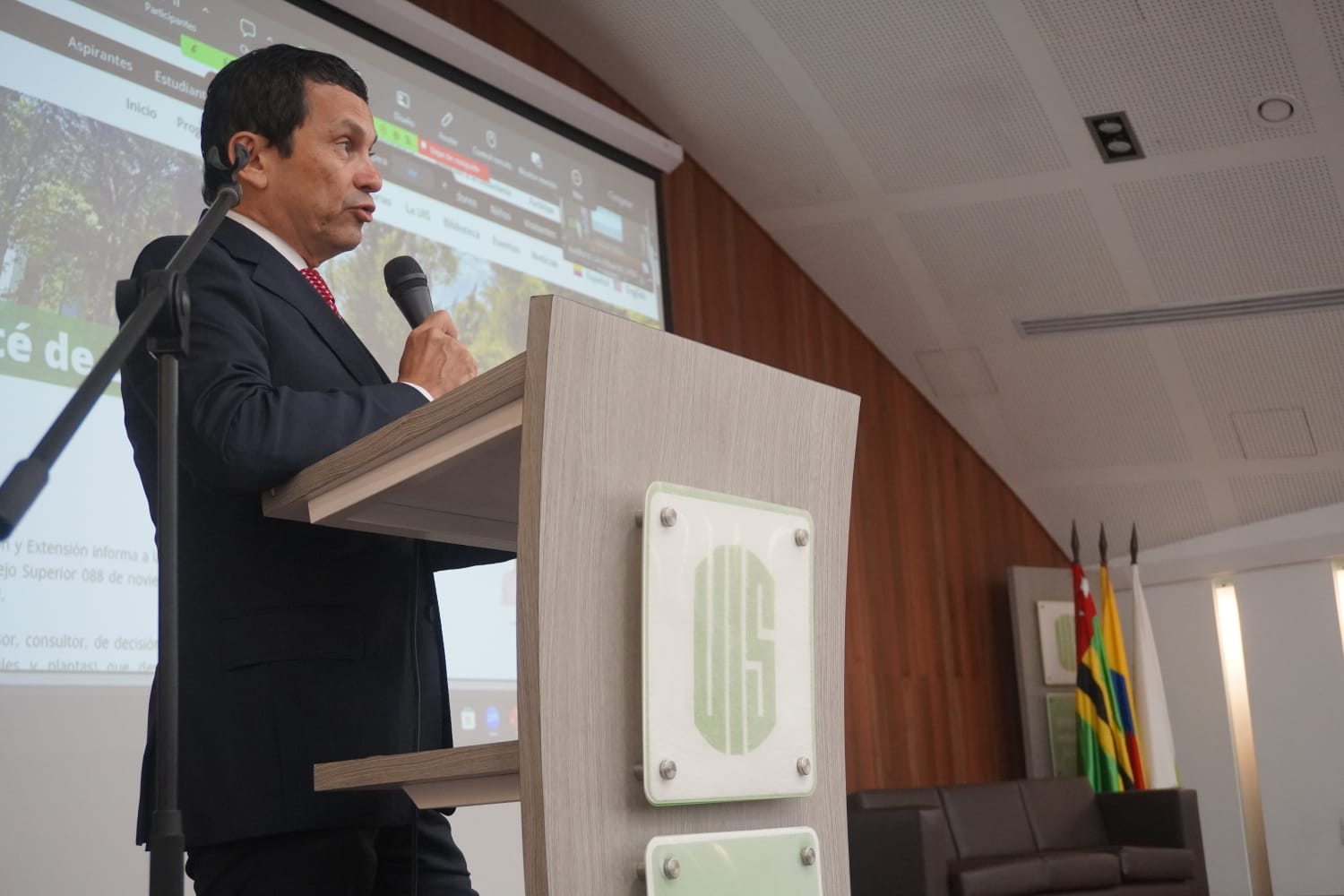
In this context, Hernando Guerrero, director of CEDEDUIS, highlighted the scope of the project: “This research project, funded by the Office of the Vice President for Research and Extension in Pedagogical Innovation, has this primary goal: that the university not remain confined to its campuses, but also reach beyond them. Sometimes we want to connect with employers and alumni, but we tend to leave behind those who will be the future of the university. This project allows us to visit schools, show them everyday aspects of our labs, our theory and practice, and encourage them to become part of the UIS family.”
For his part, the institution’s rector, Juan Carlos Rueda Ortiz, highlighted the initiative’s impact on the educational community: “It is very important to us that our students feel a connection to the university. Having the MóviLab at our institution gives them the opportunity to engage with science, technology, innovation, and mathematics. We believe this serves as motivation for young people; meeting university faculty and seeing a glimpse of their laboratories will help them envision their future and foster greater interest in enrolling at the Industrial University of Santander.
The students’ feedback also underscores the program’s importance. Mayra Alejandra González Jaimes, a student at the institution, said: “Thank you to UIS for giving us this opportunity and for providing us with this kit, as it will strengthen our knowledge of physics, chemistry, and biology. This will help us gain a broader and more practical understanding of these subjects.”


Pedagogical Innovation at UIS MóviLab
MóviLab is part of the research project “Design and Evaluation of STEM Pedagogical Innovation Practices with High School Students at UIS,” which aims to foster scientific and technological interests among 10th- and 11th-grade students through hands-on experiences.
The initiative receives internal funding from the UIS under the Research and Extension Strengthening Plan (VIE 2025), particularly through the “For Our Well-Being” call for proposals, which supports projects with social and educational impact and recognizes pedagogical innovation as a strategic pillar for educational transformation.
Likewise, the project collaborates with research groups such as the Corrosion Research Group (GIC) and the Catalysis Research Group (CICAT), which allows for the extension of scientific knowledge into school settings and brings students closer to experiences typical of higher education.
With the implementation of STEM-MóviLab, UIS continues to contribute to narrowing the gap between secondary and higher education, creating opportunities for more young people to discover their scientific calling and pursue training in engineering and the sciences.