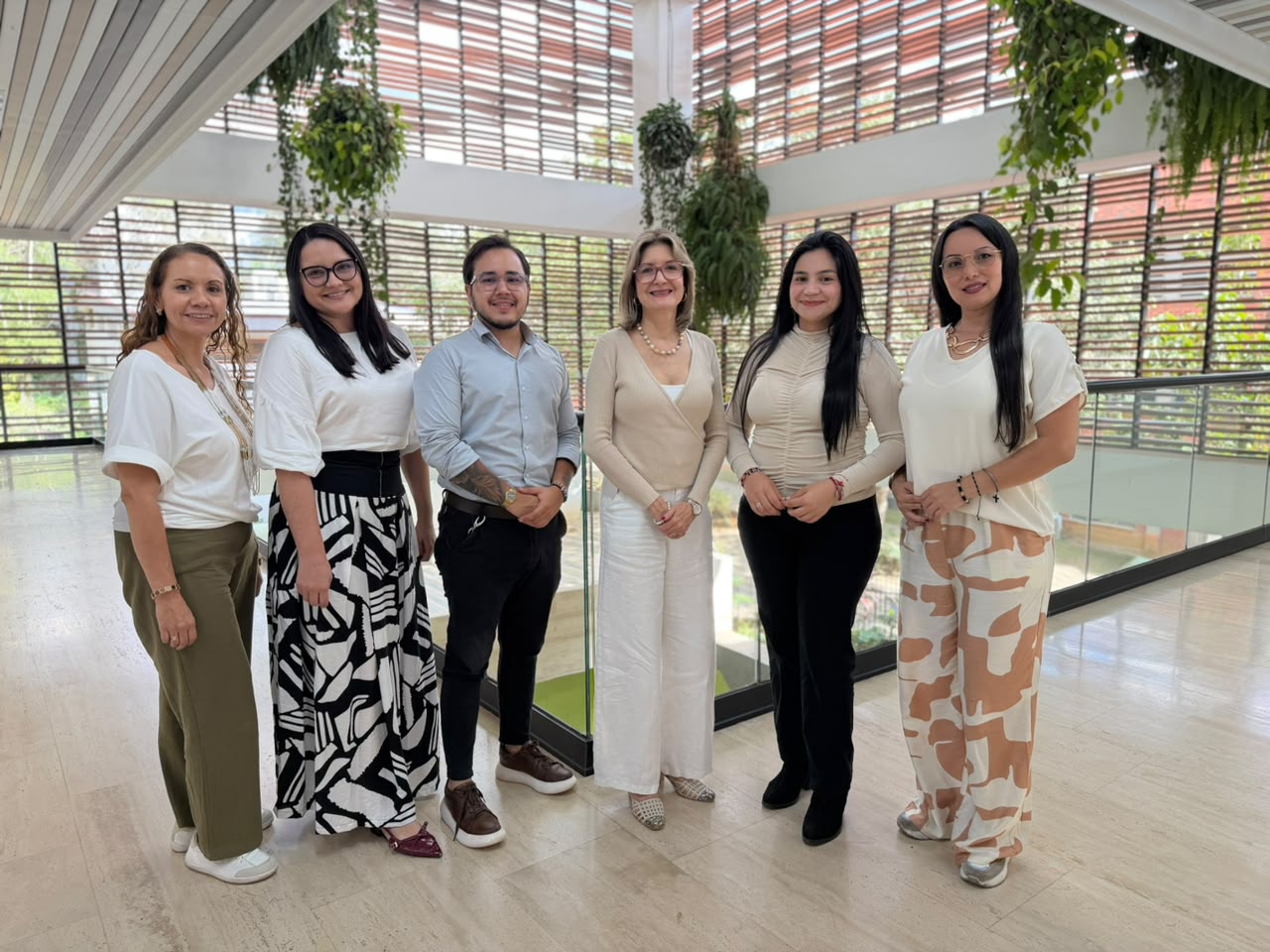


The main objective agreed upon during the sixth session of the UNIRED Board of Directors was for UNIRED member universities to share their research capabilities, equipment, and technologies for the benefit of Santander.
The meeting, held at the Industrial University of Santander (UIS), was attended by rectors and representatives from UIS, the Autonomous University of Bucaramanga (UNAB), the University of Santander (UDES), Santo Tomás University (USTA), Uniminuto, and the FCV-FUFCV University Foundation.
In this scenario, the UIS plays a leading role in the region’s research ecosystem and, therefore, coordinating with local universities is key to promoting inter-institutional alliances.
“Universities make significant efforts and investments in laboratories and equipment, and we can make much better use of them and share our efforts among all of us. That intention remained, in relation to an initial dynamic in physics issues that is developing between professors at the UIS and the UNAB, like that seed, that first intention leads us to make a complete map of capabilities and technologies and to begin an exercise of sharing much more between universities and putting the possibilities and knowledge we have at the service of the region and businesses,” says Juan Camilo Montoya Bozzi, rector of the Autonomous University of Bucaramanga and president of the UNIRED Board of Directors.

The university partnership would not only involve professors or the use of infrastructure, but also the training of skilled human capital through seedbeds and research groups.
For Cristian Blanco Tirado, Vice-Rector for Research and Extension at UIS, who represented the Industrial University of Santander, this initiative will enable regional development and advance the needs of the department and the country, where the University can contribute in various ways.
He also highlights the leading role of the UIS in the region’s research ecosystem, which makes it a viable idea, especially since many of the University’s graduates are sometimes professors at these institutions.
Open calls
During the sixth session of the UNIRED Board of Directors, it was noted that calls for proposals for aCTIva2 en Red and CienTIoN are open until September 19. These calls seek to coordinate the work of the network, carried out by partner universities, and to promote research.
The purpose of these calls is for researchers to become involved in their projects and, in support of these initiatives, for each university to allocate financial resources for their development.

According to César Darío Guerrero, Director of Research, Creation, and Innovation at the Autonomous University of Bucaramanga (UNAB), aCTIva2 en Red, now in its second edition, promotes the formation of alliances between network members or external strategic partners with the aim of developing project proposals focused on the economic, social, and environmental development of the department of Santander. This initiative seeks to foster inter-institutional collaboration through research projects that consolidate teams with high regional impact, capable of attracting national and international investment.
Meanwhile, the CienTIoN call for proposals, which aims to explore and debate the emerging challenges facing research and innovation in the current context, under the slogan “Research that connects, innovates, and transforms,” reaffirms the conviction that knowledge, articulated with the needs of the environment, generates sustainable solutions with high social impact.
“In addition, we achieve projects with greater impact and visibility for student programs, enabling our researchers and students to engage in dialogue and get to know each other, and providing a platform for the development of projects and initiatives with greater impact, hopefully with external international funding,” Guerrero emphasizes.
Projects submitted to the calls for proposals must be aimed at providing solutions to specific issues and achieving greater connection and participation by faculty members.

The Education Cluster
Following the UNIRED Board of Directors meeting, the Santander Higher Education Cluster session was held, continuing to advance its regional objectives.
In this space, rectors of higher education institutions, representatives of the Mayor’s Office of Bucaramanga, the Chamber of Commerce, and other strategic entities met to promote the Santander Education Observatory, an initiative that seeks to identify and close gaps in human talent and development, thus strengthening the future of the region.

“This Education Cluster has been promoting initiatives to strengthen the business sector and close gaps in education, such as the one we are analyzing today at the Santander Education Observatory, which is a fundamental initiative for obtaining information that allows all institutions in the department involved in education and training issues have the information necessary to make decisions and promote public policies that continue to strengthen Santander,” explains Juan Hernando Puyana, Vice President of Business Human Capital at the Bucaramanga Chamber of Commerce.
Santander is consolidating its position as one of the departments with the greatest strengths in education, which, for the members of the Cluster, is important to capitalize on in order to continue to have an increasingly competitive and innovative productive sector.
Nicolás Ordóñez Ruiz, Secretary of Education for Santander, says that the department is exploring programs to link secondary education with the aim of helping ninth, tenth, and eleventh graders begin the transition to technical and technological higher education.
“We analyzed the possibilities for unified action, to see the resources that the government allocates to higher education and begin to figure out how to finance these research projects and publications that seek to improve the quality and coverage of educational services,” explains Ordóñez Ruiz.
The Cluster continues to promote opportunities for dialogue between academia and the productive sector to identify training needs, which will enable the creation of different short courses, diploma programs, and specializations so that companies can have the human capital they need to be more productive, innovative, and competitive.