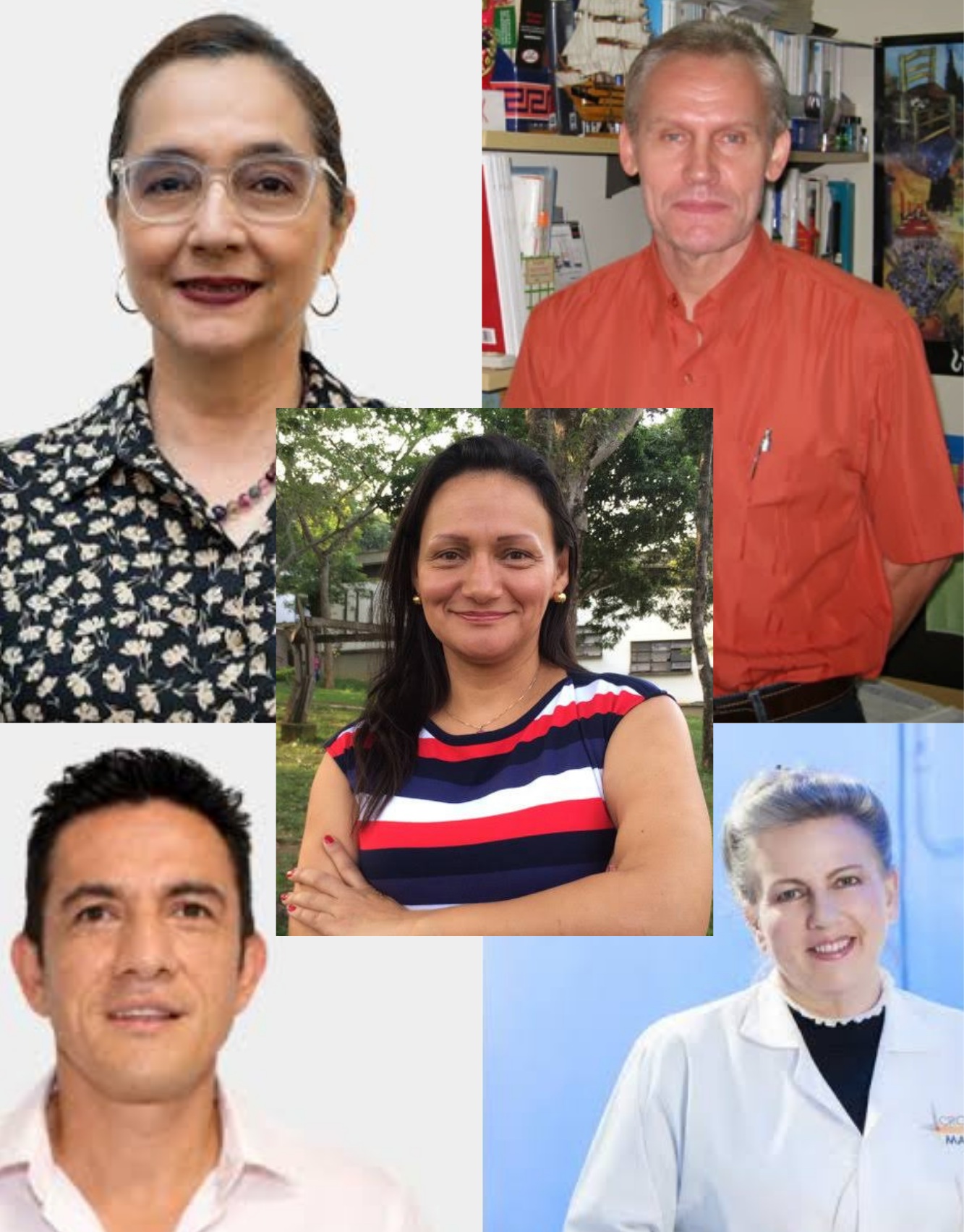

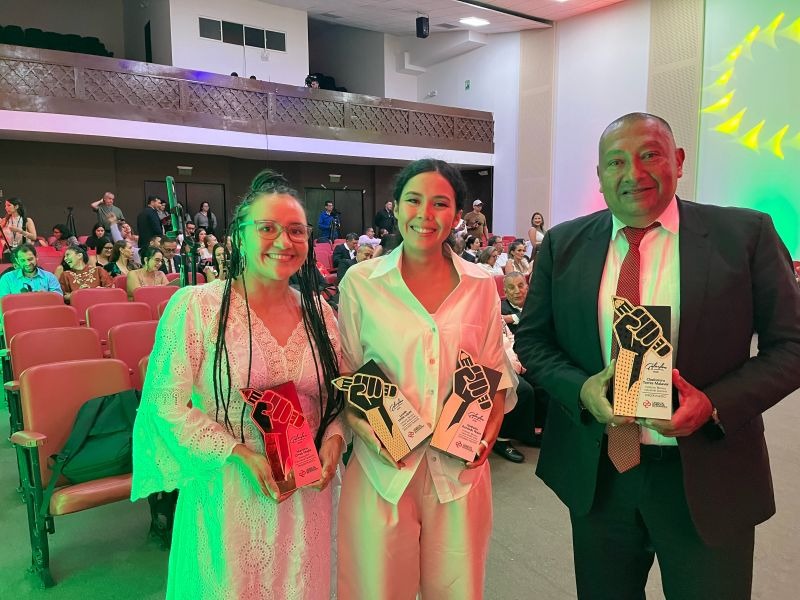
A social worker, a biologist, and an industrial engineer, all graduates of the Universidad Industrial de Santander (UIS), took center stage at the 2026 Excellence in Education Awards, leading initiatives that secured first and second place in this prestigious recognition. Their projects, developed in Barichara and Mogotes, demonstrate how research and knowledge can transform teaching and learning processes while strengthening the connection between schools and their communities.
Education is transformed when knowledge moves beyond the classroom and becomes a tool for understanding and improving reality. This is precisely what Mariana Urrea Mejía, Lyzeth Uribe López, and Nathalia Acevedo Rojas demonstrate. These three graduates of the Universidad Industrial de Santander (UIS) are making a lasting impact on educational institutions throughout Santander.
Their initiatives were recognized in the thirteenth edition of the 2026 Excellence in Education Awards, an initiative promoted by the Bucaramanga Chamber of Commerce, which brought together 45 proposals from the Comunera and Guanentá provinces. In this edition, projects led by UIS graduates earned first place in the Citizenship and Socioemotional Skills category and second place in the Bilingualism and STEAM Education category.
Researching the Local Environment to Educate Responsible Citizens
At the Santa Elena campus of the Paramito Educational Institution in Barichara, Mariana Urrea Mejía found in water conservation an opportunity to teach citizenship, community participation, and social responsibility.
A social worker who graduated from UIS, she holds a master’s degree in Neuropsychology and Education and is currently pursuing a doctoral degree in Complex Thinking. She leads the initiative “Seed Hunters: Community Water Governance and Territorial Citizenship,” which won first place.
Developed over nine years, the initiative emerged from concerns about protecting the community’s water springs. Through school-based research and the methodology of the Ondas Program, students identify water sources, formulate questions, collect information, share their findings, and participate in collective conservation efforts.
The project currently engages children and young people between the ages of four and eighteen, as well as graduates and their families. Its main contribution lies in turning learning into a practical experience of civic participation, where students strengthen their ability to present arguments, make collective decisions, and take responsibility for shared resources.
The judging panel highlighted the integration of research into the curriculum, as well as the opportunities created for presenting and discussing findings. This experience demonstrates that rural schools are also spaces for knowledge production and social transformation.
Mathematics and Science at the Service of the Environment
In the municipality of Mogotes, Lyzeth Uribe López and Nathalia Acevedo Rojas found an opportunity in organic waste management to bring together two fundamental areas of knowledge: natural sciences and mathematics.
Lyzeth Uribe, a biologist who graduated from UIS in 2015, and Nathalia Acevedo, an industrial engineer from the same university, lead the initiative “From Waste to Roots: Mathematics and Science, a Partnership for Environmental Awareness” at the Instituto Técnico Isaías Ardila Díaz. Their project earned second place in the Bilingualism and STEAM Education category.
The initiative involves 148 students who engage in observation, research, measurement, and data analysis through the recovery and use of organic waste. In this way, mathematical concepts become meaningful when applied to real-world environmental situations, while natural sciences benefit from mathematical reasoning as a tool for explaining the phenomena being studied.
The judging panel recognized the project’s curricular integration, its promotion of scientific and mathematical thinking, and its ability to turn mistakes and unexpected results into learning opportunities.
Beyond waste recovery, the initiative demonstrates how interdisciplinary work can foster meaningful learning and develop the skills needed to understand the challenges facing local communities.
UIS Knowledge Transforming Communities
The recognition received by Mariana, Lyzeth, and Nathalia reflects the impact that professionals educated at the Universidad Industrial de Santander can achieve when they put their knowledge at the service of their communities.
Although they come from different academic disciplines, the three graduates share a common commitment: identifying local needs, encouraging student participation, and turning everyday challenges into opportunities for research, learning, and transformation.
Their experiences also highlight the valuable work of teachers who, from rural educational institutions, innovate in their teaching practices and develop new approaches to education.