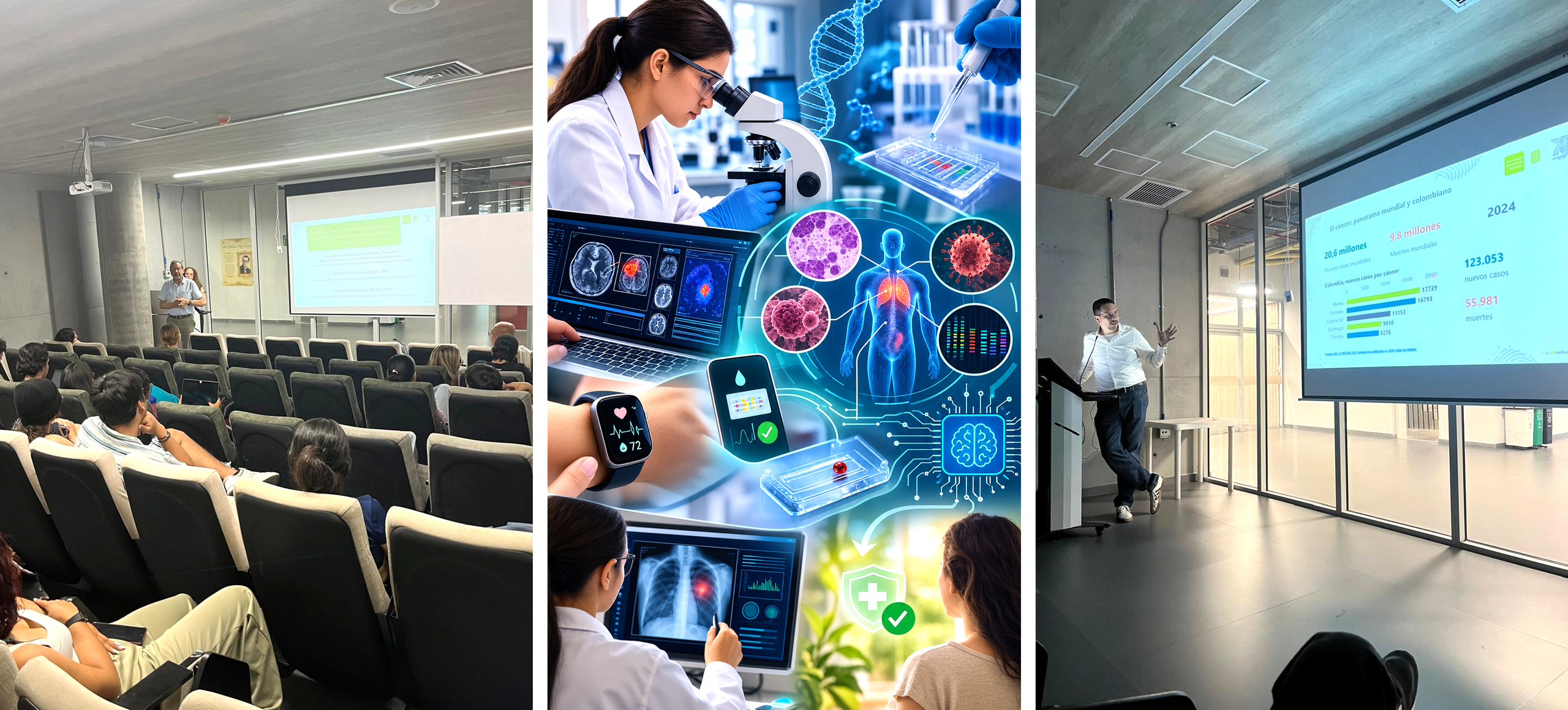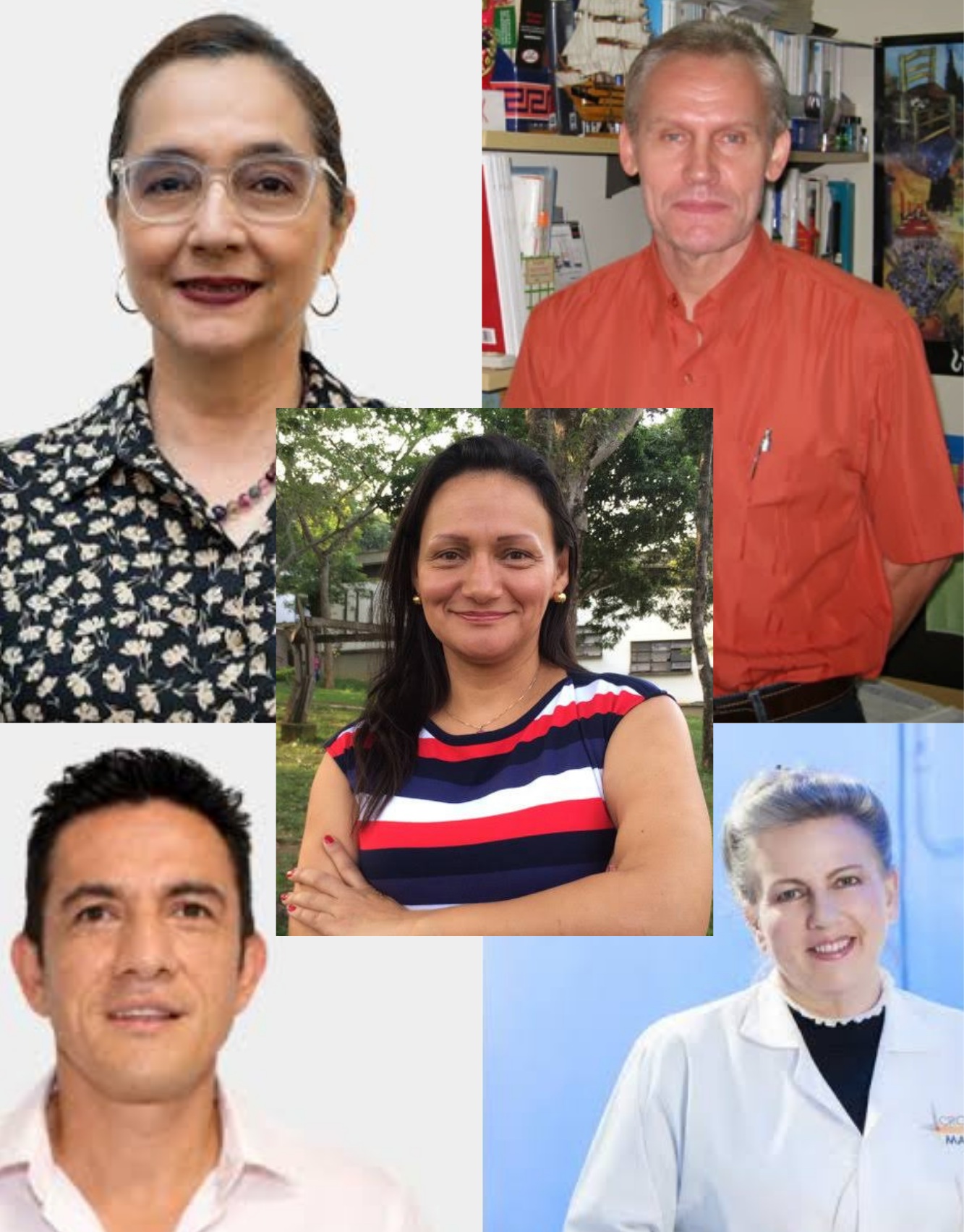


During September and October, the Health and Society Chair hosted sessions that demonstrated how scientific research, technological development, and educational innovation can transform disease diagnosis and the training of future professionals.
The first of these sessions, titled “The Integration of Supercomputing, Biology, and Public Health in Disease Diagnosis,” was led by Dr. Francisco José Martínez Pérez, a professor in the School of Biology. The speaker presented research conducted in collaboration with Dr. Lina María Vera Cala and Professor Carlos Jaime Barrios of the Department of Systems Engineering, which demonstrated how traditional diagnostic methods, such as RT-PCR, can fail due to rapid viral mutations. Thanks to the use of supercomputing, the team managed to reduce the time required to analyze viral mutation patterns from a year and a half to just four hours, developing new diagnostic systems capable of detecting emerging variants. This work was validated in Mexico with 150 patients and patented internationally, establishing UIS as a pioneer in this field and demonstrating that interdisciplinary collaboration can save lives.
The second session, “Multimedia Resource for Learning Medical Chemistry in Simulated Clinical Settings,” was led by Dr. William Villamil Villar and Dr. Lina María Vera Cala. The researchers presented an educational project that arose from a real-world problem: the high failure rate in chemistry among medical students, who could not see the relevance of a subject that seemed unrelated to their profession. The proposal, based on simulated clinical consultation scenarios, enabled students to solve real clinical cases—such as calculating blood alcohol concentration or determining medication dosages—by integrating multimedia tools, meaningful learning, and co-teaching. The project transformed the classroom into a space for active participation, where students ask questions, build knowledge, and better prepare for their professional practice.
Finally, the session “Basic Research, Technological Development, and Innovation in Early Disease Detection” was led by Dr. David Alejandro Miranda Mercado, a professor in the School of Physics. His presentation debunked the notion that physics is unrelated to health, explaining how the fundamental principles of light and matter underpin technologies such as nuclear magnetic resonance and low-cost sensors for detecting biomarkers. Faced with alarming statistics—20.6 million new cases of cancer by 2024—Dr. Miranda emphasized the need to detect diseases before they reach advanced stages and noted that the Nobel Prizes in Medicine frequently recognize discoveries in physics and chemistry that later revolutionize medical practice.
With these three sessions, the Health and Society Chair reaffirmed its commitment to an interdisciplinary approach to science, where biologists, physicians, engineers, physicists, and educators collaborate to build a healthier, more equitable, and more sustainable future.