
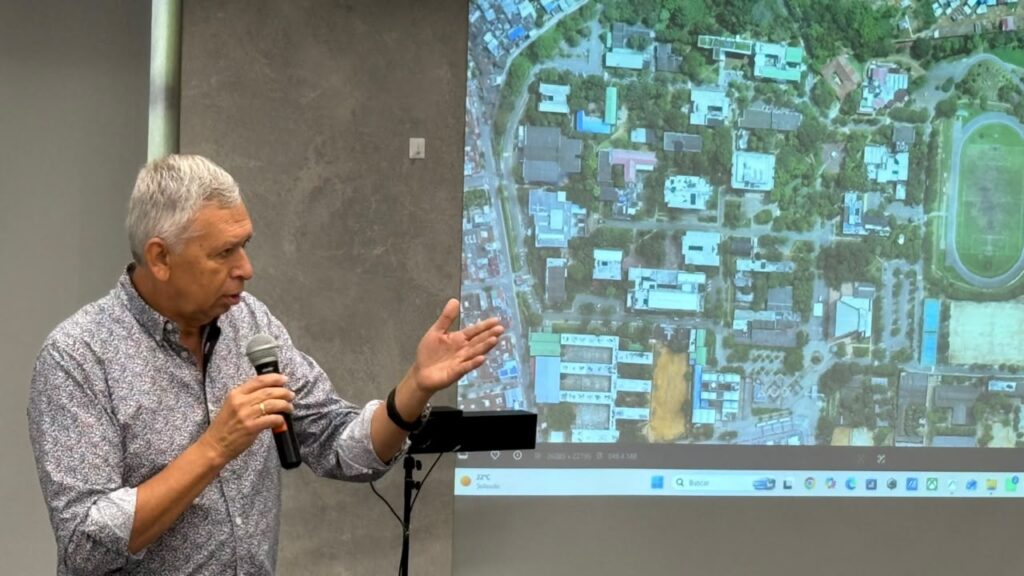
The Academic Council presented a proposal for an outdoor park to school coordinators and principals, aimed at integrating 22,000 square meters dedicated to learning, remembrance, culture, and community gatherings.
The proposal, designed for the central campus in Bucaramanga, aims to connect existing university spaces to transform them into open venues for innovation, creativity, outreach, and learning. The project is currently in the preliminary design phase and is incorporating input from various sectors of the educational community.
Cristian Hernández, the project’s architect, explained that the initiative aims to connect various parts of the campus and create new opportunities for interaction between the University and its surroundings. “The idea is to transform these spaces into places of integration where a multidisciplinary environment can be fostered,” Hernández noted, explaining that students, faculty, the university community, and people from outside the UIS will be able to come together there.
The initial scope covers approximately 22,000 square meters, corresponding to a portion of the University’s grounds. The proposal seeks to ensure that these spaces incorporate recreational, educational, environmental, and cultural elements, offering opportunities for the dissemination of knowledge and engagement with the public.
For Luis Eduardo Bautista, director of the School of Industrial Design, the project represents an opportunity to make the most of these spaces from a holistic perspective that is connected to the local area. “This space is an opportunity to showcase the geological and historical heritage, as well as the material culture, of all the towns in Santander and the Chicamocha Canyon, including the rich biodiversity we have in Santander,” he explained.
The presentation to school coordinators and directors marks the beginning of a phase of collective project development. According to Hernández, the input received constitutes “a foundation—it’s how everything gets started, and it’s like a first step toward everything that lies ahead.”
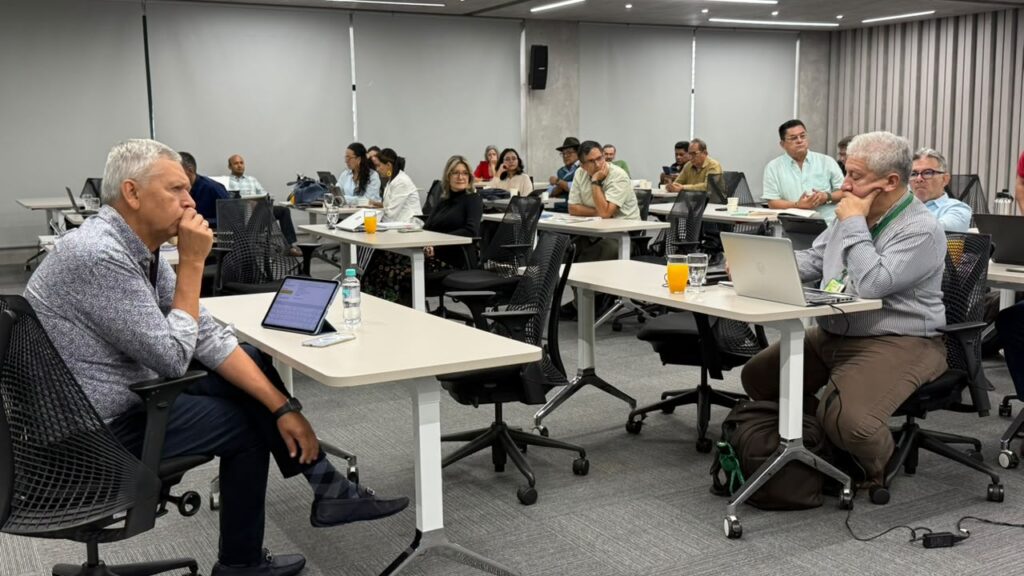
One of the goals of the proposal is for these new spaces to also serve as venues for academic activities outside traditional classrooms. In this regard, Bautista emphasized that “the goal is to create spaces that allow us to function as open innovation classrooms, so that not just one school but several can come together to foster innovation processes in this space.”
The initiative also aims for the campus to transcend its traditional role as a place of learning. Luis Fernando Arévalo Viveros, dean of the School of Humanities, believes the proposal can strengthen the relationship between the University and Santander society. “The idea is, above all, to integrate Santander society—and even the nation as a whole—with the campus of the Industrial University of Santander,” he stated.
The project includes spaces dedicated to ancestral memory and the memory of victims of violence in Colombia, as well as areas for the natural sciences and multisensory experiences related to the perception of nature and the environment.
For Arévalo Viveros, the creation of these spaces requires dialogue among different departments within the University. “This effort demands interdisciplinary work; it requires a dialogue of knowledge and expertise among the various departments that make up the university,” he said.
The firm in charge expects to have a more refined version of the proposal ready between October and November, after making progress on incorporating ideas and gaining approval from the community. Thus, the central campus is envisioned as a place where knowledge can come together with creativity, memory, nature, and society.
The UIS envisions a central campus that invites exploration, learning, and living
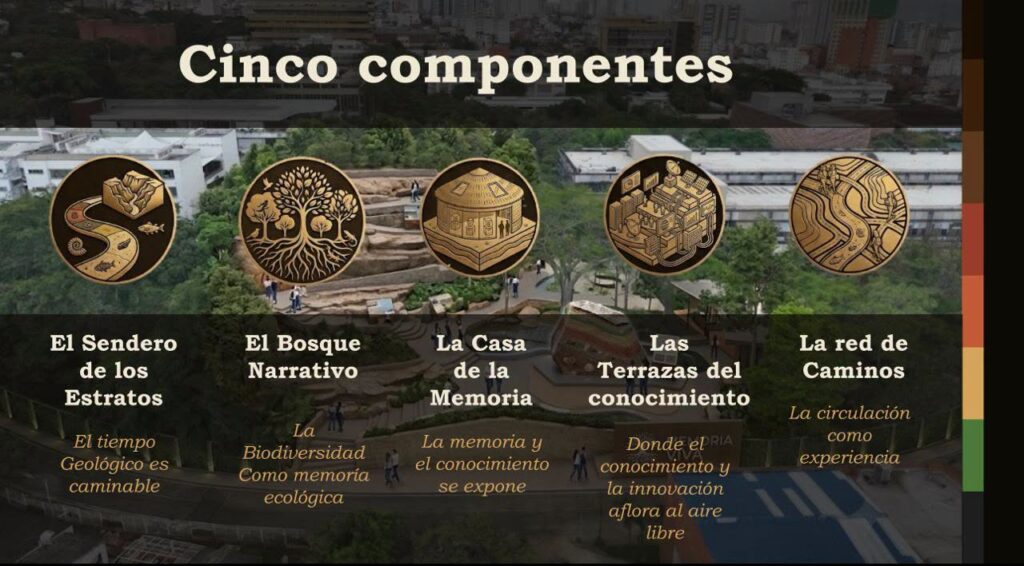
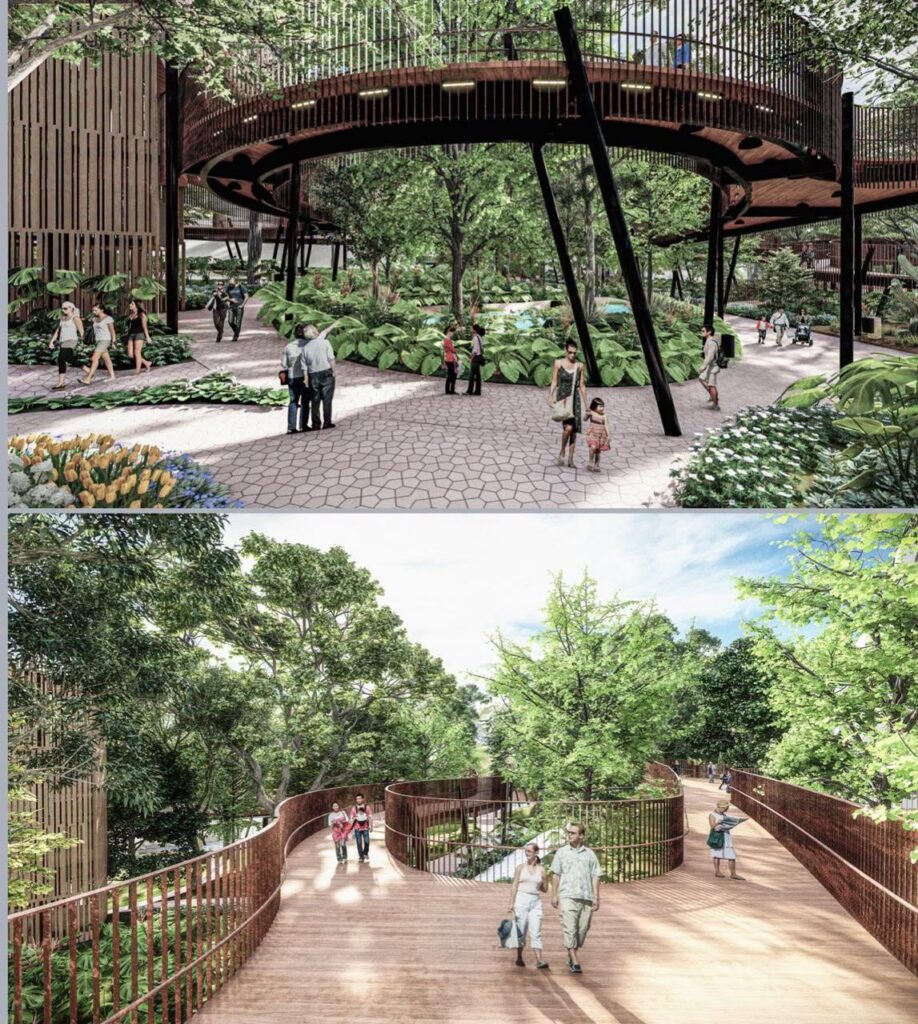
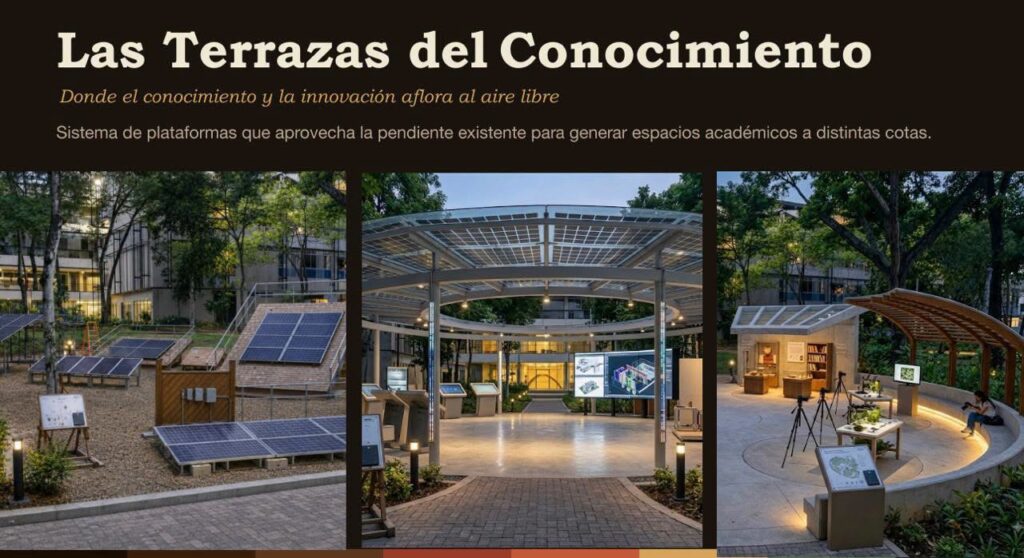
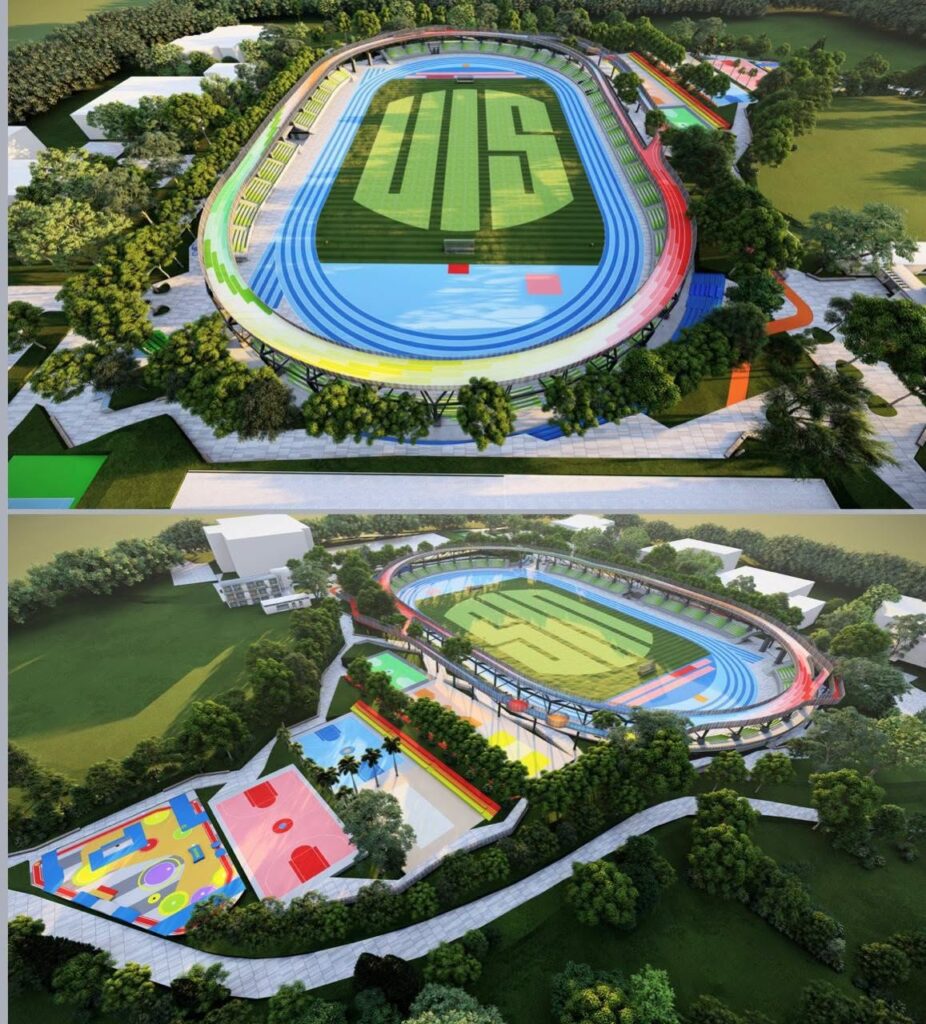
Two projects bring this new vision to life: a grandstand and walking path above the Primero de Marzo Stadium, and the Terrazas del Conocimiento, planned for the green space located behind the buildings of the Schools of Industrial and Business Studies and Electrical, Electronic, and Telecommunications Engineering, and across from the Álvaro Beltrán Pinzón building.
This is what the first project will look like, transforming our iconic sports venue into a model for the region and helping to advance physical activity within the university community.
Alongside it, we will have a walking trail—a space where knowledge and nature will come together on our campus.