
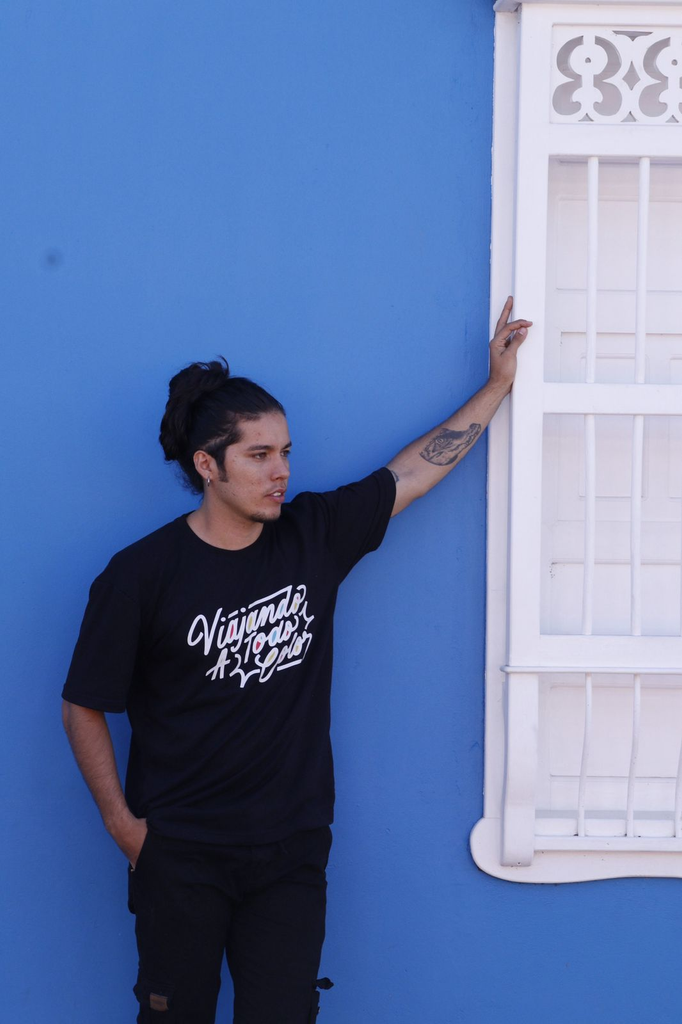
From Piedecuesta to Gatineau, Quebec, John Ramírez’s art crossed borders. In 2026, the Colombian visual artist represented his country at the 4th HOLA 2026 International Festival, organized by Heritage Colombien in Gatineau, Quebec, Canada—an experience that, in addition to marking his debut as a muralist at a festival, later allowed him to join the Ville de Gatineau’s urban art circuit alongside eleven Canadian artists.
For Ramírez, this international participation represents the culmination of nearly a decade of work and a steadfast commitment to establishing his own identity within the visual arts. Born in Bucaramanga and raised in Piedecuesta, he holds a Master’s degree in Visual Arts from the Industrial University of Santander (UIS) and has focused his career primarily on painting, muralism, and the creation of audiovisual content related to his works.
His foray into mural art began in 2017, while he was still in college. Through a call for submissions called Teatro Verde, he discovered that painting murals could also become a form of work connected to his artistic training. Since then, he has found in large-scale murals a way to bring art to audiences who do not necessarily frequent galleries or museums.
“I really liked mural art because it’s an art form that’s accessible to everyone,” explains the artist, who also found in the streets the challenge of working on a large scale and dealing with conditions such as the weather and the unique characteristics of each space.
An Invitation That Began in La Tatacoa
Ramírez’s arrival at the Canadian festival had a unique aspect: the invitation came about as a result of his work on social media. The artist had created “Viajando a Todo Color,” a project through which he decided to go beyond simply showing the final result of his murals and began to share the stories, places, and experiences surrounding each piece.
While painting a mural inspired by paleontology in the La Tatacoa Desert in Huila, he documented the entire process on video and later posted the content. That video allowed the organizers to learn about his work, and, having taken an interest in his proposal, they decided to invite him to the festival.
“I have a project called ‘Viajando a Todo Color,’ which came about because I felt I was a little tired of painting in such a commercial way, and there was a part of me that wanted to do something different. Since I constantly have the opportunity to travel and paint in different places, I wanted to take advantage of those trips to go beyond simply showing a photo of what I had painted, but also to tell the story behind each piece and capture a bit of each place’s identity,” says Ramírez.
For the artist, this opportunity confirmed the potential of combining painting with content creation to tell stories and showcase the diversity of Colombia’s regions.
A Catrina to Explore Identity and Diversity
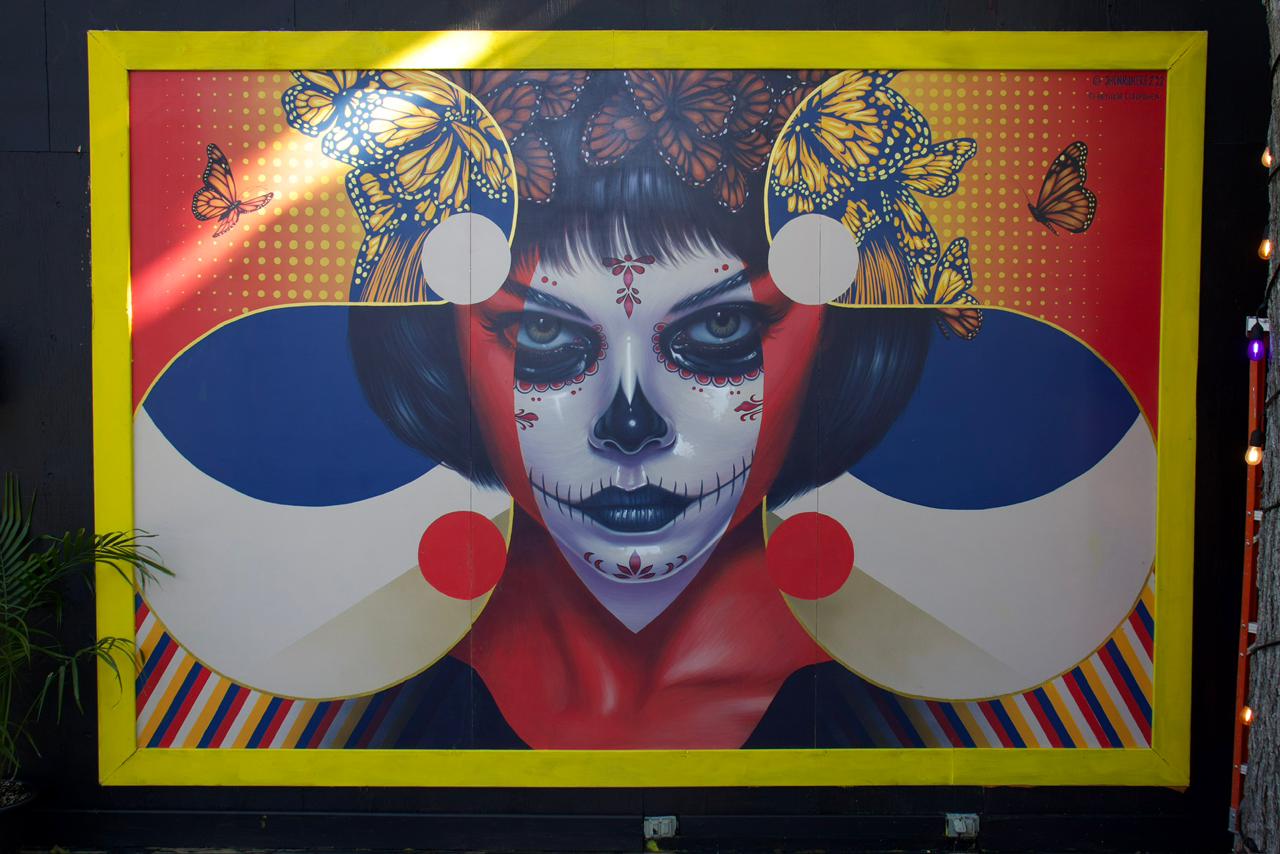
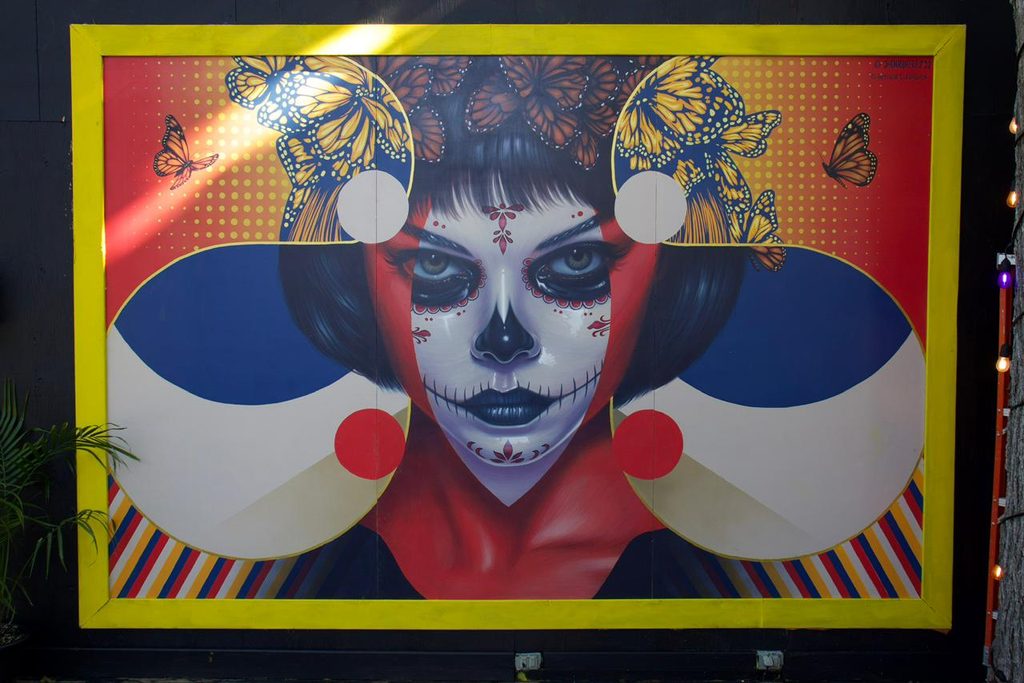
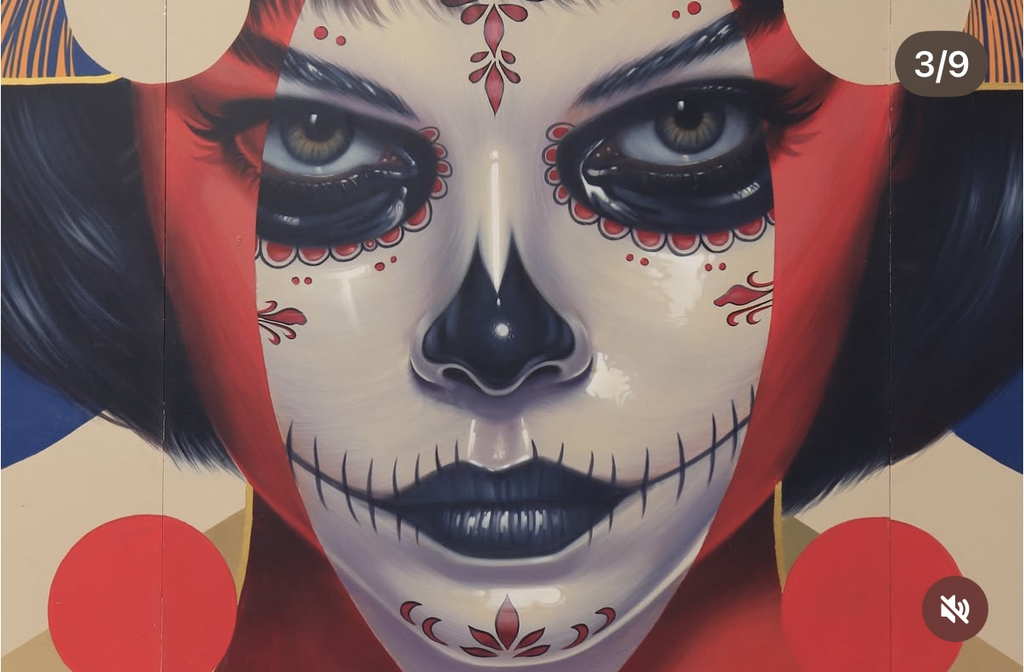
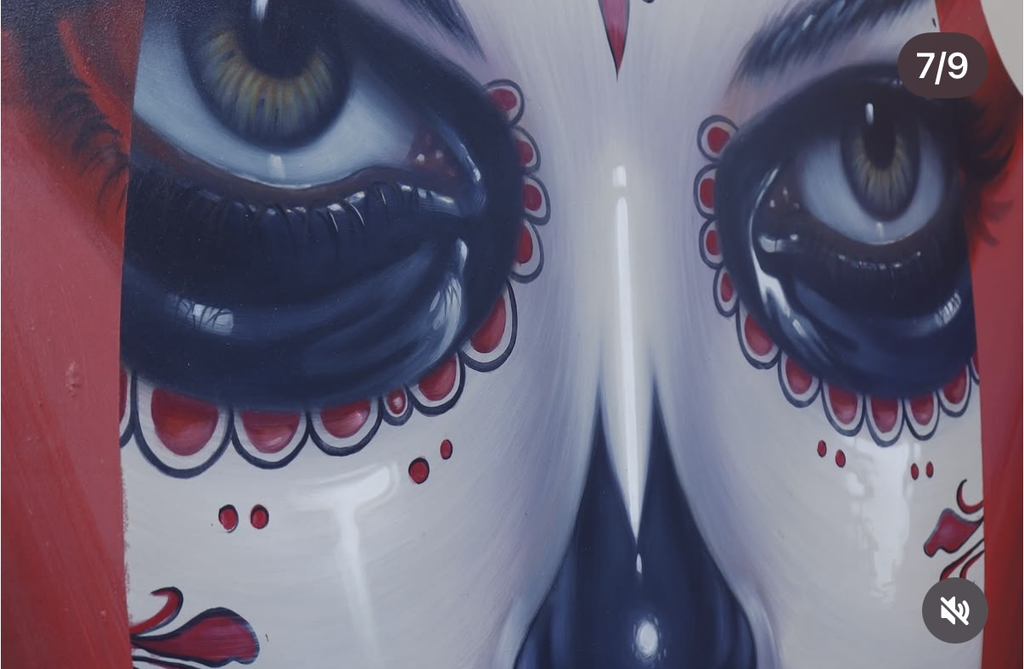
During the HOLA 2026 International Festival, Ramírez painted a Catrina—a choice that, while immediately associated with Mexico, was inspired by the original meaning of José Guadalupe Posada’s Calavera Garbancera.
The work revisited the social critique inherent in this figure, which relates to those who renounced their origins to appear as if they belonged to a higher social class. In the artist’s interpretation, the central message is that all people are equal in the face of death, regardless of their origin, status, or social class.
Bringing this concept to Canada took on special significance for Ramírez, given the country’s multicultural character and the role that immigration plays in its identity. Both this mural and the one he later created for the City of Gatineau incorporated the Colombian flag as a way to keep his country of origin present in the works he created abroad.
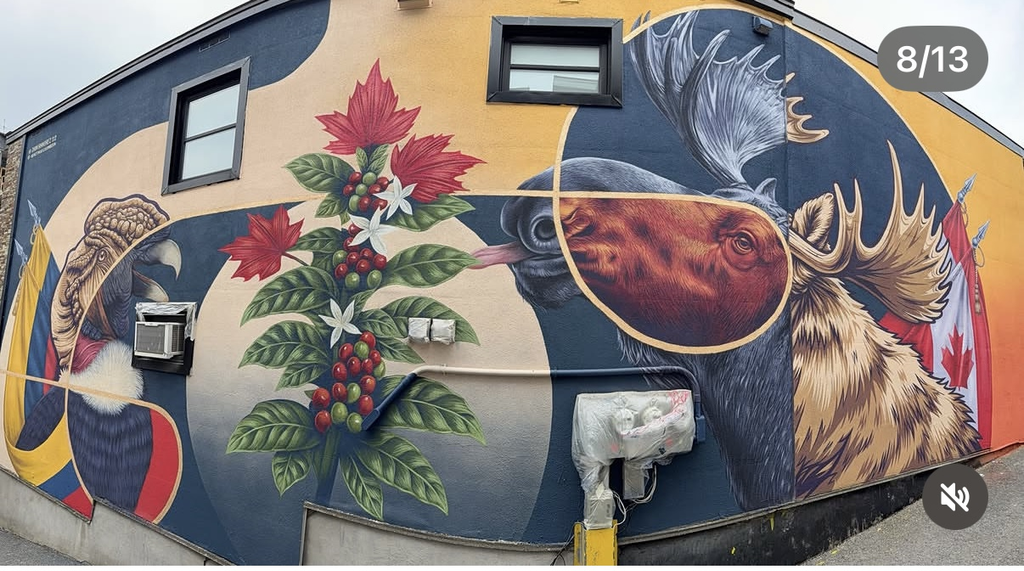
In the mural created for the Canadian city, the artist delved deeper into the encounter between the two cultures. He incorporated an Andean condor—a symbol of freedom and sovereignty for Colombia—a coffee plant whose leaves intertwine with maple leaves, and a moose, associated with Canadian wildlife.
According to Ramírez, the blend of coffee and maple leaves represents those who grow up amid different cultures and ultimately forge their own identity from them. The result was a work conceived as a dialogue between Colombia and Canada: preserving one’s roots, recognizing other cultures, and creating something new from that encounter.
“For me, it’s a great source of satisfaction to be able to carry the name of Santander to other countries. Being on international stages, representing not only my work but also where I come from and where I was trained, has a very special meaning,” he says with great pride.
Art as a Universal Language
One of the lessons he remembers most from his experience in Canada was realizing that art can become a language capable of bridging cultural and linguistic differences.
During the festival, Ramírez met people who initially spoke to him in French and then switched to English when they realized he didn’t understand the first language. Even with the difficulties in verbal communication, he found a common ground in art.
He also highlighted the warm reception Colombian culture received at a predominantly Latin American festival. The Colombian folk dance performances sparked the interest of the Canadian audience, who participated in and enjoyed the activities.
Santander Also Traveled Through His Murals
For Ramírez, representing Colombia in Canada also meant carrying the name of Santander with him. His pride in the region is reflected in an idea he considers fundamental: demonstrating that it is also possible to reach international stages through art from this region.
“As an artist from Santander, having the opportunity to paint internationally means taking our region’s name to other places,” he notes. He also hopes that his experience will help raise the profile of other artists from Santander, a region he believes has more than enough talent to represent the country on the international stage.
Although he acknowledges that it is not always possible to incorporate explicitly Colombian or Santander-specific elements into his compositions due to the context of each work, there is one element he strives to maintain: the colors or the flag of Colombia. For him, it is a way to bring “a little piece of Colombia” with him every time he paints outside the country.
Ten Years of Discipline Behind the Recognition
Behind his international recognition lies a story marked by hard work. When he began his professional training in 2017, one of his main challenges was financial. To pay for his studies, he had to work while pursuing his degree, all while building his career as an artist.
He asserts that his training in Fine Arts at the UIS did not directly determine the graphic style that characterizes his work today, but it did allow him to develop a discipline he considers fundamental. For five years, he combined his work as a muralist with his academic responsibilities, conducting research, reading about art history, and developing university projects.
Added to this challenge, in his early years, was a lack of equipment to document and share his work. Over time, he was able to acquire the necessary tools to strengthen that digital aspect, which he considered from the outset a window for showcasing his work.
Today, that combination of painting, mural art, audiovisual documentation, and social media is part of a strategy that has allowed him to reach new audiences and, ultimately, the international stage.
What’s Next
Following his participation in Canada and the invitation to join Gatineau’s urban art scene, Ramírez keeps his sights set on new territories and projects. His goal is to continue evolving the visual language he has built over the years and to strengthen the concept behind his work.
“I’m one of those people who believes you always have to dream and set short-, medium-, and long-term goals. So, of course, visiting other territories is on the table. I hope it happens, and if not, well, I’ll just keep painting—which has been my only strategy,” Ramírez asserts.
He also hopes to bring to fruition before the end of 2026 a personal project he has been envisioning for several years, although he prefers to keep it under wraps until it can become a reality.
His story, which began between Bucaramanga and Piedecuesta and took shape through years of hard work, discipline, and perseverance, is now unfolding on a new stage outside Colombia. On the walls of Canada, he has left not only his brushstrokes but also symbols of a country that, through his work, continues to travel with him.