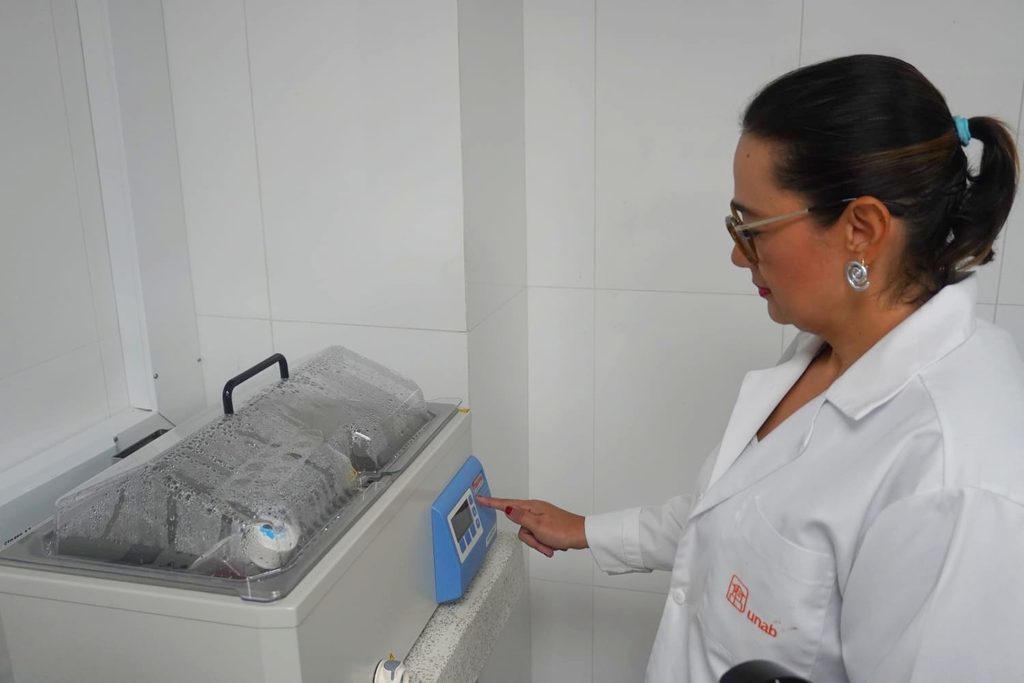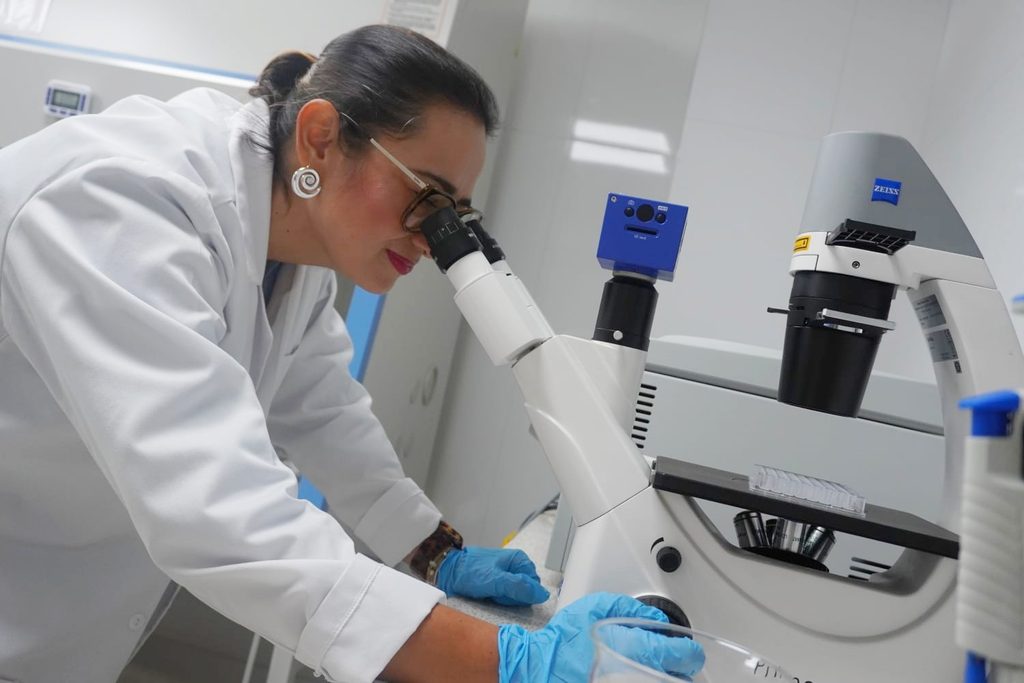

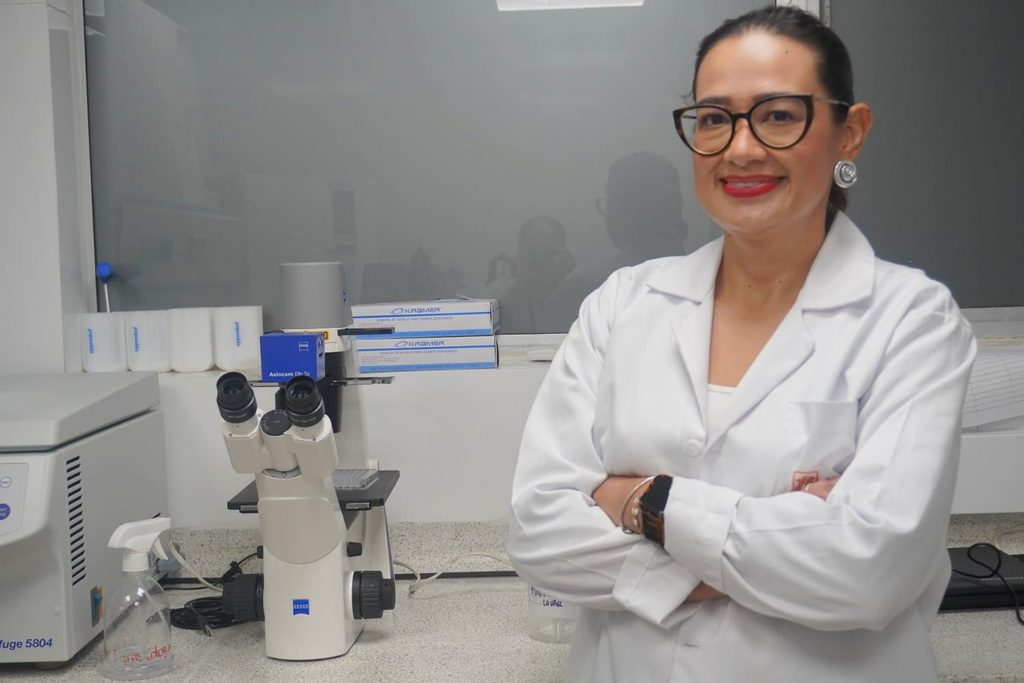
Dr. Deisy Yuley Rodríguez Sarmiento, a Chemistry graduate of the Universidad Industrial de Santander (UIS), is leading research that combines chemistry, biochemistry, and artificial intelligence (AI) to design new peptides with potential antitumor properties.
In initial tests on cervical cancer cells, two of the selected peptides reduced cell viability by 98%. Although the result is highly promising, the researcher herself firmly emphasizes that a long process of scientific validation remains before any clinical applications can be considered.
From School Curiosity to UIS and Brazil
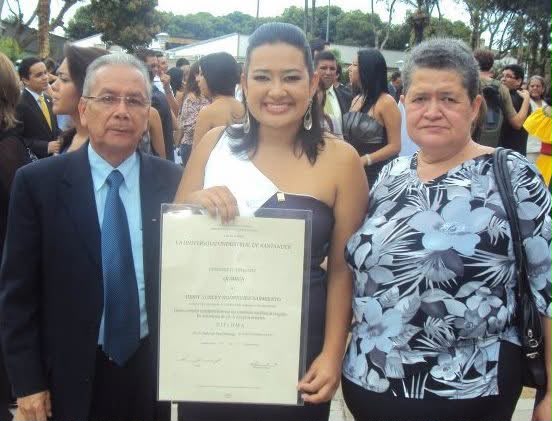
Deisy’s scientific journey began at school, standing in front of a blackboard, where she discovered her passion for chemistry. That curiosity led her to pursue professional training at UIS, a milestone she considers fundamental: “UIS was fundamental because it gave me the scientific foundations I needed to enter the great world of international scientific research.”
During her time at the university, she joined the Theoretical and Experimental Physical Chemistry Research Group (GIFTEX) under the guidance of Dr. Cristian Blanco. There, she developed her undergraduate thesis and became involved in the study of biochemistry and molecular interactions. This early experience taught her how to read and interpret scientific papers and understand the complex world of proteins.
She later continued her academic training with a Ph.D. in Biochemistry at the University of São Paulo in Brazil, joining the laboratory of Dr. Claudio Costa Neto, where she deepened her knowledge of molecular pharmacology.
Artificial Intelligence and Chemistry: The Building Blocks of Life
Today, as a researcher at the Universidad Autónoma de Bucaramanga (UNAB), her work addresses an important challenge: Can artificial intelligence help identify molecules capable of attacking tumor cells among millions of possibilities?
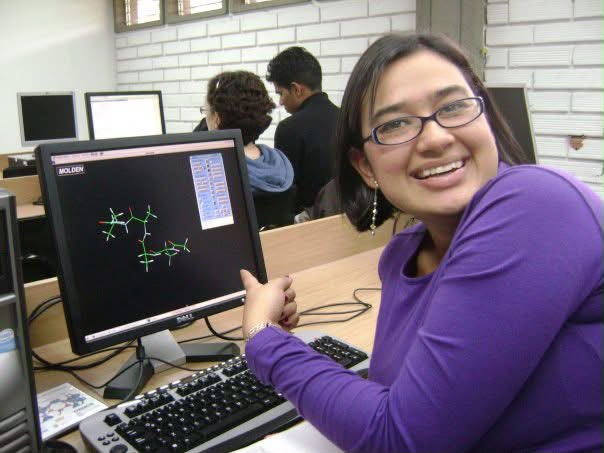
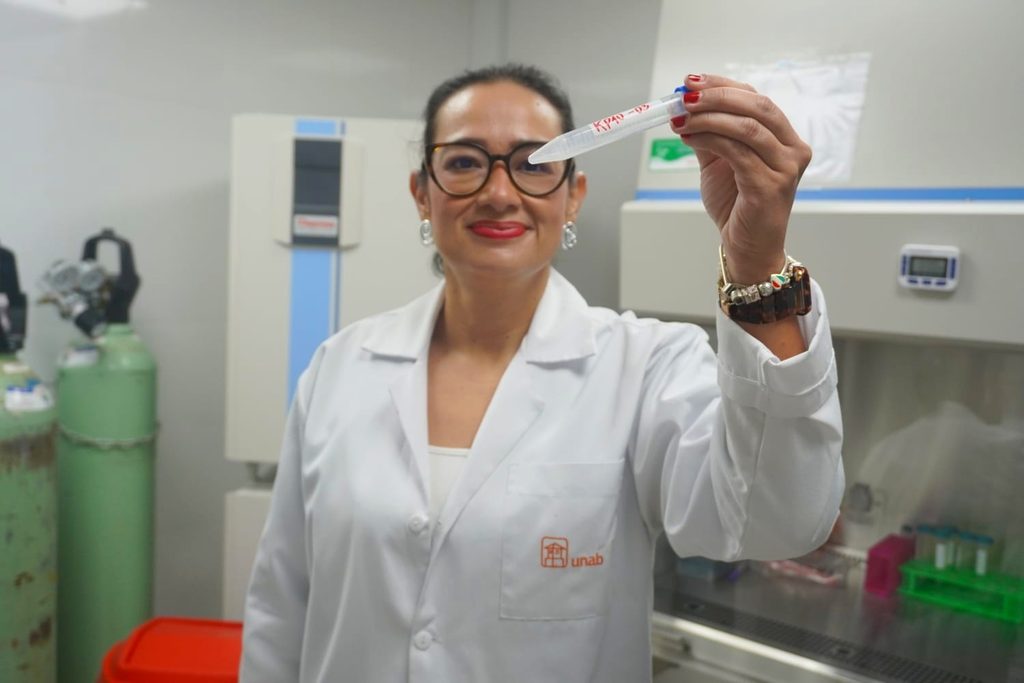
The team is working with the peptide KP10, a molecule of interest in cancer research. Peptides are small chains made up of amino acids—think of them as “building blocks”—whose organization determines the properties of the molecule. Modifying a peptide can generate millions of possible combinations; evaluating all of them through traditional methods would require impractical amounts of time and resources.
This is where AI comes in. It acts as a filter, analyzing millions of possibilities and selecting the most promising candidates for laboratory testing. However, Rodríguez Sarmiento emphasizes that the machine does not work on its own; it follows codes and guidelines established by humans:
“Artificial intelligence follows a code that I explicitly give it… We have to set limits. And who sets them? We, as human beings.”
The metaphor is simple: it is like having a deck of cards containing millions of cards and a tool capable of selecting those that meet specific rules.
“Out of the millions of molecules it analyzes, it tells me: Deisy, these 10 are the best and most promising ones for the laboratory. But there is something fundamental: the machine does not work on its own. That is where the scientist comes in, with their chemical foundations and biochemical knowledge, to tell the AI how to behave.”
The researcher sums it up with a statement that extends beyond her own project: “We have to set limits for AI. And who sets them? We, as human beings.”
A 98% Reduction That Calls for Scientific Caution
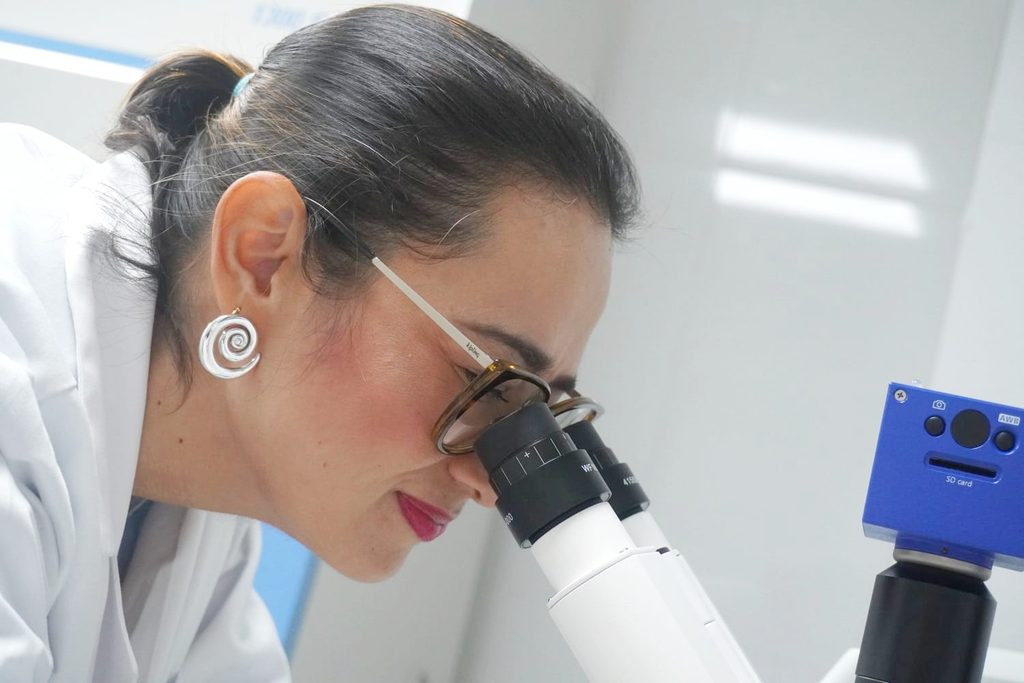
One of the most significant aspects of the project emerged during initial tests on cervical cancer cells. Ten AI-selected peptides were evaluated and, under the experimental conditions of the study, two of them showed a 98% decrease in tumor-cell viability after approximately 48 hours, as demonstrated through quantitative metabolic activity assays.
Despite the impact of this finding, the researcher insists on caution:
Preliminary stage:
A 98% reduction does not mean that a treatment is available for patients.
Future stages:
Further studies are needed to determine the exact cellular mechanisms involved, the types of cell death induced, and the effects in more complex models, such as spheroids or organoids, followed by animal studies and, eventually, human clinical trials.
“It is a fairly promising result, but I would like to clarify that we are still in the early stages,” she explained.
Drug development is a process that has historically taken decades. Therefore, this precision does not diminish the value of the finding; on the contrary, it highlights the rigor with which the science is being conducted.
Deisy Rodríguez Sarmiento’s career brings together traditional chemical knowledge and advanced computational tools. Her message to new generations regarding the use of artificial intelligence is clear: “There is no need to be afraid of them; instead, we should learn to use them as complementary tools that enhance critical thinking and human curiosity.”
Between algorithms, amino acids, and cells observed under a microscope, the story of this UIS graduate reminds us that behind every technological advance there is still a person who asks a question, formulates a hypothesis, establishes boundaries, and dares to search for an answer.
And in science, many times, everything begins with a question…