
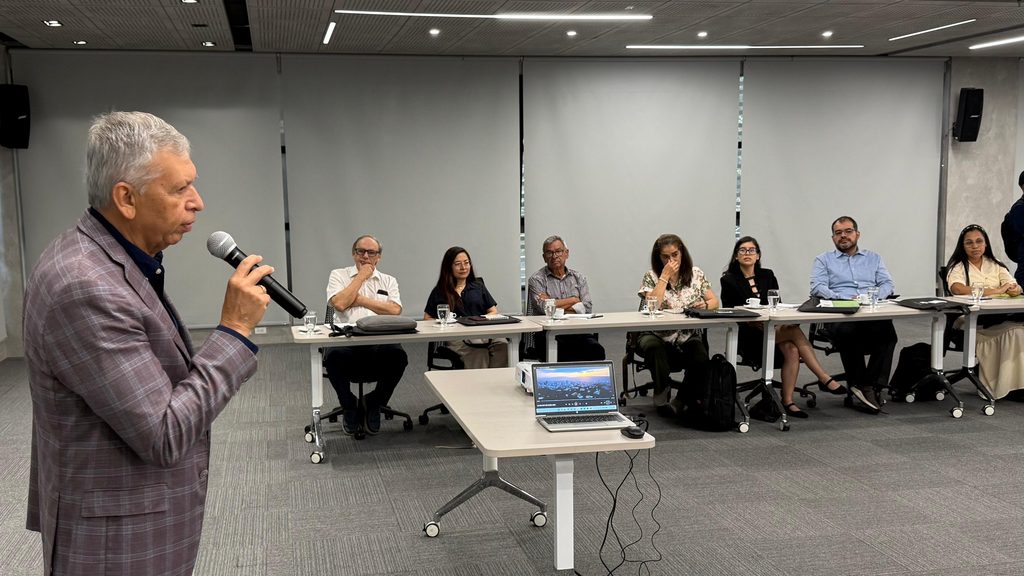
The Universidad Industrial de Santander (UIS) welcomed academic peers from the National Accreditation Council (CNA) to evaluate the renewal of accreditation for two graduate programs and to grant accreditation for the first time to a third.
The academic visit covers the Master’s in Industrial Engineering, the Doctorate in Physics, and the Master’s in Telecommunications Engineering. The process allows for an examination of the academic conditions, outcomes, and opportunities for improvement in these programs, which are affiliated with the Schools of Physicomechanical Engineering and Sciences.
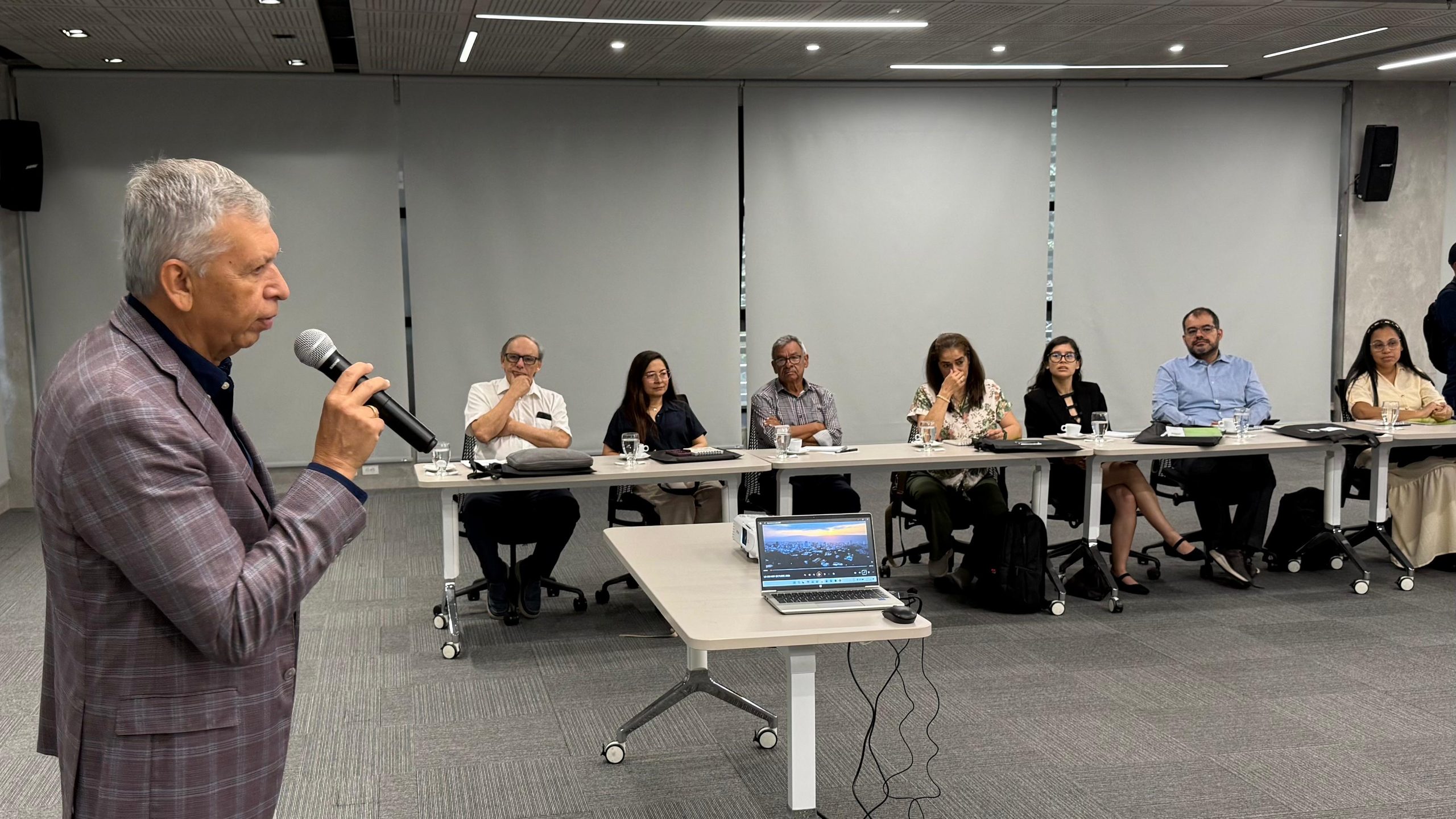
During the reception for the evaluators, UIS Rector Hernán Porras Díaz highlighted the institution’s track record in accreditation and the importance of receiving feedback that contributes to the University’s development.
Porras Díaz noted that the University uses the results of these evaluations to guide its improvement plans, strengthen institutional planning, and define management actions. He also noted that the UIS’s engineering programs hold international accreditation from ABET, a U.S.-based accrediting body.
Academic Quality Under Evaluation
For Luis Eduardo Becerra Ardila, director of the School of Industrial and Business Studies, the renewal of accreditation for the Master’s in Industrial Engineering represents an opportunity to reaffirm the academic work carried out by the School and the University. “For the School and for the University, it means reaffirming the quality of the academic programs we offer at our institution,” he stated. The director added that this process allows the School to demonstrate to the public the quality criteria and standards that guide the education of its students.
For his part, Oscar Arnulfo Quiroga Quiroga, director of the School of Electrical, Electronic, and Telecommunications Engineering, highlighted the research capabilities of the Master’s in Telecommunications Engineering program, which is seeking high-quality accreditation for the first time. “This accreditation provides our students and graduates with the assurance that they are in a program that meets the highest quality standards established by the Ministry of National Education,” he noted.
The evaluation also includes the Ph.D. in Physics. The director of the School of Physics, Rafael Ángel Torres Amariz, highlighted the conditions offered by the UIS for conducting scientific research and training Ph.D. candidates capable of producing high-level knowledge. As he explained, the program addresses the need to advance scientific developments associated with increasingly specialized technologies.
Recognition That Extends Beyond the Classroom
The Vice President for Academic Affairs, Olga Mercedes Álvarez Ojeda, explained that these processes benefit students, faculty, and alumni by increasing the visibility of academic programs, fostering knowledge networks, and creating opportunities for academic mobility. She also emphasized that accreditation is an exercise in public accountability. “We are a public university, and as such, we must be accountable through clear indicators,” she stated.
The visit by the academic peers thus represents an opportunity to evaluate the outcomes of the three graduate programs, identify areas for improvement, and guide new academic development initiatives, with quality as the evaluation criterion and advanced education as the institutional mission.