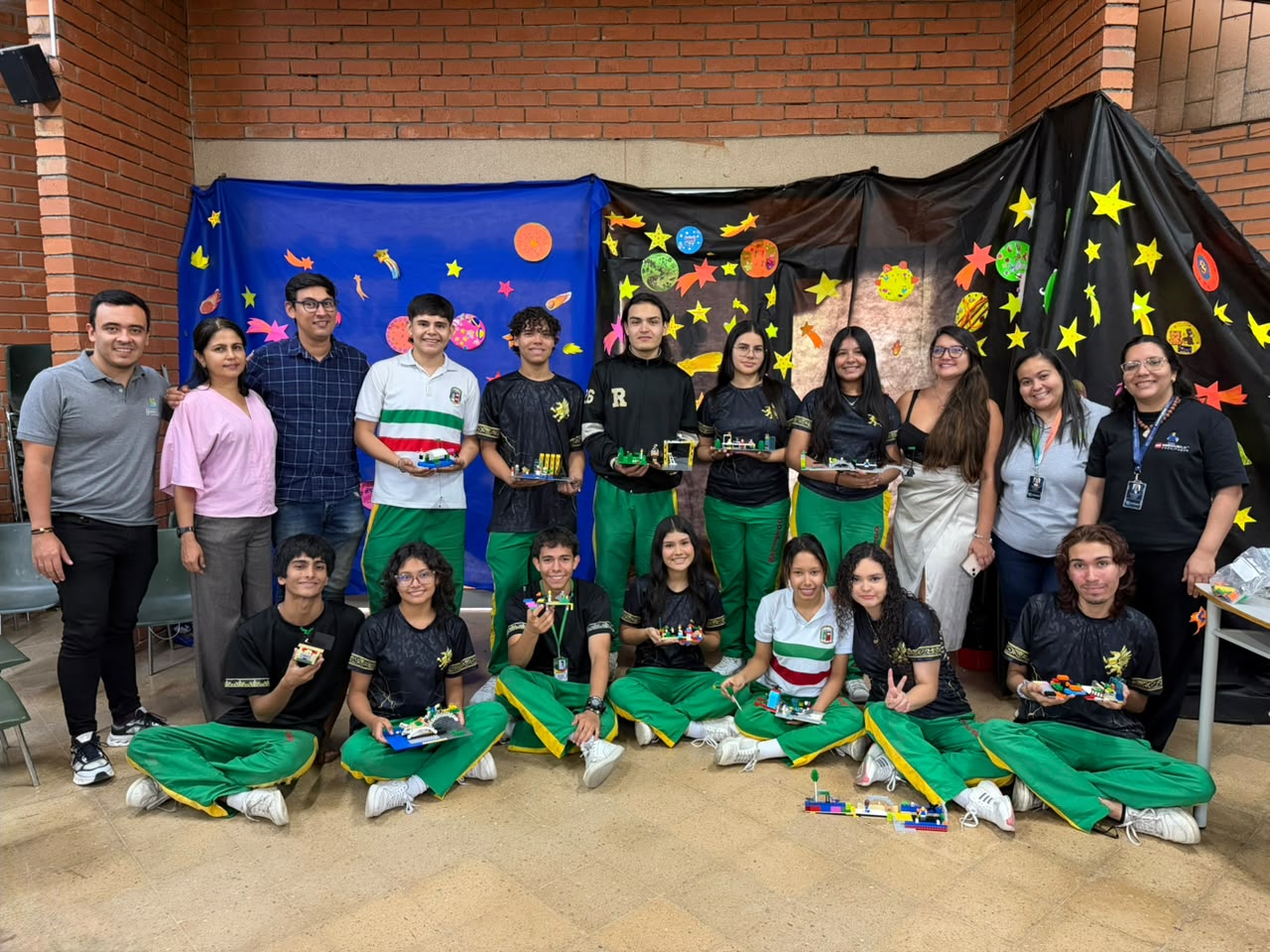


After four years of continuous work in rural institutions in the Santurbán páramo and other rural locations, MoviLab-UIS is embarking on a new phase focused on schools in Bucaramanga and its metropolitan area, expanding its impact and consolidating itself as a scientific training strategy for children, young people, and adolescents in the department of Santander.
The program, led by the Industrial University of Santander (UIS), has been developed between 2020 and 2023 through mobile laboratories, experimental activities, and pedagogical support in rural contexts. As a result, the team has achieved publications in international journals and the development of basic manuals for science teaching, demonstrating the academic rigor and social relevance of the initiative.
Focus on urban areas, face-to-face learning, and STEM methodology
In this new phase, MoviLab UIS is linked to an educational innovation project funded by the Vice-Rector’s Office for Research and Extension and implemented by the UIS Center for Teaching Development (CEDEDUIS) together with the Dean’s Office of Physical and Chemical Engineering. The objective is to implement an updated version of the program in primary and secondary educational institutions, exploring the use of STEM (Science, Technology, Engineering, and Mathematics) methodology as a tool to spark interest in scientific research from an early age.
During this stage, the program will develop academic and experimental activities in the following educational institutions:
– Nuestra Señora del Pilar, Bucaramanga.
– Miguel Sanchez Hinestrosa, Floridablanca.
– Víctor Felix Gomez Novoa, Piedecuesta.
The teaching material has been designed in line with the Basic Learning Performance Standards (BLPS) for grades 9, 10, and 11, ensuring its alignment with the curriculum. In the first phase, the team is designing the educational communication materials and will implement practical experiences in STEM areas, including laboratories, applied experimentation, interactive workshops, and ongoing educational support.
A multidisciplinary team dedicated to science education
A multidisciplinary team leads the initiative: Professor Hernando Guerrero Amaya directs the project; engineer Sergio Andres Rincon Ortiz coordinates activities; Professor Sandra Judith Garcia participates as co-researcher; Juan Sebastian Correa Delgado, philosopher and social worker, advises on the pedagogical component; and Lizeth Carolina Vargas Nuñez, biologist, serves as a young science promoter. This group brings together scientific, pedagogical, and social skills that allow for a comprehensive, inclusive, equitable, and contextualized approach to science education, strengthening the academic and social impact of the program.
Expected impact
With this new implementation, MoviLab UIS seeks to encourage critical thinking and scientific curiosity in secondary school students, promoting interest in research and rigorous analysis of their environment. It also aims to strengthen the link between the university and schools, creating opportunities for academic cooperation that bring scientific knowledge into the classroom.
The program also promotes equitable access to quality experimental experiences, ensuring that more young people can interact with tools, methodologies, and dynamics specific to STEM areas. In this way, the Industrial University of Santander continues to expand its territorial reach and consolidate spaces in which science, technology, and innovation become key tools for educational transformation and regional development in the department of Santander.