
esearchers from the Industrial University of Santander participated in the identification and scientific description of Parablechnum yariguense, a new species of fern endemic to the Serranía de los Yariguíes.
In the mountains of Santander, where Andean forests meet high-mountain ecosystems, scientists have just identified a species new to science. It is Parablechnum yariguense, a fern endemic to the Serranía de los Yariguíes, described by a team of researchers from the UIS Herbarium and academic institutions in Colombia and Brazil.
The new species was discovered during a field trip conducted in January 2024 in the municipality of Simacota, in the Serranía de los Yariguíes area. Subsequently, the researchers studied the collected specimens and reviewed botanical collections from various herbaria, including the Herbarium of the Industrial University of Santander (UIS).
The scientific work was led by student Juan D. Gómez Romero and Professor David Sanín, affiliated with the UIS Herbarium and the UIS School of Biology, in collaboration with José Murillo A. of the Institute of Natural Sciences at the National University of Colombia and André Luís de Gasper of the Regional University of Blumenau in Brazil.
A Contribution to Science
The name Parablechnum yariguense was chosen to honor the Serranía de los Yariguíes, the region where this species was discovered, which is characterized by its diverse habitats and its importance as a center of diversification and endemism for vascular plants.
The species was recorded in the municipalities of Simacota and San Vicente de Chucurí, on both slopes of the Serranía de los Yariguíes, where it grows in well-preserved montane and subpáramo ecosystems at an elevation of approximately 2,546 meters above sea level.
To confirm that this was a distinct species, the researchers did not limit themselves to observing its external characteristics. The study integrated morphological and molecular analyses, including the analysis of different DNA regions, as well as comparisons with related species. The results made it possible to establish its distinctive features and its position within the genus Parablechnum.
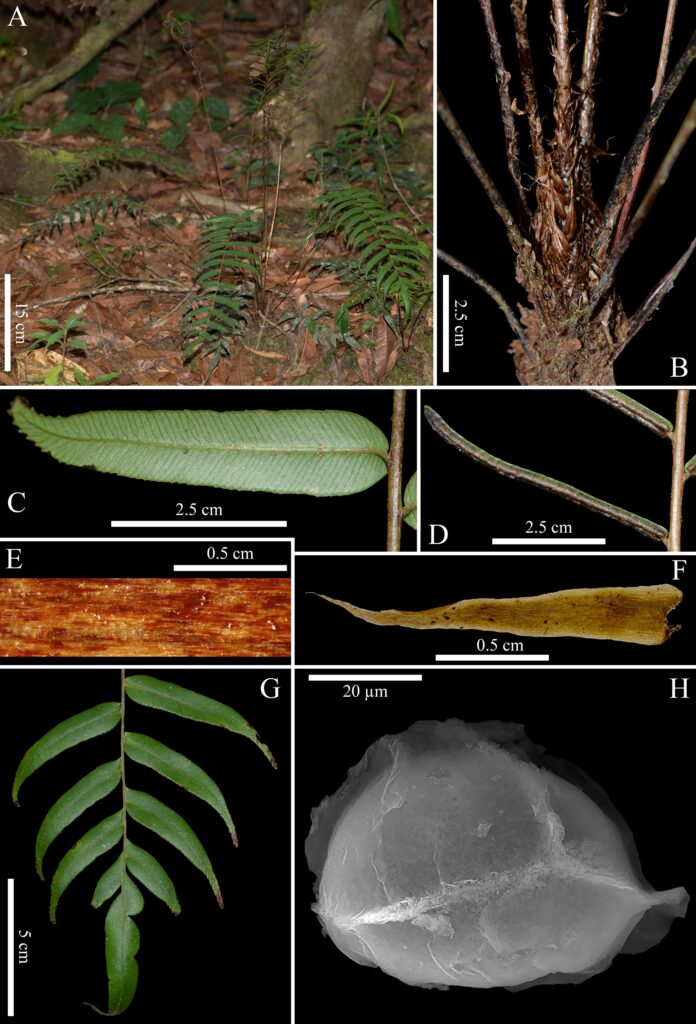
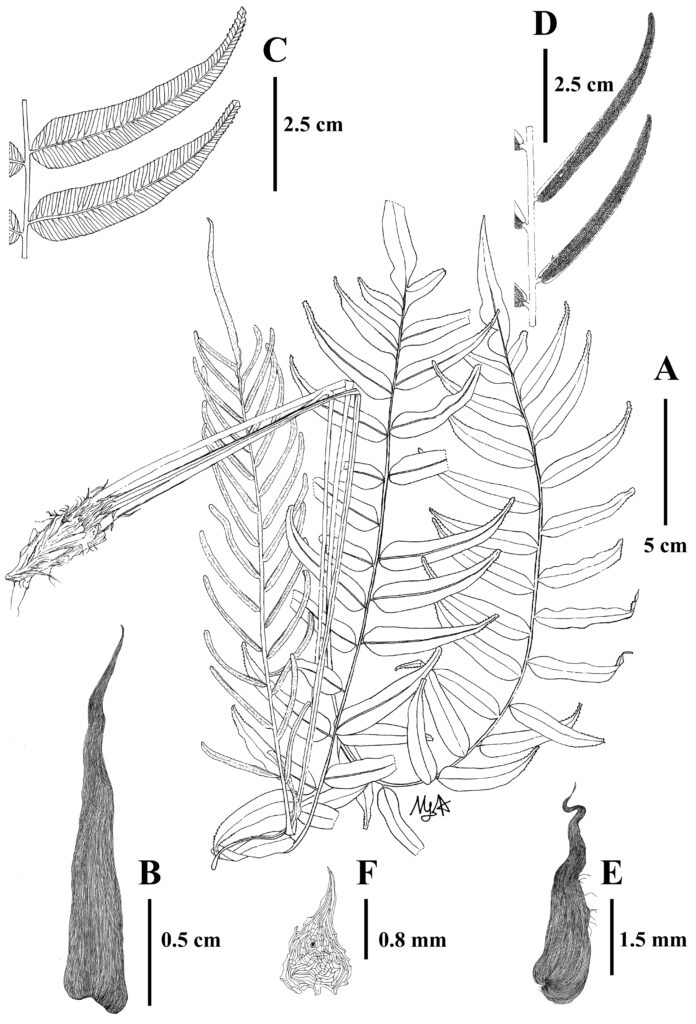
Among the characteristics that distinguish P. yariguense are the bicolored scales on its rhizome, the presence of small structures called papillae on the underside of the petiole and rachis, the absence of aerophores, and sterile pinnae that are shorter than those of morphologically similar species.
The identification of this new species is particularly significant because the Serranía de los Yariguíes is considered an area of great biological richness, yet it still contains regions that have been little explored scientifically. Specifically, the authors note that the northeastern region of the Colombian Andes is characterized by its high species richness and remains particularly understudied.
This discovery demonstrates that the biodiversity of Santander continues to offer opportunities for new research. In fact, the researchers note that the genus Parablechnum, to which this new species belongs, has not yet been fully studied, and that recent discoveries of new species suggest there are gaps in our understanding, especially in tropical America.
Although Parablechnum yariguense is found within a protected area, the researchers caution that information on its distribution remains limited. The species has been recorded in only two areas of the Serranía de los Yariguíes, and therefore its conservation status was provisionally classified as Data Deficient.
The study was published in May 2026 in the scientific journal Phytotaxa, under the title “Parablechnum yariguense (Blechnaceae), a new endemic fern species from the Serranía de los Yariguíes, Santander, Colombia.”