
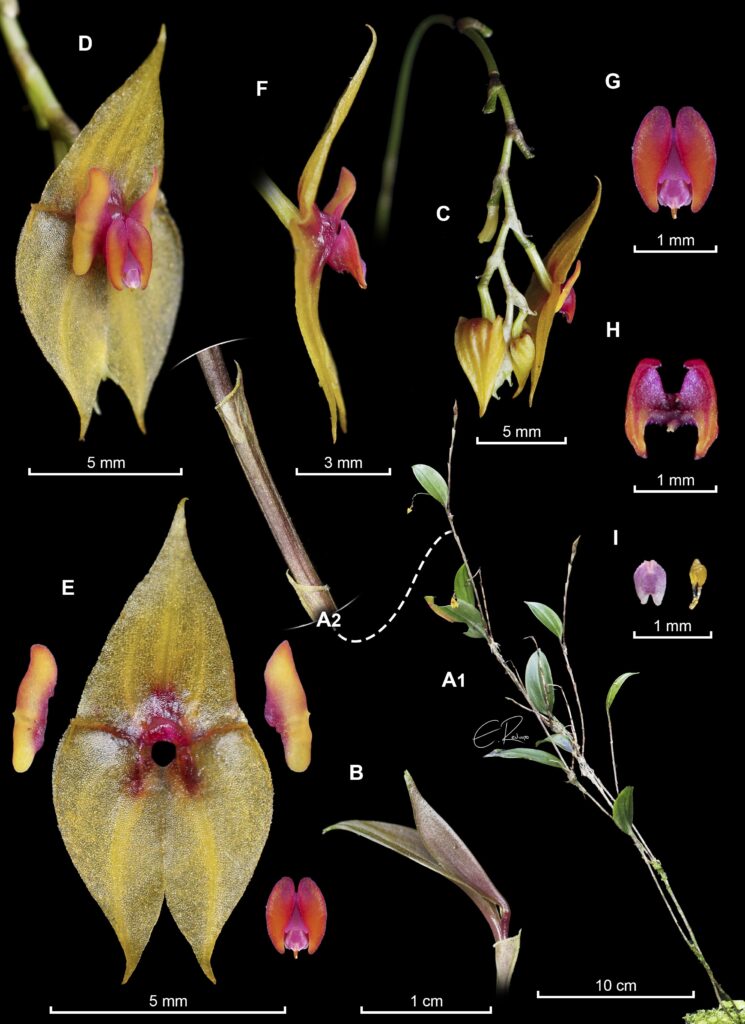
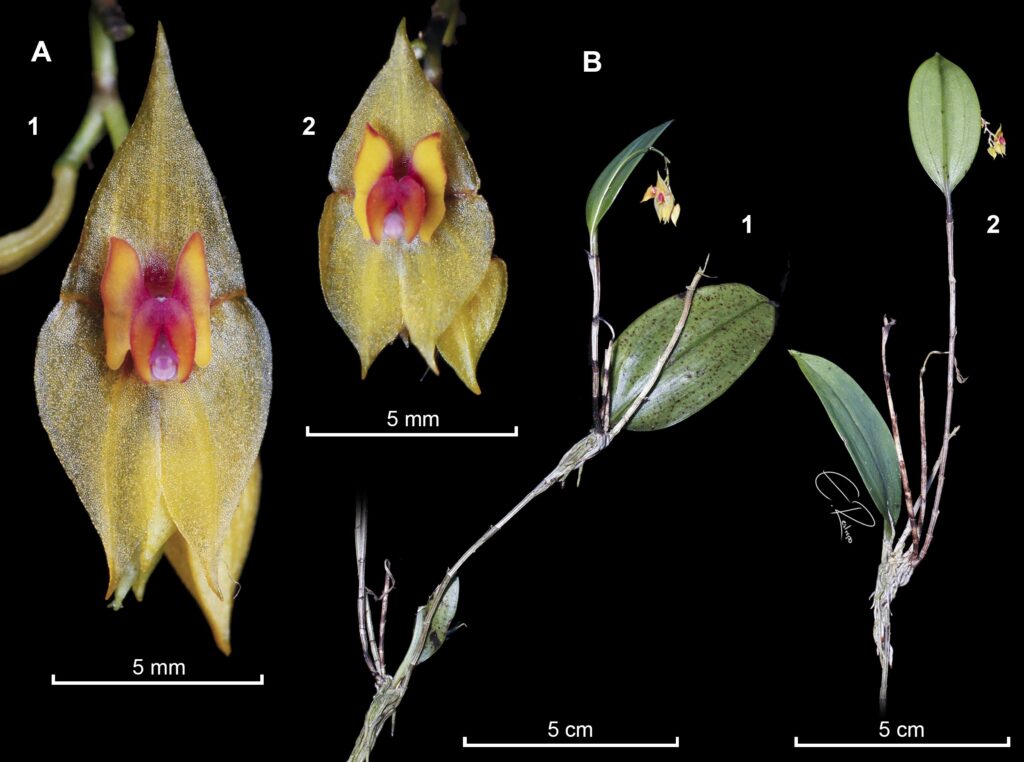
An important advancement for science and the conservation of Colombian biodiversity was recently reported by a team of national researchers, including scientists affiliated with the Universidad Industrial de Santander (UIS), Málaga campus, who participated in the identification and description of a new orchid species for science: Lepanthes leonmoralesii.
The discovery was published on June 16, 2026, in the journal Phytotaxa, internationally recognized for its publications on plant taxonomy. The research is part of a series of studies aimed at documenting the still-unknown biological richness of the Colombian Andes.
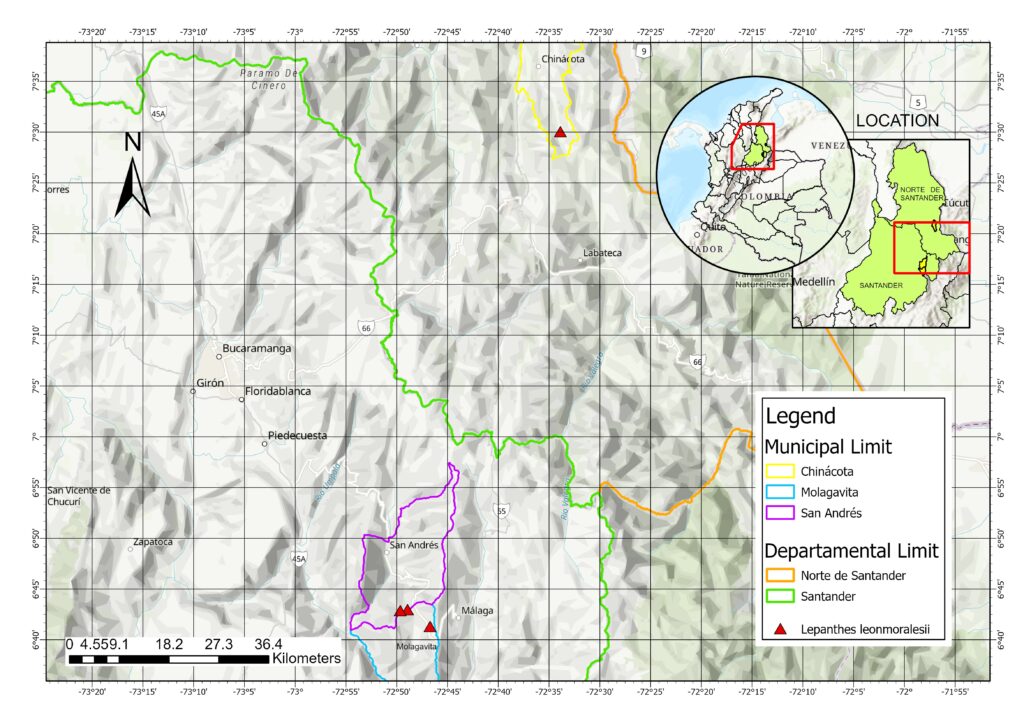
The new species was found in high Andean forest ecosystems in the municipalities of Chinácota, in Norte de Santander, and San Andrés and Molagavita, in the García Rovira province of Santander. The species, named Lepanthes leonmoralesii in honor of Professor León Morales Soto for his contributions to botany and academic training in Colombia, belongs to one of the most diverse orchid genera on the continent. Researchers determined that this plant exhibits unique morphological characteristics that distinguish it from other similar species, making it a new record for science.
The study, entitled “Unhiding Colombian Orchid Treasures II: Lepanthes leonmoralesii, a new species from the Norte de Santander and Santander departments,” involved researchers from Universidad de Antioquia, Universidad de Caldas, and Universidad Industrial de Santander, Málaga campus, including Eugenio Restrepo, Diana Joya, Susana María Arango, Heidy Carolina Caro, Paula Andrea Morales, and Diego Suescún. Several of them are members of the Instituto de Proyección Regional y Educación a Distancia (IPRED) of UIS, further strengthening the institution’s position as a research center committed to the study and conservation of Colombia’s natural heritage.
“Knowing, documenting, and sharing the natural wealth of our forests is both a responsibility and a way of contributing to conservation and the advancement of scientific knowledge,” said forestry engineer Diana Joya.
This discovery is particularly significant because Colombia is the second most orchid-diverse country in the world and continues to be the setting for important scientific discoveries. However, the study warns that the new species has a very restricted distribution, limited to only three known localities, and that its populations are found in ecosystems affected by deforestation, agricultural expansion, and forest fragmentation.
Due to these conditions, the researchers conducted a preliminary conservation assessment and concluded that Lepanthes leonmoralesii should be classified as an Endangered (EN) species according to the criteria of the International Union for Conservation of Nature (IUCN).
Beyond the taxonomic discovery, the research provides key information for designing protection strategies for the high Andean forests of Santander and Norte de Santander, ecosystems that harbor numerous endemic species and play a fundamental role in water regulation and biodiversity conservation.
“Collaborating in the publication of this new orchid species for Colombia and science has been highly rewarding because of the contribution we are making to the knowledge and conservation of native flora, especially in the eastern region of the country, where many species undoubtedly remain to be discovered and protected,” commented biologist Paula Morales.
For UIS, this achievement demonstrates the impact of research conducted from the regions and reaffirms its commitment to generating high-level scientific knowledge. It also highlights the capacity of researchers at the Málaga campus to lead processes that contribute to the understanding, appreciation, and conservation of Colombia’s natural heritage.
The discovery of Lepanthes leonmoralesii adds to other recent contributions made by UIS researchers in the García Rovira province, a region that continues to reveal species previously unknown to science and is consolidating its position as a natural laboratory of national and international importance.