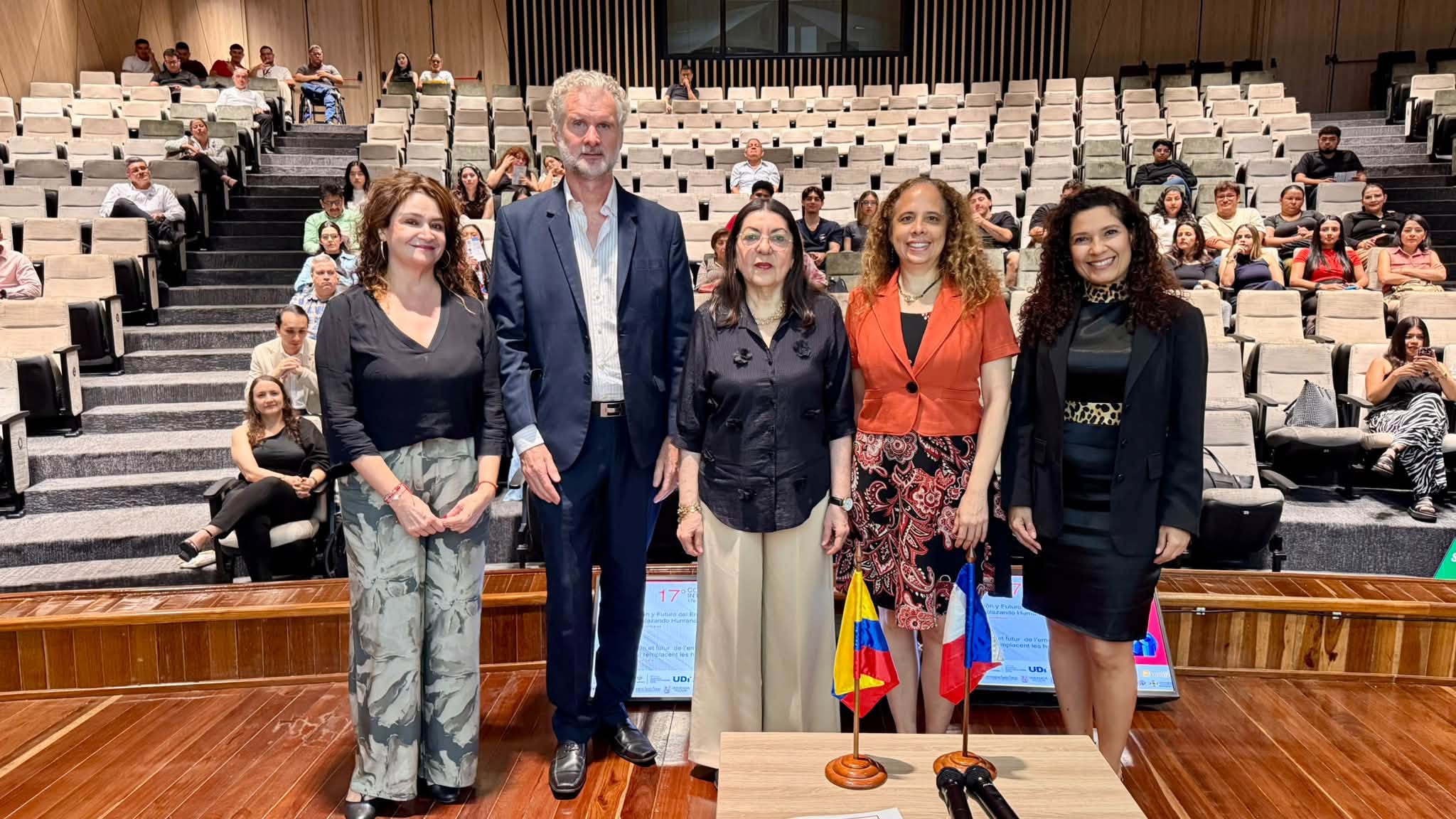


The Universidad Industrial de Santander (UIS) opened its doors to the productive sector to promote a space for dialogue and collaboration led by Rector Hernán Porras Díaz, who welcomed business leaders and executives from the Inter-Guild Committee of Santander.
During the meeting, business representatives, guild leaders, and members of the University’s executive team shared perspectives and proposals aimed at identifying the needs of the productive sector, strengthening human talent development, and consolidating new synergies among academia, industry, and society.
Rector Hernán Porras Díaz emphasized the importance of maintaining constant dialogue with the region’s economic guilds as part of an ongoing effort that reinforces the UIS’s commitment to development, competitiveness, and innovation in Santander. He explained that once the main needs of the productive sector are identified, the University will initiate a coordination process with its research groups so that, through their knowledge, capabilities, and experience, they can propose concrete solutions and generate collaborative projects that address the region’s challenges.

For his part, Alejandro Almeida Camargo, executive director of Fenalco Santander and representative of the productive sector on the University’s Superior Council, highlighted the outcomes and commitments resulting from the meeting:
“Today we had an important space for coordination and collaboration with the guilds and business leaders, who were impressed by the progress achieved by the UIS thanks to its institutional leadership and teamwork. Clear tasks emerged: building a sectoral diagnosis, defining a joint action plan, and establishing a monitoring system that strengthens coordination with the productive sector.”

The dialogue also addressed key topics such as student internships, entrepreneurship, and the circular and solidarity economy, with the aim of promoting joint projects that benefit companies and the community of Santander.
For Juan Pablo Remolina, executive director of ProSantander, the visit was an opportunity to reaffirm the University’s strategic relevance:
“Once again, we recognize that the UIS is the most important institution in Santander, and that is why this coordination with the productive network is essential to build actions that strengthen the interests of all guilds.”
Similarly, Sonia González Corzo, president of the Sociedad Santandereana de Ingenieros, highlighted the value of this type of setting:
“The meeting was wonderful because it allowed us to discuss new dynamics that require the support of academia and the engineering sector to contribute to development and to solving current challenges in the department.”

In turn, Javier Peñaranda, manager of CAMACOL Santander, praised the University’s efforts to strengthen effective ties with the business sector:
“This space is truly important. It allowed us to identify valuable opportunities to enhance both professional and business capabilities in Santander. I leave pleasantly surprised; the facilities, the work, and the projection of the UIS are noteworthy.”
Likewise, Juan Carlos Rincón Liévano, executive president of the Bucaramanga Chamber of Commerce, highlighted this meeting as a valuable opportunity to listen, engage in dialogue, and strengthen new synergies:
“As the Chamber and as a member of the Committee of Guilds, I leave very satisfied because several work fronts were clearly defined for us to deepen with confidence. The University has been a historic ally of the Chamber of Commerce in numerous initiatives, and this space represents a great opportunity to continue working together,” he stated.
Following this meeting, the Universidad Industrial de Santander (UIS) will continue working collaboratively with guilds and business leaders to listen to, understand, and address the needs of the productive sector, integrating them with the academic, scientific, and technological support offered by its professors and students. The goal is to jointly design solutions and contribute to the social and productive transformation that drives regional development.