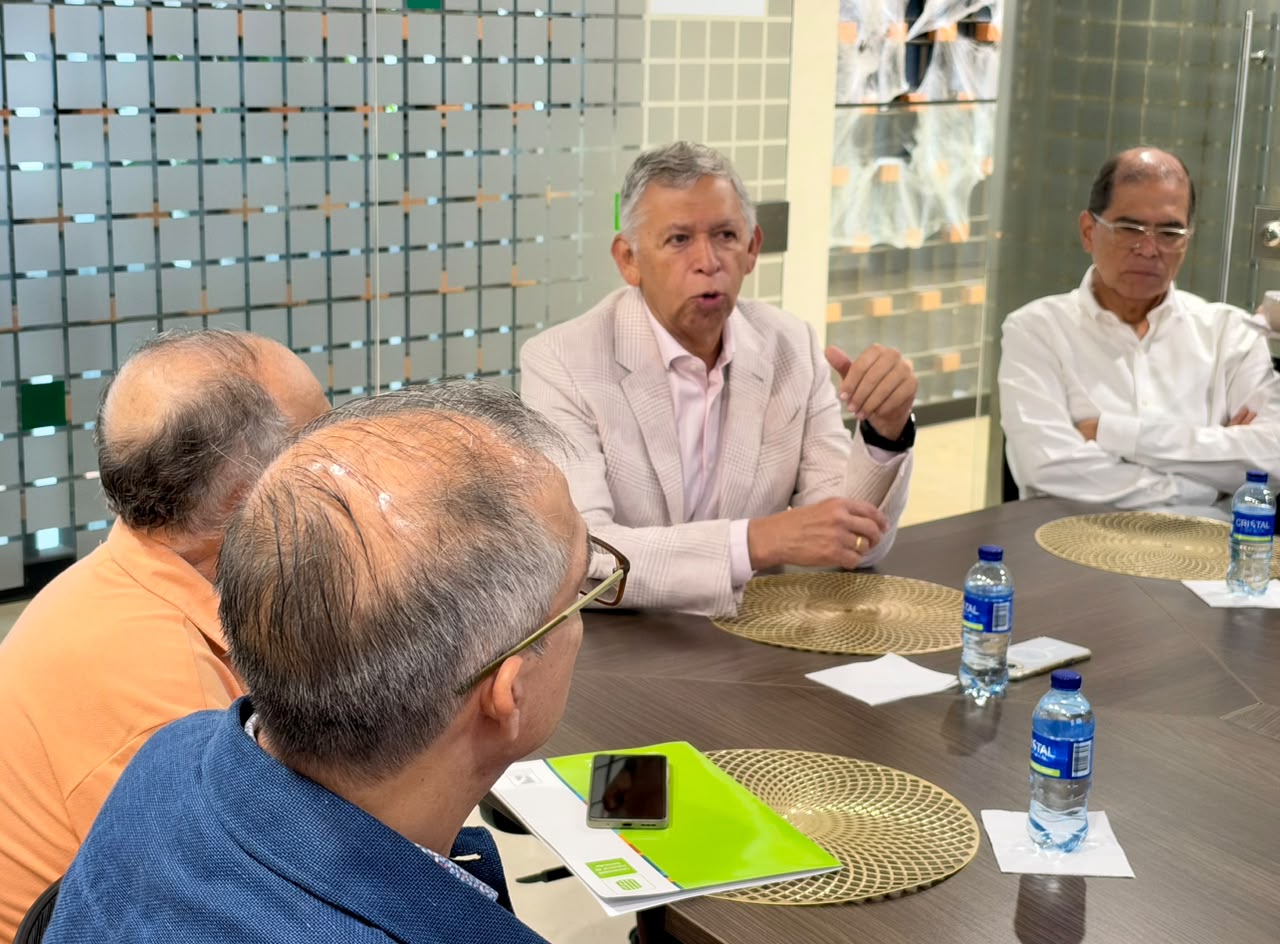


The Industrial University of Santander (UIS) became a forum for reflection and analysis on the country’s energy future when it hosted the panel “Application of Fair Energy Transition in Colombia” as part of E3T 2025 Technical Week. The meeting, held in the Luis A. Calvo Auditorium, brought together representatives from the government, academia, and the business sector to discuss the challenges and opportunities facing the country in this process.
Among the guests were Johanna Castellanos, deputy director of Information Management at the Mining and Energy Planning Unit (UPME); Manuel Peña, director of the UPME; Vladimir Murillo Delgado, deputy technical director of the Fund for Non-Conventional Energy and Efficient Energy Management (Fenoge); Edgar Colmenares Vargas, President of Energysan; and Wilman Morales Rey, Manager of WM S.A.S.
The academic world was represented by Oscar Quiroga, Coordinator of the Electrical Engineering Program at the UIS, who highlighted the importance of the university continuing to be a meeting point for analyzing the country’s major challenges. Along the same lines, Professor Gabriel Ordóñez Plata, from the School of Electrical, Electronic, and Telecommunications Engineering, stressed the importance of coordinating efforts between public, private, and academic institutions to ensure that the energy transition is effective.

During the panel discussion, the panelists agreed that moving toward a new energy model involves not only ensuring environmental sustainability, but also social equity and regional development. Diversification of energy sources, inclusion of communities in projects, and the design of clear public policies were some of the main topics of discussion.
For Manuel Peña Suárez, director of the UPME, the energy transition is a global challenge: “It is an issue that brings all of humanity together. From the United Nations’ sustainable development mechanisms, to which all countries are committed, it sets the path for energy in the world.”
Similarly, Vladimir Murillo Delgado stressed the importance of these spaces for dialogue: “It shows the real situation we are experiencing in each of the affiliated entities: what their needs, challenges, goals, and projects are in relation to the energy transition in Colombia.”
The panel established itself as a key space for strengthening dialogue between the state, business, and academia, with the aim of drawing up a roadmap that will enable Colombia to move forward in a fair and sustainable manner towards a new energy model.