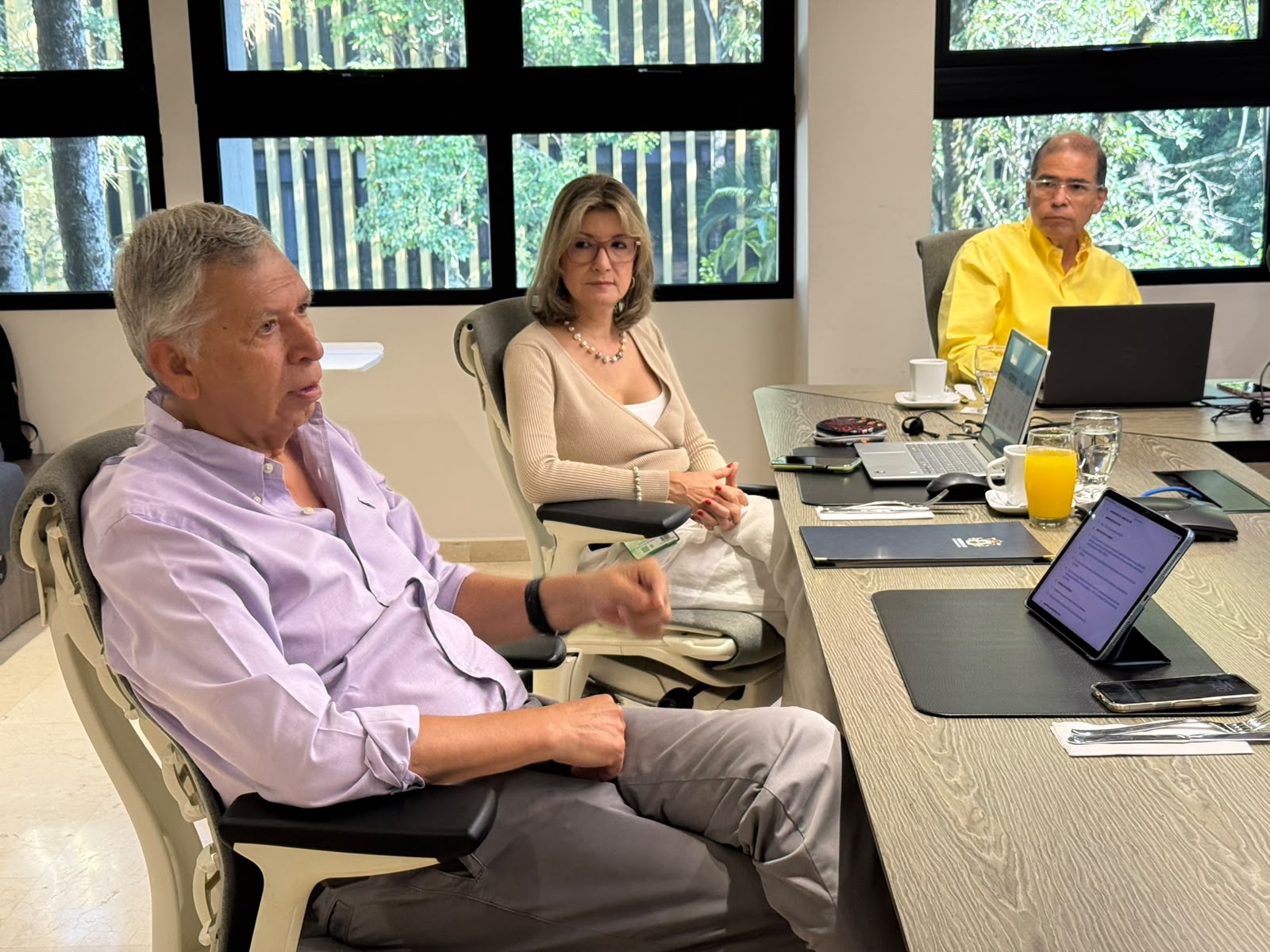


With the aim of strengthening knowledge about the procedures and obligations associated with the process of applying for the new Permit for the Collection of Specimens of Wild Species of Biological Diversity for Non-Commercial Scientific Research, the Industrial University of Santander (UIS) held a training session aimed at research professors and technical professionals.
The activity included the participation of the technical team from the National Environmental Licensing Authority, who guided the university community on the requirements, procedures, and responsibilities involved in this environmental instrument.
This initiative was led by the Knowledge Transfer Directorate of the Vice-Rectory for Research and Extension, within the framework of the University’s efforts to obtain the new Framework Permit for the Collection of Specimens of Biological Diversity, a requirement that allows the University’s researchers to legally carry out field activities.
During the session, topics were addressed related to the general aspects and applicability of the collection permit, the use and compliance with the obligations of framework permits, as well as the procedures for application and the submission of information to the environmental authority.
According to Ofelia Mejía, a specialized professional at ANLA, this type of space allows researchers to learn firsthand how to complete the process to obtain the new permit and comply with the requirements established by regulations.

“The permit covers all specimen collection activities necessary to conduct scientific research. Knowing how to meet the obligations, what procedures must be carried out, and how to submit semiannual reports will help them comply with the regulations,” she explained.
For her part, Vanessa Quiroga Arciniegas, Director of Knowledge Transfer at UIS, highlighted that obtaining this permit involves shared responsibility among the affiliated researchers.
“When we apply to be part of these permits, we do so as supportive colleagues. Each person is responsible for ensuring that everything goes well so as not to affect other professors. From the University, we have made a significant effort with this training so that the process is carried out efficiently and, when we submit the documentation, it fully meets the required standards,” she stated.

The training included the participation of research professors who need to be linked to the permit and technical professionals responsible for reporting and submitting information to the environmental authority.
For Germán Zafra, professor at the School of Microbiology, these initiatives are essential for resolving concerns related to the use of the framework collection permit. “These training sessions are very welcome, especially because many researchers use this permit constantly. It is very valuable to be able to resolve doubts directly with ANLA officials, who ultimately guide and approve these processes,” he said.
As part of the institutional process for applying for the new permit before ANLA, the University established requirements and a procedure for including researchers in the application. Among these, it stands out that interested professors must be affiliated with institutionally recognized research groups and categorized in the national Minciencias call, in addition to having research lines associated with biodiversity collection activities.

The director of each research group will be responsible for consolidating and submitting the technical information required by the environmental authority. This must be completed and sent to the email address recursosbio@uis.edu.co no later than Wednesday, March 18, 2026.