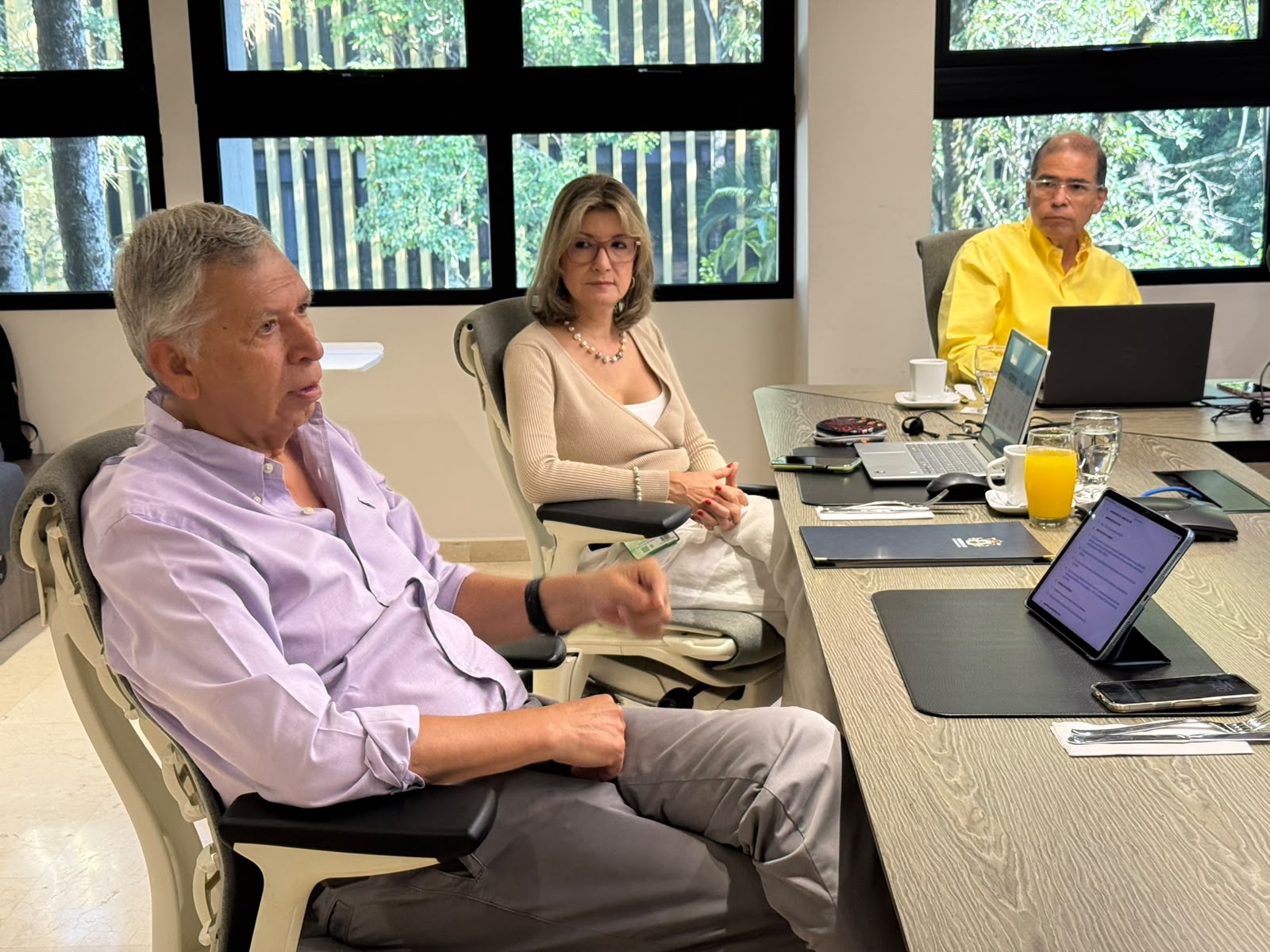

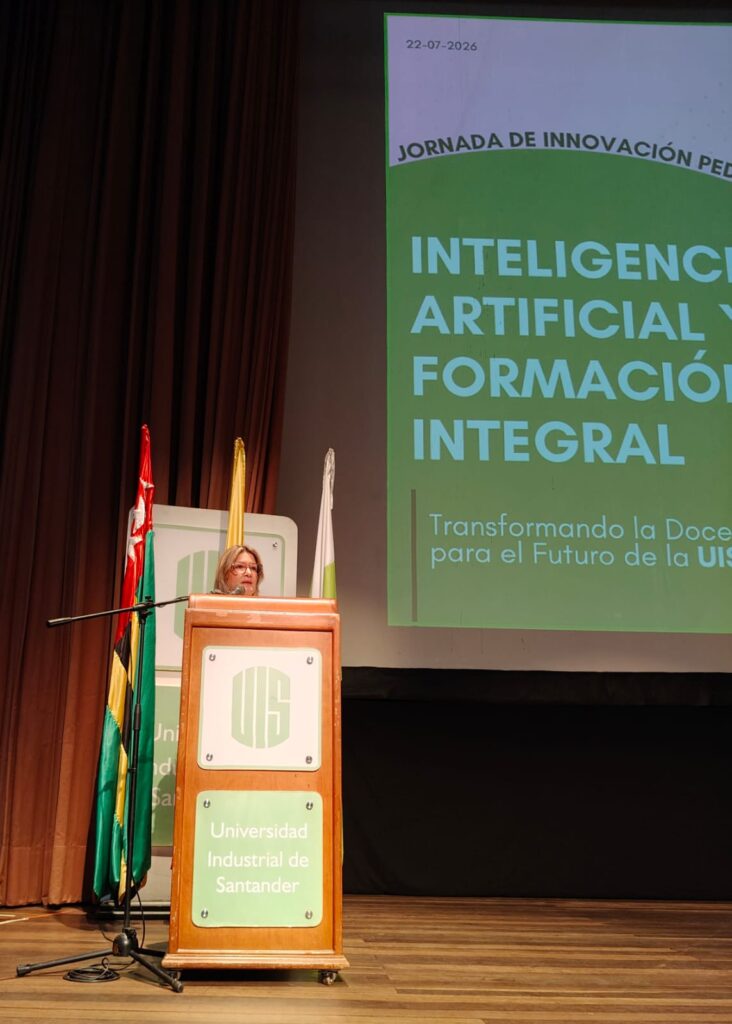
High expectations and strong interest in the topics addressed during the evento held as part of the institutional Misión Docencia UIS 2030 strategy, were expressed by attending faculty members and guest speakers throughout the first plenary session.
Welcoming participants, Professor Olga Mercedes Álvarez Ojeda, vicerrectora académica UIS, reiterated her invitation to fellow faculty members to embrace the initiative of transforming teaching practices and, in doing so, positively impact students’ lives. She also encouraged participants to consider extending the duration of future editions of the Pedagogical Innovation Conference.
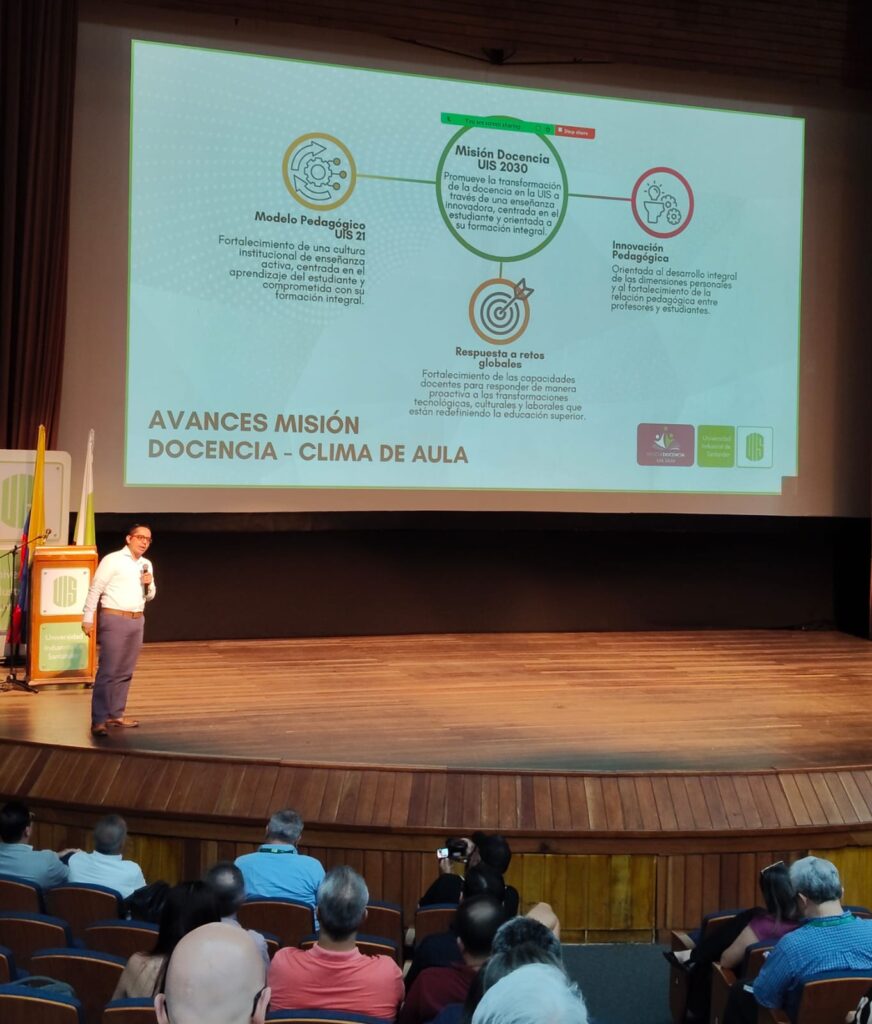
During the opening session, the Misión Docencia team, represented by UIS professors Daniel Sierra Bueno and Oscar Fernando Herrán Falla, presented the progress made on the Classroom Climate Assessment Instrument developed within the framework of Misión Docencia UIS 2030. They also launched the call for proposals to establish Comunidades de Aprendizaje Docente, CAD.
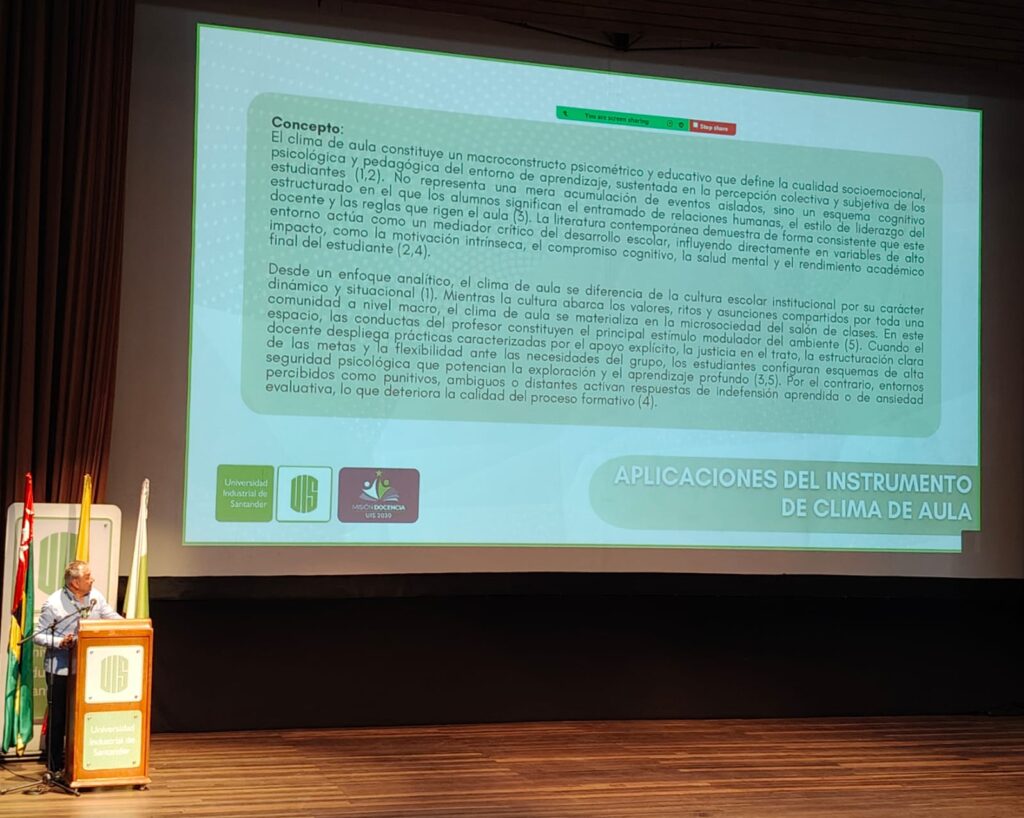
In this regard, Professor Hernando Guerrero, Director of the Centro de Desarrollo para la Docencia en la UIS, CEDEDUIS and a member of the Misión Docencia team, stated: “We invite you to submit proposals for Communities of Learning and to become familiar with these voluntary academic groups, which are collaboratively built among faculty peers.”
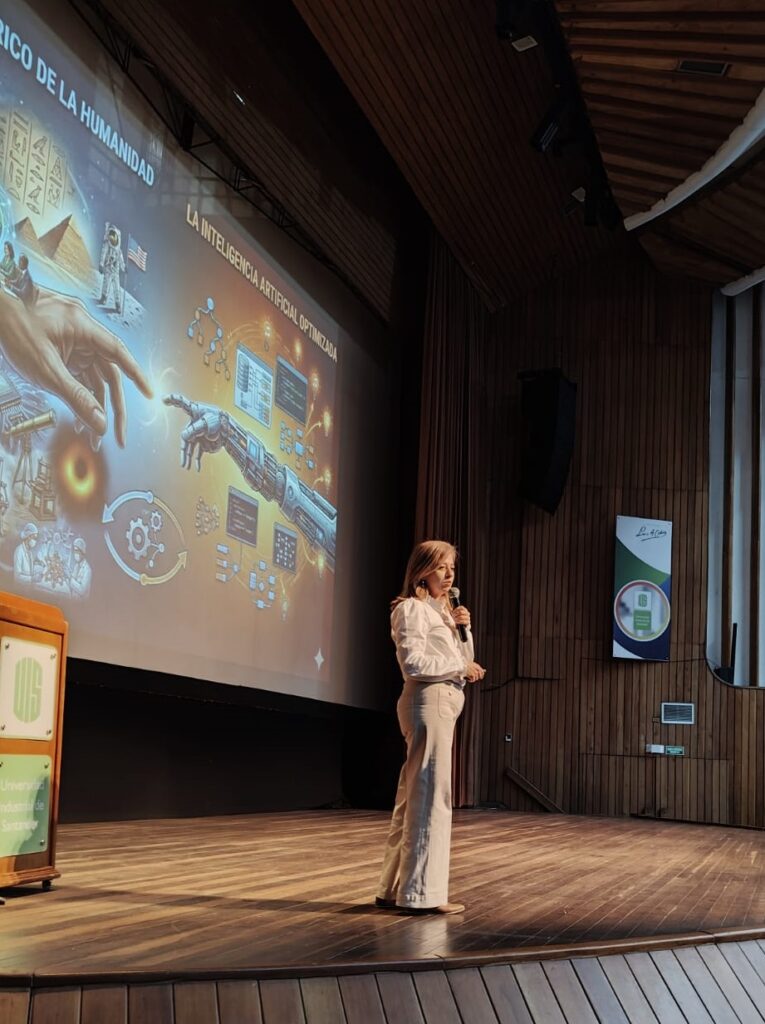
Addressing the topic “Equity and Bias in Educational AI: The Role of Data and the Power of AI in Holistic Education,” Professor Lola Xiomara Bautista Rosso, from the Escuela de Ingeniería de Sistemas e Informática, explained: “We are living through a unique moment worldwide, where pedagogical and instructional approaches must evolve to make effective use of these tools. Rather than acting negatively, they can enhance our teaching practice and become valuable resources we can rely on. Above all, our goal through the Teaching Mission is to support faculty in understanding how these technologies can improve our work while always strengthening our students’ learning process and helping them become aware of how to use them responsibly for their own benefit.”
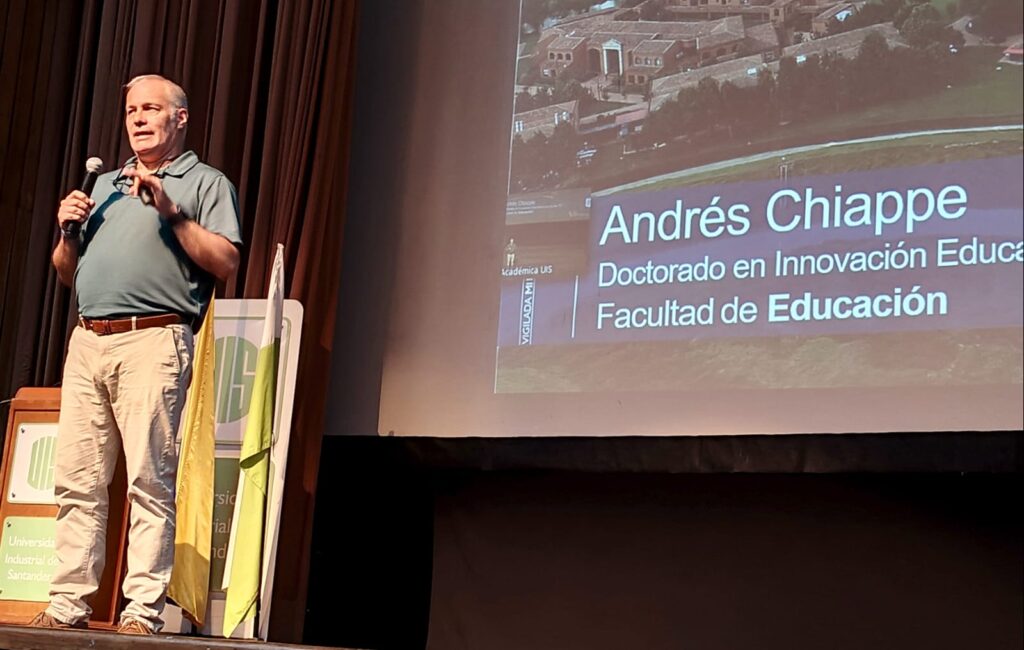
Meanwhile, Professor Andrés Chiappe Laverde, Director of the Doctoral Program in Educational Innovation through ICT at the University of La Sabana and guest keynote speaker, highlighted the commitment of the Universidad Industrial de Santander to engaging its faculty in the use of Artificial Intelligence. He stated: “This is the time to understand the challenge, study it, and face it. We are experiencing a historic opportunity to drive meaningful change in education.”
Commenting on the conference, he added: “I believe this is an absolutely essential and structural responsibility within the mission of any university. Educational quality, regardless of buildings or infrastructure, depends fundamentally on its faculty. Every effort made to support continuous faculty development and to respond to emerging challenges—such as the use of Artificial Intelligence—is invaluable. By promoting initiatives like this, the university enables professors not only to reflect on these challenges but, more importantly, to take action. These initiatives should go beyond professional development; they should inspire faculty to implement what they learn, generating the transformations that are truly needed in their work with students.”