

Photos / Mauricio Olaya
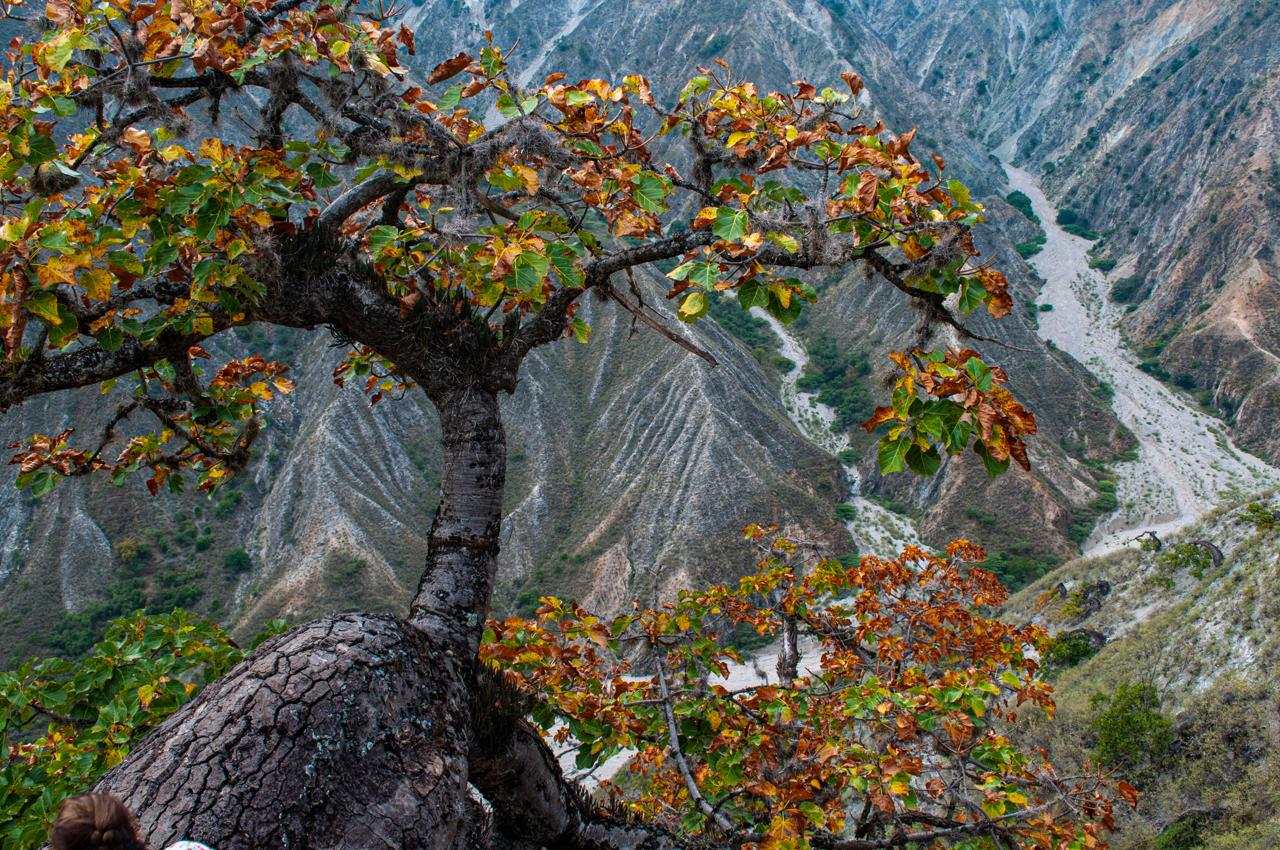
With over 1,000 million years of geological history, a length of 200 kilometers, and a depth of nearly 2,000 meters, the Chicamocha Canyon is one of Colombia’s most extraordinary natural landscapes. Now, this natural treasure has received new international recognition: its inclusion on the International Union of Geological Sciences (IUGS) list of Geological Heritage Sites, a distinction that highlights places around the world for their exceptional scientific, educational, historical, and cultural value.
For Santander and Colombia, this recognition is a source of pride that goes beyond the beauty of its landscapes. This is how Francisco Velandia, a full professor at the School of Geology at the Industrial University of Santander (UIS), explains it, emphasizing the importance of being part of a selection that brings together some of the most extraordinary places on the planet due to their geological richness.

“And being on that list is a source of great pride for all of us who live in regions blessed with such beauty,” says the professor.
The distinction is not awarded solely based on a place’s visual characteristics. Behind each selected site lies exceptional scientific value, related to the contributions it can make to our understanding of the Earth. In this regard, Velandia notes that “the main contribution is that they have something to teach humanity.”
“So they teach us to understand how our planet works,” adds the professor, explaining that these areas become ideal settings for helping people learn about nature and the geological evolution of the world.

An Accolade Built on Science and Collaboration
As explained by UIS geologist Luis Carlos Mantilla, who traveled to Portugal to receive this award, the inclusion represents a significant achievement for Santander and for Colombia, as it places the Chicamocha Canyon among the world’s most geologically significant sites. Its formation, tectonic features, and natural diversity make it an ideal setting for understanding the Earth’s evolution.
This is undoubtedly an international achievement. After years of effort and scientific rigor, the professor highlights the demanding nature of the evaluation process and celebrates that, following a failed attempt in 2024 to correct technical details, the nomination for the 2026 edition was successfully approved.
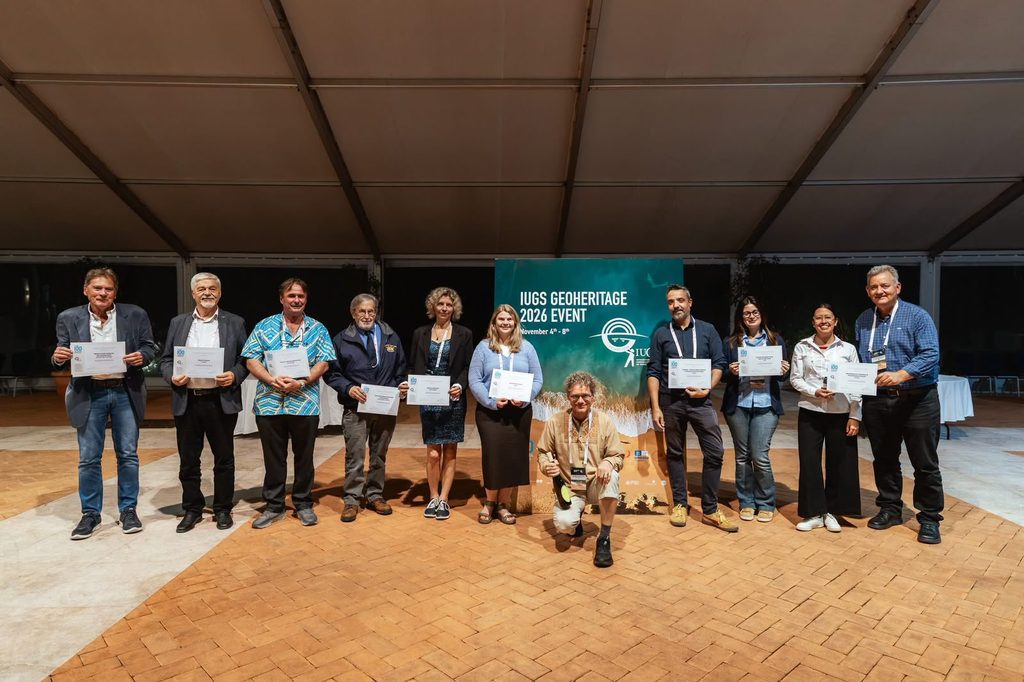
“We began taking steps nearly four years ago because we truly wanted the Canyon to be included among the world’s 100 geological heritage sites. With about five evaluators for each proposed area, it is a fairly rigorous process (…) the work was done quite well this time around, for the 2026 list.”
The scientific rationale behind the IUGS’s selection of the Chicamocha Canyon as one of the most significant geological sites on the planet (an exclusive group that will total 400 sites worldwide by 2028) is that “it is, so to speak, an exceptional morphotectonic landscape of global significance and is therefore designated as a site of geological interest… the exact term is ‘geopatrimonial site’.”
This process also involved the participation of the Industrial University of Santander and the Colombian Geological Service. The School of Geology contributed its academic and scientific expertise to support the nomination and help secure recognition for this area.
In this regard, Professor Francisco Velandia highlights the collaborative effort: “In this case—the Chicamocha Canyon—we formed a working group with the Colombian Geological Survey. The School of Geology was involved here, working alongside the group at the Geological Survey that focuses on geological heritage.”
Located on the western flank of the Eastern Mountain Range, the canyon stretches for more than 200 kilometers and encompasses territories in 17 municipalities in Santander: Aratoca, Barichara, Capitanejo, Cepitá, Curití, Jordán, Los Santos, Macaravita, Mogotes, Molagavita, Onzaga, Piedecuesta, San Andrés, San Joaquín, San José de Miranda, Villanueva, and Zapatoca. It also contains the Bucaramanga Seismic Nest, one of the most studied seismological phenomena in the world.

A recognition that opens new opportunities and commits to conservation
Inclusion on the IUGS list constitutes an initial international scientific recognition, but it also represents an opportunity to promote the region from other perspectives: sustainable tourism, education, research, economic development, and community participation.
For Professor Velandia, this distinction can foster specialized tourism—one focused not only on admiring the landscapes but also on understanding the natural processes that have shaped this region.
“So a site is recognized as unique and added to the list. There are many people who travel the world solely to visit these spectacular, well-recommended sites because we can learn about the planet there,” he explains.
However, one of the aspects the professor emphasizes most is the need to involve the communities living in the Chicamocha Canyon. Their participation will be crucial in ensuring that this recognition translates into opportunities and a greater appreciation of the natural heritage.
“Furthermore, another important aspect of these sites is that the community living there must also be very aware of the beauty that surrounds them so that they can educate others and, for example, organize groups of guides,” notes Velandia, who believes that for Santander, this recognition represents “a huge impact because we will now have tourism that is more specialized in these geological wonders and natural landscapes.”
The next challenge is to move toward recognition as a UNESCO Global Geopark. This designation not only highlights geological heritage but also promotes local ownership, education, conservation, and the sustainable development of these areas.
To achieve this new goal, Professor Velandia insists that institutional or academic support alone is not enough: it is essential that communities understand the significance of this project and become actively involved.
“The most important thing is for the community to understand its importance and to work toward achieving it as well. So, the key—the importance—lies especially in getting the community, the people, to get involved,” he affirms.


Along the same lines, Luis Carlos Mantilla points out that international recognition provides momentum to continue working toward the designation of the Chicamocha Canyon as a UNESCO Global Geopark. This effort requires a preparatory process lasting approximately a year and a half before a decision is made.
“This recognition is a major boost for us, allowing us to continue focusing our efforts on the next goal, which is, of course, to secure UNESCO’s designation of the Chicamocha Canyon as a UNESCO Global Geopark. That requires nearly a year and a half of preparatory work before we can expect a decision on the matter,” added Mantilla.
With this in mind, the Industrial University of Santander will hold the First International Symposium on Geoparks, Territorial Development, and Coexistence on November 12 and 13 at its main campus in Bucaramanga.

The meeting is taking place following the IUGS international event on geological heritage, held in Portugal, where the inclusion of new World Geological Heritage sites—including the Chicamocha Canyon—was announced.
The program will bring together experts from renowned geoparks in various countries and national representatives from the scientific, academic, social, business, and public administration sectors. It will serve as a forum to exchange experiences, learn about successful models, and develop proposals that will help consolidate the Chicamocha Canyon Geopark project.


A heritage we must all work together to protect
Beyond the economic and tourism opportunities that may arise, international recognition brings with it a collective responsibility: to protect what today sets the Chicamocha Canyon apart in the eyes of the world.
Professor Francisco Velandia places special emphasis on the fact that geotourism must be accompanied by outreach, education, and conservation efforts, so that the value of this region is not limited to its use for tourism.

“When we talk about geotourism and, above all, heritage, we’re not just thinking about the economic aspect—that is, projects that can be developed around a tourist attraction, a form of sustainable development—but, above all, we’re also thinking of these as places where we can raise awareness, educate, and, most importantly, conserve.”
He adds a message that sums up the commitment that must accompany this recognition: “We all need to be aware that the most important thing, once such recognition is achieved, is to ensure its preservation, so that for many generations to come, people can continue to learn from this planet and enjoy this beauty—this rich heritage we have in Santander and Colombia.”
The Chicamocha Canyon is much more than a natural landscape of extraordinary beauty. It is a testament to the Earth’s history, a natural laboratory for science, and an expression of Santander’s identity. Its recent international recognition is a source of pride, but also an invitation for institutions, communities, and visitors to take on the responsibility of getting to know it, valuing it, and conserving it. Because the true legacy of this heritage will be that future generations, too, can learn from it and enjoy its extraordinary richness.
View post: https://iugs-geoheritage.org/the-third-100-iugs-geological-heritage-sites-have-been-announced/
Colombian gems included on the IUGS list
First batch (2022 – First 100 sites):
Nevado del Ruiz Volcano
Villa de Leyva Paleontological Site
Second batch (2024 – Second 100 sites):
3. Tatacoa Desert
4. Muzo Emerald Deposits
Third batch (2026 – Next 100 sites):
5. Chicamocha Canyon (recognized for its globally significant morphotectonic landscape)
6. Cerro Bravo Volcano
7. Cretaceous-Paleocene Komatiite of Gorgona Island