
Five years after the implementation of the Temporary Protection Statute for Venezuelan Migrants (ETPV), Universidad Industrial de Santander reaffirms its role in defending the rights and promoting the integration of a population that continues to face barriers to accessing services and regularizing its status in Colombia.
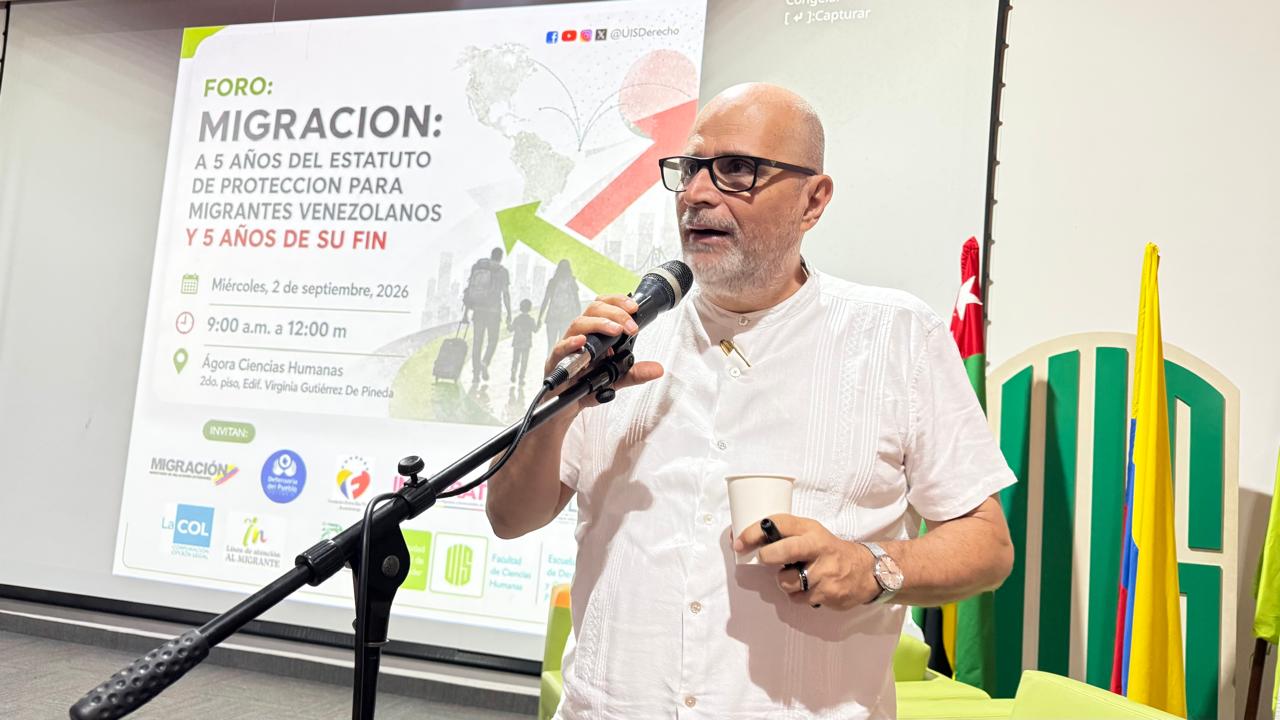
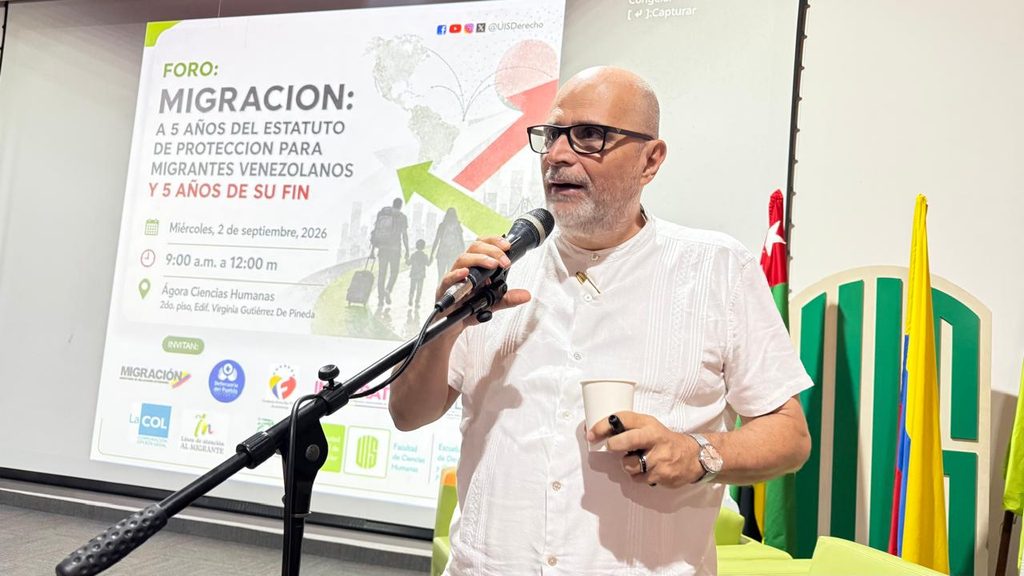
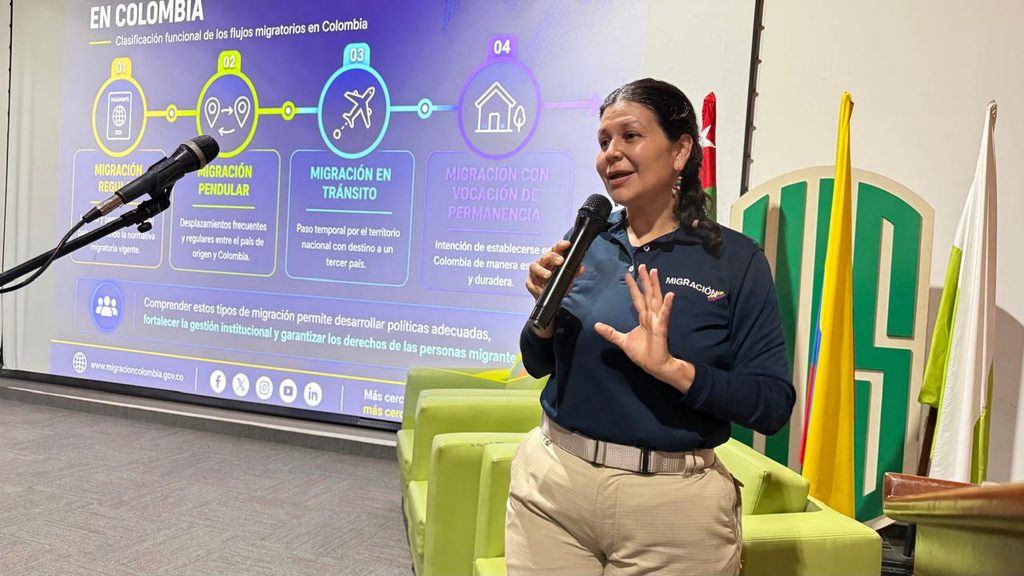
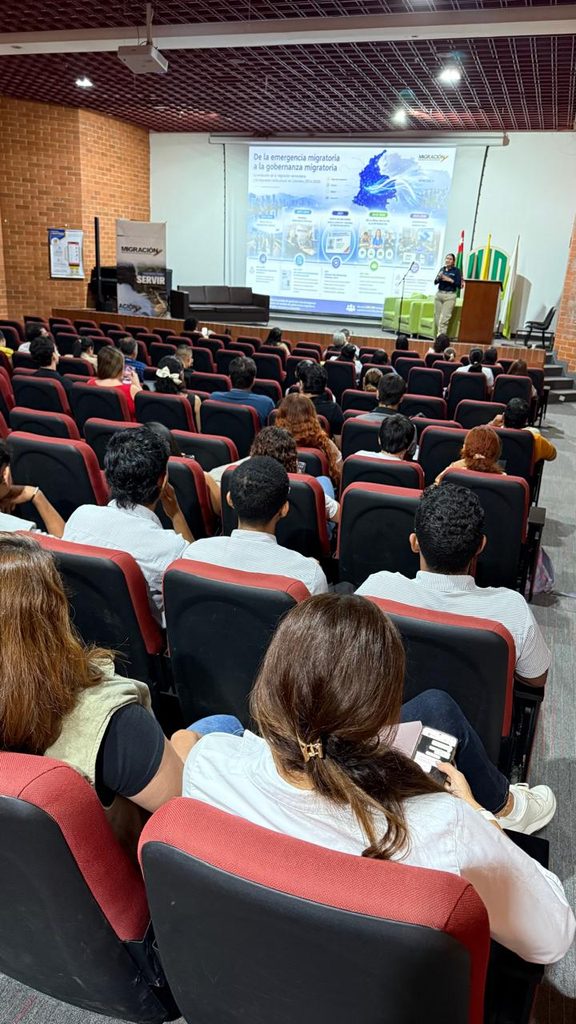
This assessment was one of the main topics discussed during the forum “Migration: Five Years of the Temporary Protection Statute for Venezuelan Migrants and Five Years Until Its End,” held at the Ágora of the Faculty of Human Sciences, with the participation of Migración Colombia, the Ombudsman’s Office, academia, educational institutions, and social organizations.
For Iván Padilla Moreno, advisor at the Legal Clinic and coordinator of UIS’s Migration Support Program, the event represents a key opportunity to analyze the future of the Venezuelan population in Colombia. He explained that the Statute, established in 2021, created a pathway toward regularization for millions of migrants, and that the current challenge is to move toward more stable residency processes.
More than 1,100 people have received support from UIS
UIS has supported this process directly in the region. Through its Migration Support Program, the Legal Clinic assisted 1,163 people between 2021 and 2026, providing guidance on permits, regularization, procedures before Migración Colombia and the Ministry of Foreign Affairs, as well as actions to protect fundamental rights related to healthcare, education, and other services.
In addition, 52 legal assistance brigades were carried out between 2021 and 2025, with an average of 20 people assisted per session, for an estimated total of 1,040 consultations. These brigades have made it possible to bring legal services to municipalities such as Bucaramanga, Girón, Piedecuesta, Floridablanca, and San Vicente.
“Over these five years, we have provided assistance to a little more than 1,100 people,” said Padilla Moreno, who also highlighted the University’s work with schools, universities, and social organizations to ensure that legal information reaches communities directly.
Meanwhile, Javier Alejandro Acevedo Guerrero, director of the School of Law and Political Science, emphasized that the challenge is to expand assistance through a differentiated approach and strengthen support in areas such as healthcare, education, employment, and the prison system.
“We want to strengthen assistance to the migrant population through the Legal Clinic,” said Acevedo, also highlighting the importance of consolidating partnerships with organizations engaged in humanitarian work and the defense of human rights.
Migration is also experienced in schools
The impact of migration is also reflected in classrooms. Marcela Caballero Ramírez, a teacher at Colegio de Santander, highlighted the support provided by UIS to migrant students and their families in documentation processes and access to healthcare and education. “We are one of the schools with the largest migrant population in our classrooms,” she said.
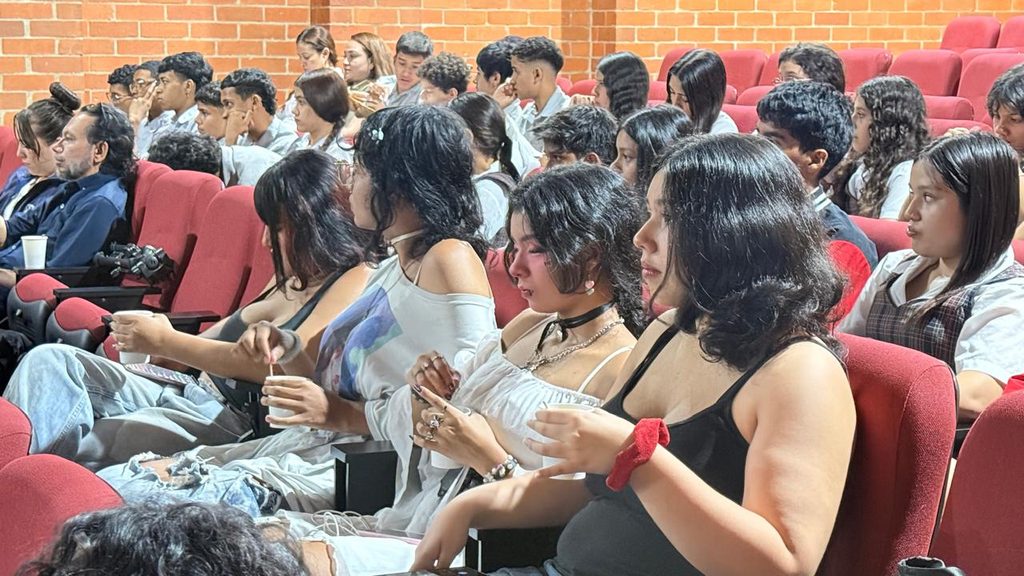
For this forum, Colegio de Santander participated with 50 ninth-, tenth-, and eleventh-grade students in an experience aimed at helping younger generations understand migration from the perspectives of rights, inclusion, and coexistence.
Through legal assistance brigades, legal counseling, training, work with educational institutions, and strategic partnerships, UIS continues to pursue an approach that goes beyond administrative procedures: supporting the migrant population so that regularization translates into rights, opportunities, and a dignified life in Colombia.
Key figures (as of December 31, 2024)
- Venezuelan migrants in Colombia: 2,815,611
- Santander: 117,444
- Bucaramanga: 59,036
Because behind every procedure there is a story. Behind every document there is a family. And behind every migrant person is the right to start over with dignity.