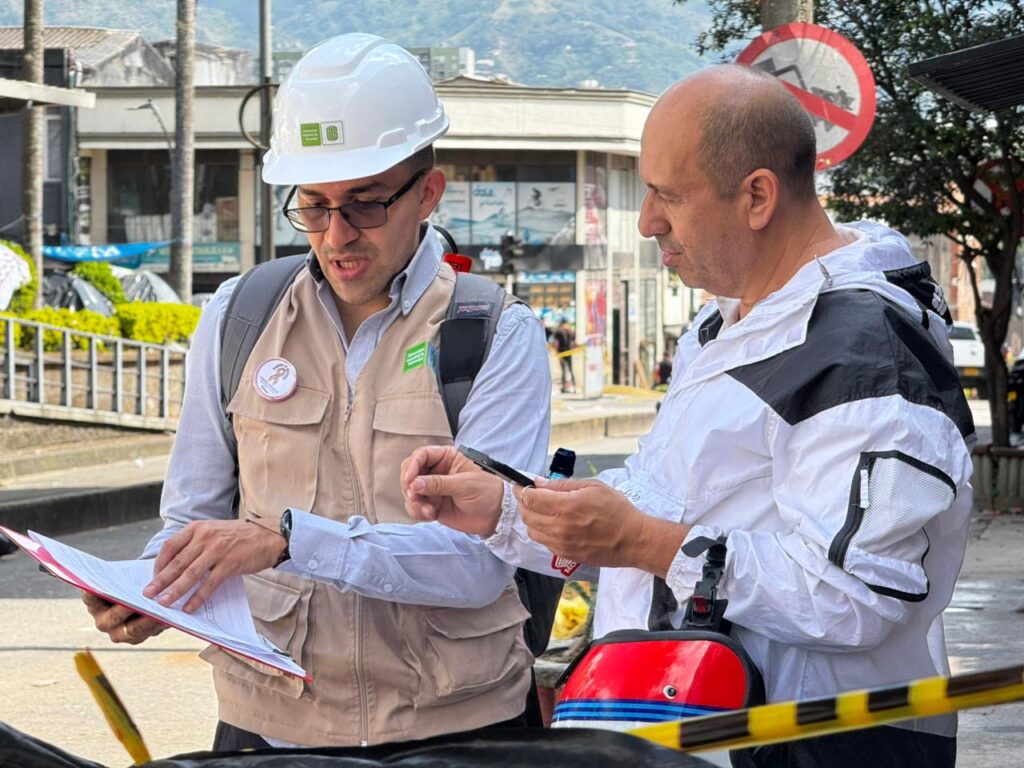
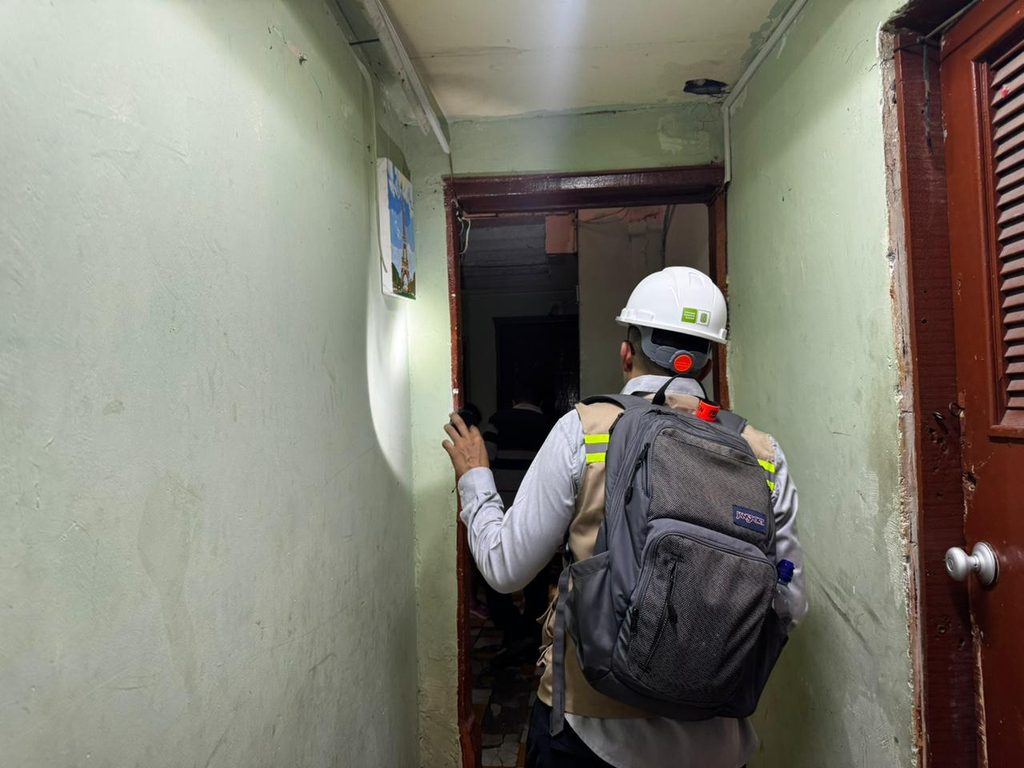
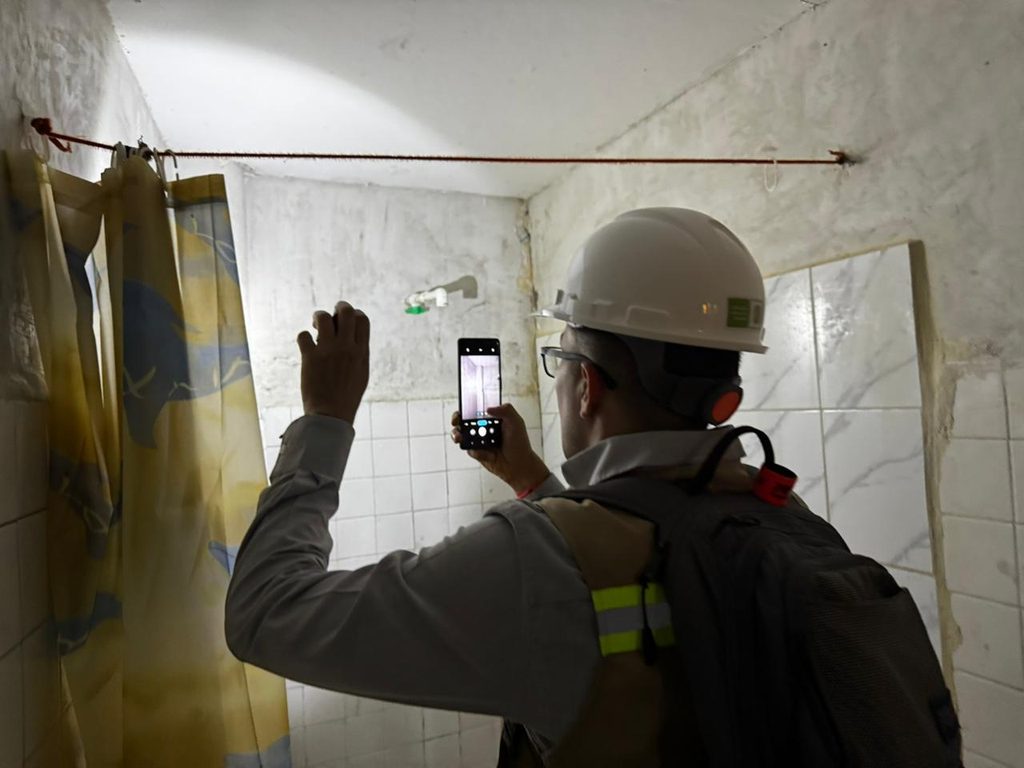
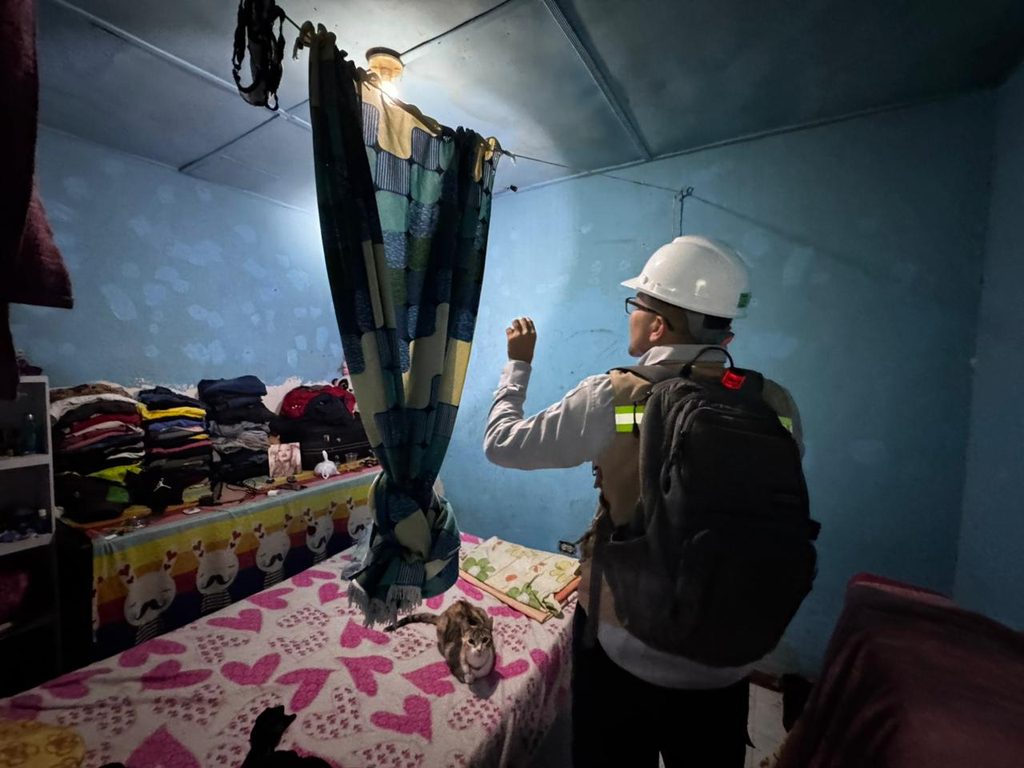
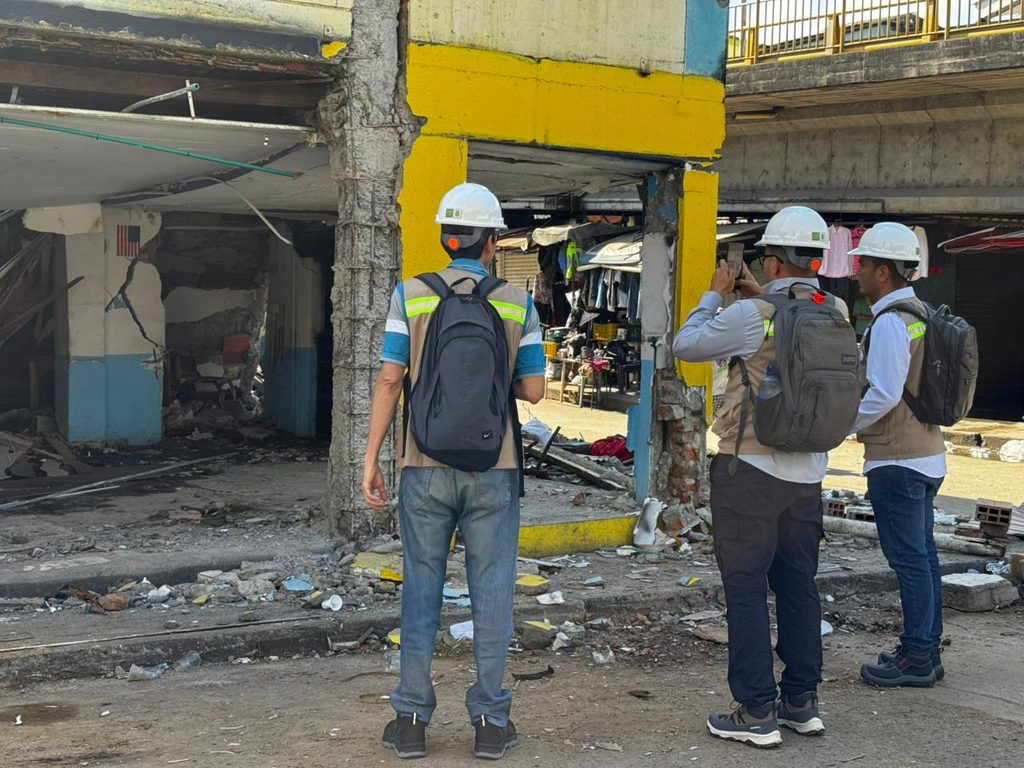
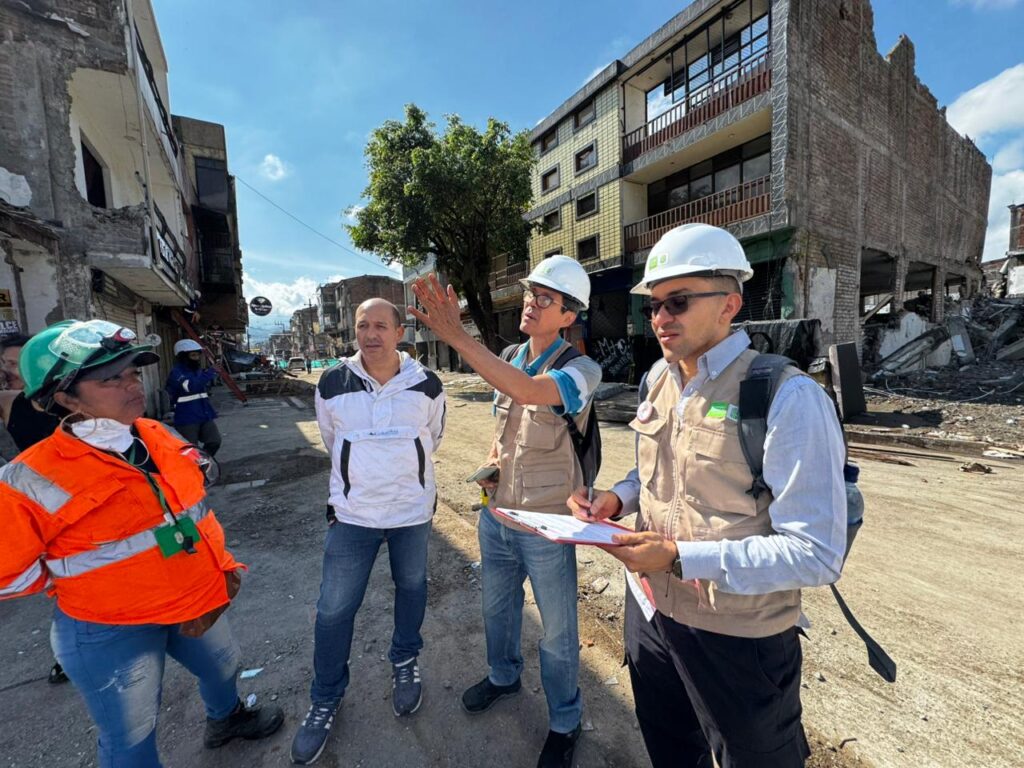
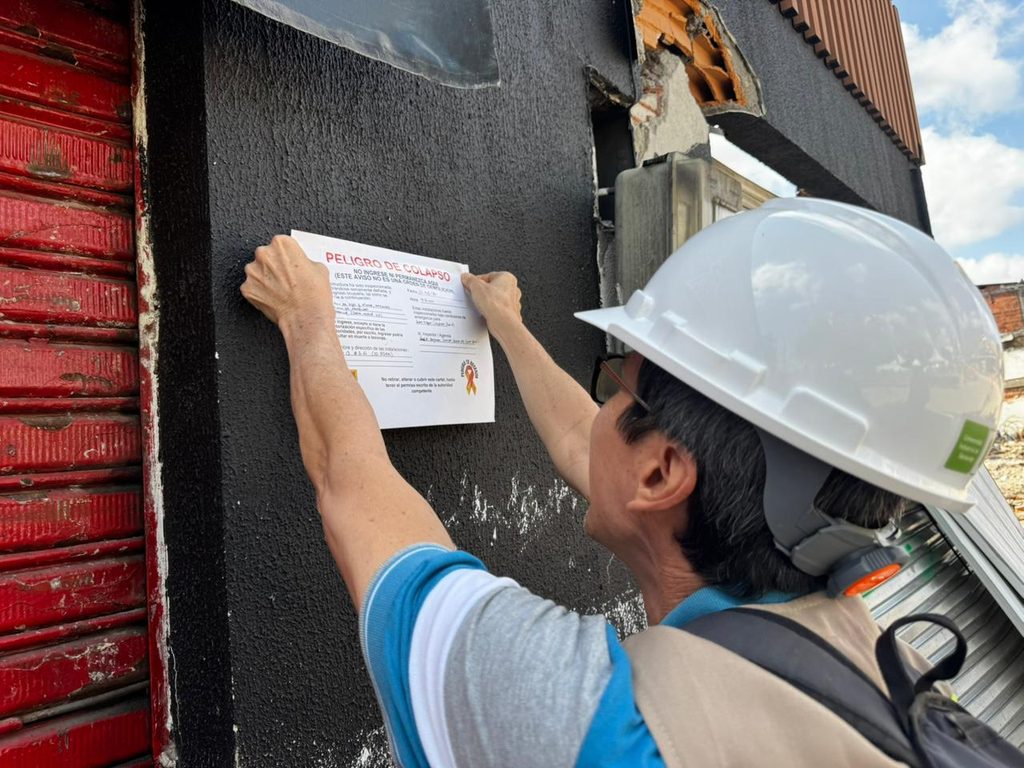
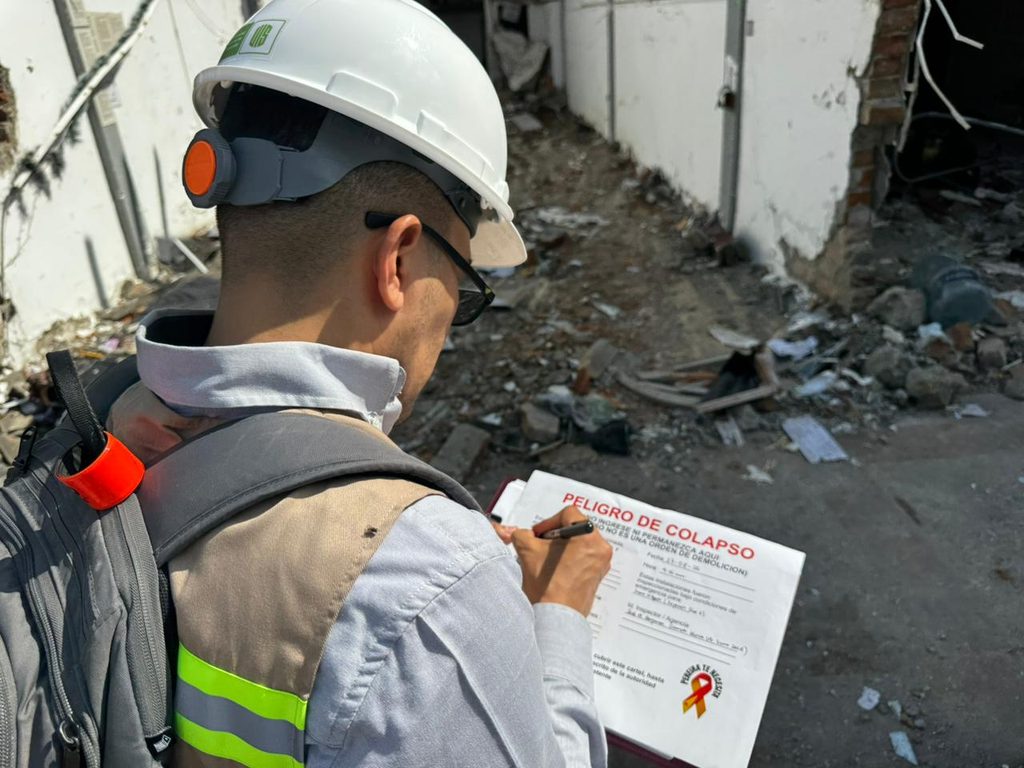
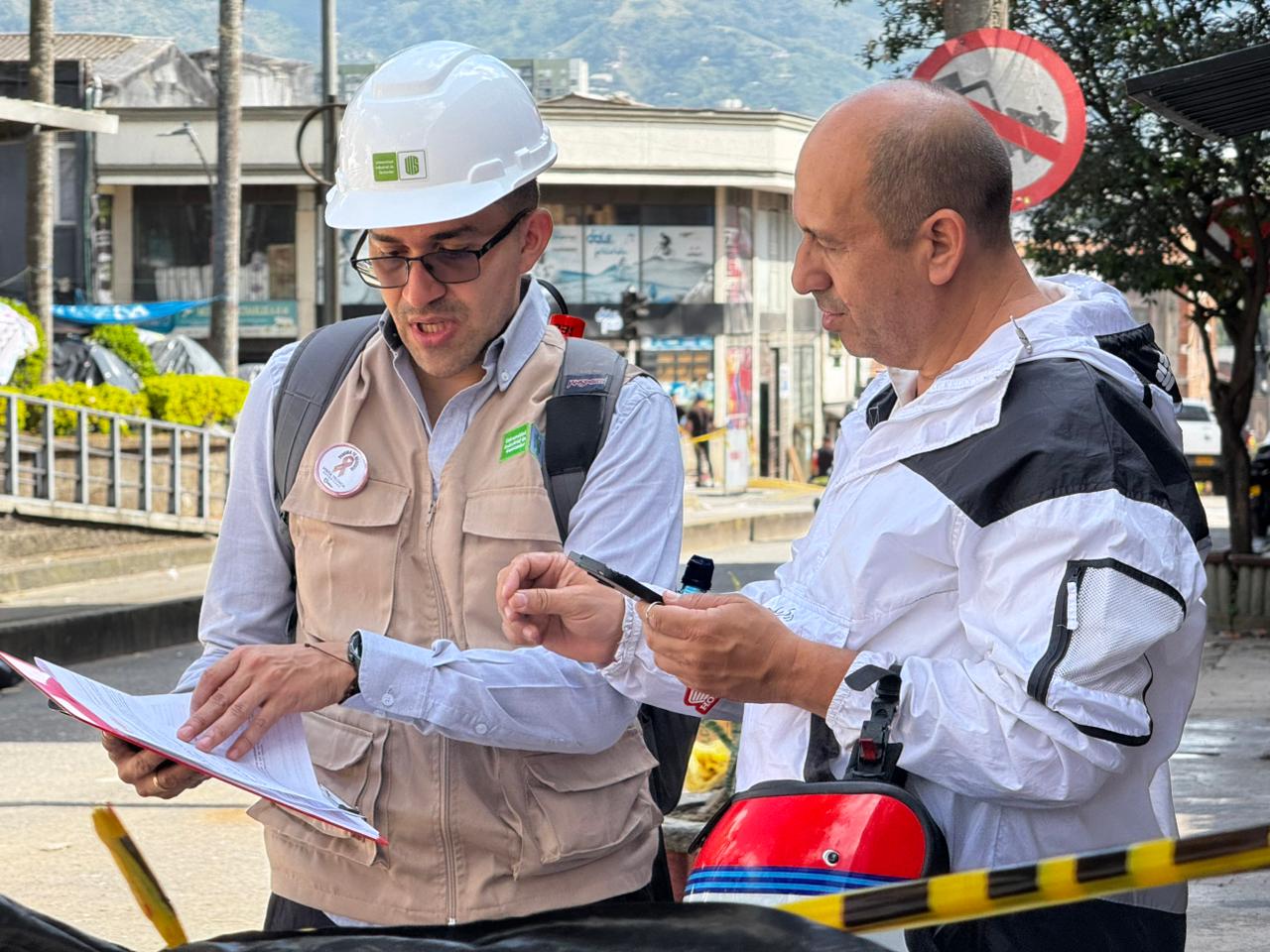
On the second day of the UIS Pereira Mission, 25 professors, graduates and graduate students from the School of Civil Engineering are conducting specialized inspections in downtown Pereira and speaking with property owners and residents to explain the risks identified.
The UIS Pereira Mission is advancing the specialized assessment of buildings affected by the earthquake that struck on August 10. On its second day of work, professors, graduates and graduate students from the School of Civil Engineering of the Universidad Industrial de Santander (UIS) are working in downtown Pereira and surrounding areas, evaluating structures and providing technical information to support local authorities in making decisions about their recovery.
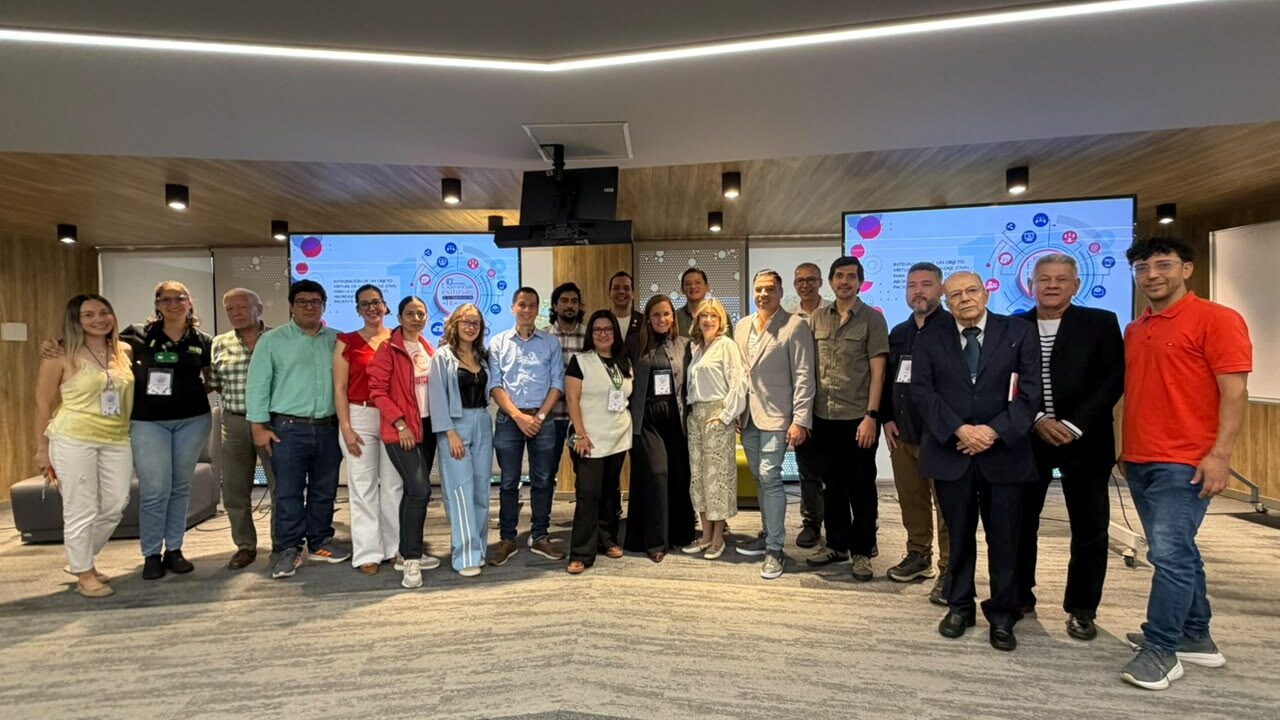
The mission brings together 25 professionals: four full-time professors from the School of Civil Engineering, three adjunct professors, three students from research programs and 15 volunteer graduates of UIS specialization and master’s programs in Structural Engineering.
The team is working in coordination with local authorities and focusing its efforts on buildings that require a specialized assessment following the initial emergency inspections carried out after the earthquake.
In downtown Pereira, UIS assesses the most affected structures
This Thursday, the UIS team is working around Parque de la Libertad and surrounding areas, one of the city’s critical sectors. There, the professionals are conducting Level 2, or Phase 2, inspections, a detailed assessment designed to determine the condition of structures and provide technical recommendations to the authorities.
José Miguel Benjumea Royero, a member of the UIS Pereira Mission, explained that the process begins by ensuring the safety of the inspection teams themselves.
“We begin by reviewing the overall stability, making sure that we do not put the lives of the inspection personnel at risk.”
The engineers first check for excessive displacement, loose walls and other conditions that could pose a danger. Once it is safe to enter a structure, they conduct a more detailed assessment of the damage.
The evaluation focuses on the main structural elements responsible for resisting both vertical and lateral loads. The professionals therefore examine columns, beams and connections, as well as conditions such as excessive cracking and exposed reinforcing steel.
“We inspect whether there is damage to the columns, whether the reinforcing steel is exposed, whether there is excessive cracking, and we also examine the beams and connections,” Benjumea explained.
Olso, The assessment also includes non-structural elements, such as partition walls, facades and parapets. Although these components are not part of the main structural system, their deterioration or collapse can pose a serious risk to people inside or around a building.
“Even if the structural system is in very good condition, the collapse of a partition wall could pose a danger to the lives of the occupants.”
Every structure is also a home
The work of the UIS Pereira Mission does not end when engineers inspect a column, document a crack or assess a damaged wall. Every evaluation involves people who need to understand what is happening to the place where they live, work or have built their assets.
For this reason, alongside the technical assessment, the professionals maintain dialogue with property owners and residents of the buildings they inspect, explaining the risks identified and listening to their concerns.
For Benjumea, this component is essential because technical recommendations can directly affect families and their property.
“We understand that our decision, or the information we provide to DIGER, also affects their property and assets.”
The conversations with the community seek to clearly explain the conditions identified and, above all, the risks that could compromise people’s safety.
“The idea is to explain very clearly, based on our assessment, the risk that we identify, especially when it comes to their lives, so that the safety and lives of the community are not put at risk.”
Behind every inspection, therefore, there is much more than a damaged structure: there is a family waiting for answers, a business seeking to reopen, a lifetime of property and a community trying to recover its daily life.
An assessment that can determine the future of a building
The results of each inspection are recorded using a form that includes different damage indices. Based on this information, the specialists prepare a technical recommendation for the local authorities.
Depending on the conditions identified, a structure may require repairs using conventional techniques, more advanced interventions or, when the damage is too severe, a recommendation for demolition.
The experts also consider cases in which the available information is not sufficient to make a final determination.
“If we do not have enough information, we ask DIGER to conduct a third inspection, which would be the final one, before deciding whether a house or building should be demolished,” Benjumea said.
This methodology seeks to ensure that decisions are based on sufficient technical information, with the safety of people as the primary consideration.
A mission built on UIS training
The UIS Pereira Mission is made up of professionals with different levels of experience and specialized training. The group includes four full-time professors from the School of Civil Engineering, three adjunct professors, three students from research programs and 15 volunteer graduates of UIS specialization and master’s programs in Structural Engineering.
This combination allows professionals to share knowledge and experience during fieldwork while strengthening the capacity to respond to emergencies.
Professor Orlando Arroyo highlighted the value of this graduate-level training and its contribution to developing professionals prepared to participate in post-disaster reconnaissance and assessment.
“The work carried out by graduates of the university’s specialization and master’s programs in Structural Engineering has contributed to building capacity.”
For the professor, this experience also represents an important capability for future emergencies, including potential situations in Bucaramanga, by ensuring that trained and experienced professionals are available to carry out reconnaissance activities.
Pereira, a city in need of answers
The UIS Pereira Mission will remain in the field throughout the scheduled work period, addressing structures prioritized by local authorities.
According to information shared by the Unified Command Post (PMU), approximately 660 buildings are currently undergoing inspection following the earthquake. Preliminary information from local authorities indicates that between 400 and 600 buildings could be at risk of collapse, making specialized assessments essential to determine the appropriate action in each case.
The work of UIS engineers seeks to contribute to this response by gathering technical information and developing recommendations to help establish the condition of the structures and possible alternatives for intervention.
But the mission also conveys a lesson that goes beyond figures and structures: engineering is not practiced only through plans and calculations; it is also practiced in front of people who need answers when their homes, property and safety have been affected.
In Pereira, professors, graduates and graduate students from the School of Civil Engineering at the Universidad Industrial de Santander continue to walk through the affected areas, assessing structures and speaking with families