

Did you know that in Santander, during 2025, there were more than 9,000 cases of dengue fever and 93 positive cases of Chagas disease (up to July), according to figures from the Santander Departmental Secretariat?
Dengue, Chagas disease, and leishmaniasis are vector-borne diseases that continue to represent a high mortality burden in Santander and other parts of the country, especially in rural areas and vulnerable populations.
According to Lina María Vera Cala, a physician with a master’s degree in epidemiology and professor at the Industrial University of Santander, this gap can be explained, to a large extent, by the fact that these diseases are linked to poverty and developing countries, which reduces the interest of the international pharmaceutical industry.
Against this backdrop, the Program for the Promotion of Sovereignty in the Care of Vector-Borne Diseases (ETV) in the context of One Health “Profosa-ETV” has emerged, a scientific initiative that seeks to strengthen health sovereignty through the development of local solutions adapted to local contexts.
“Vector-borne diseases are very important in terms of the number of cases and mortality they cause here in Santander. While some countries have vaccines for dengue, they do not for the others,” says Vera Cala.
The main objective of this program is to implement innovative strategies for the control, diagnosis, and treatment of these diseases.
Vector transmission

The prevalence of TVE in Colombia is influenced by various factors, including climate change, growing population density in endemic areas, and lack of access to adequate health services. Rural areas, often marginalized and impoverished, are the most affected, the project highlights. In this regard, Profosa-ETV proposes a comprehensive approach that combines modern science with traditional wisdom and community participation to address these problems in an effective and sustainable manner.
Professor Vera Cala asserts that prevention and control can be improved through good health education, primary health care, or a health system based on primary care. Advances must also be made in diagnosis and treatment because this is the only way to truly control and eliminate these diseases.
The program, funded by the Ministry of Science, Technology, and Innovation (Minciencias), will be implemented over four years in Mogotes, Socorro, El Carmen de Chucuri, Lebrija, Aguachica, and Cubará, selected for their high incidence of these diseases and their epidemiological connection to the Santander region.
This project is divided into four areas. The first two are diagnostic technologies and disease management, treatment, and control, followed by the primary health care stage and impact assessment of control or elimination.
Diagnosis

The lack of adequate and timely diagnosis has been a barrier to controlling TSE. To counteract this, Vera Cala explains that the program relies on advanced technologies such as the portable CRISPR/Cas system for detecting parasites and viruses, and the development of a predictive model for Chagas cardiomyopathy using machine learning (ML).
This system allows for more accurate and rapid diagnosis, and also facilitates the implementation of appropriate treatments in the early stages of the disease, thus improving recovery rates and reducing mortality.
The proposal is to create a predictive model based on machine learning algorithms. Based on data analysis, the aim is to identify the probability of infection in a person, facilitating quick and timely decisions in the territory.
Management, treatment, and control

A second component of the program will be the implementation of a preventive and predictive primary health care (PHC) model. This model is tailored to the specific needs of local communities and focuses on the prevention and control of VST in family, community, school, and institutional settings. Participatory action research (PAR) is used to facilitate active community participation in the process of adapting and implementing the model. This methodology ensures that the proposed solutions are culturally appropriate and sustainable in the long term.
On the other hand, an Analytical Unit for Impact Assessment is established, which allows for the identification, measurement, and characterization of variables for the prevention, control, and management of VST. This assessment combines qualitative and quantitative methodologies to provide a comprehensive view of achievements and areas for improvement.
“The evaluation indicators include the reduction in the incidence of VST, the effectiveness of the technologies implemented, community participation and training, and the sustainability and replicability of the program,” explains Professor Lina María.
“This strategy will enable the design of care pathways tailored to the social, cultural, and geographical conditions of each territory, strengthening prevention, early diagnosis, and timely treatment. The integration of technological tools developed in other components will enable healthcare teams to conduct assessments and make decisions directly in the field,” says Vera Cala.
One Health
With this project, researchers aim to reduce risks and strengthen control of health issues beyond direct contagion.
The project is being implemented under the One Health approach, which takes a comprehensive view that recognizes how social, environmental, and infrastructure conditions have a differentiated impact on the health and well-being of women and men.
It also places equity at the center, recognizing that structural inequalities condition access to safe environments, adequate services, and opportunities for well-being.
This model promotes coordinated action between different sectors and disciplines, understanding that health depends not only on medical care, but also on factors such as the environment, access to safe and healthy spaces, and the social dynamics that permeate everyday life. By including the interaction between people, animals, plants, and the built environment, this perspective contributes to reducing structural inequalities and strengthening more equitable responses.
Funded by MinCiencias
The research project is funded by the Ministry of Science, Technology, and Innovation. It formally began in August 2025 after the signing of the transfer of funds for its implementation.
The initiative has a total duration of four years and is scheduled to run until July 2029, with a schedule organized into defined phases for each term. Although the funding has already been transferred in full by the Ministry, the execution of the resources is subject to a monitoring and control scheme, which requires the submission of semi-annual reports to authorize their use. This mechanism ensures the proper administration of funds and the fulfillment of the objectives set for each stage of the project.
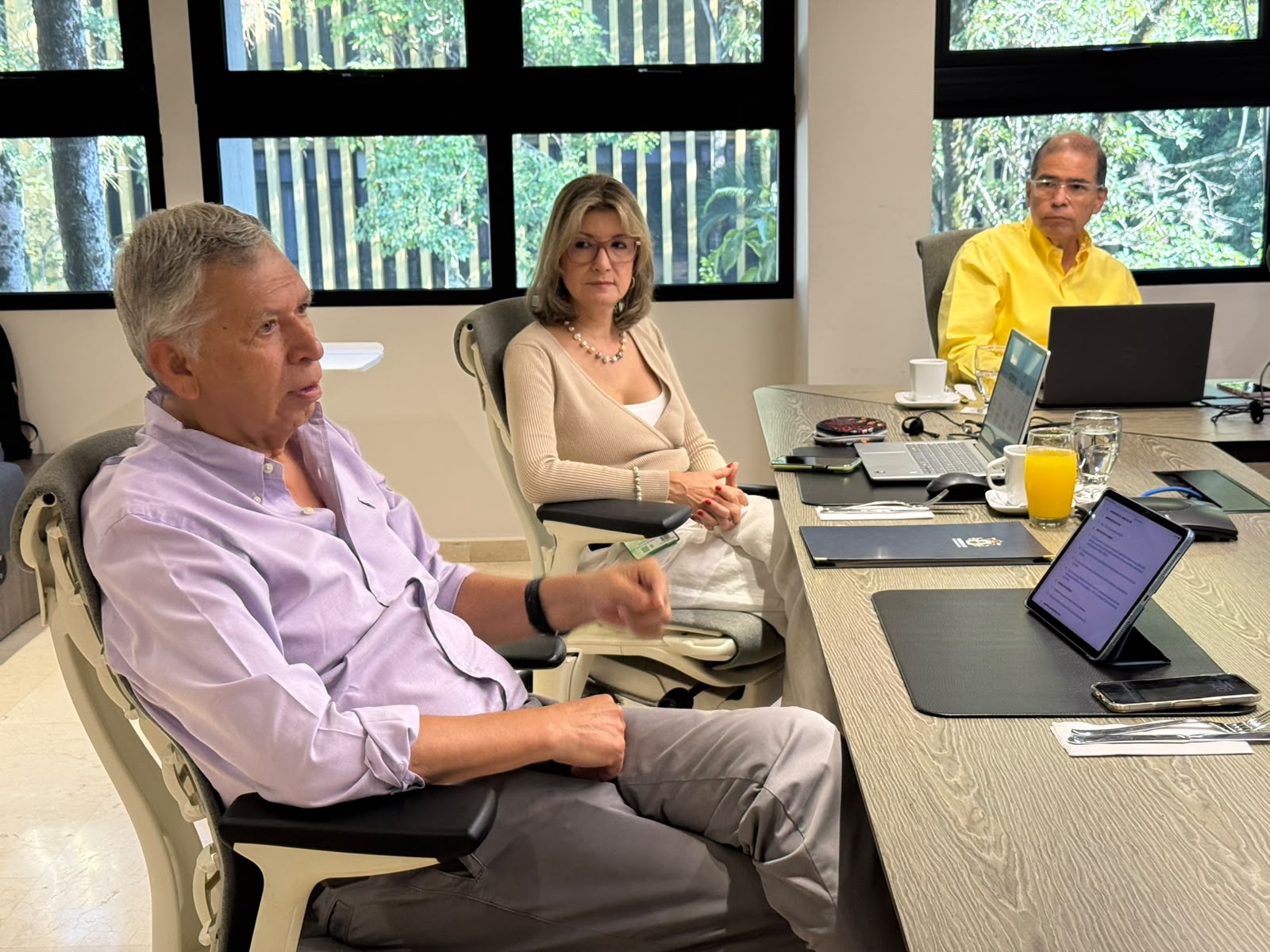
In addition to Professor Lina María, other principal investigators of the projects that are part of PROFOSA-ETV are Jonny Edward Duque Luna, professor at the UIS School of Medicine, attached to the Department of Basic Sciences and member of the CINTROP Research Group, and senior researcher at Minciencias; Stelia Carolina Mendez Sanchez, member of the Biochemistry and Microbiology Research Group, senior researcher at Minciencias, and associate professor at the University’s School of Chemistry; and Diana Carolina Tiga, professor at the UIS School of Nursing and member of the GRINFER Research Group.