

The Industrial University of Santander (UIS) kicked off the Pre-Congress on Territorial Prospectives – Santander Vision 2050, an academic space aimed at reflecting on the possible futures of the department and promoting strategic dialogues with national and international experts. The opening took place in the Mechanical Engineering Auditorium on the central campus and was attended by partner institutions such as the Bucaramanga Chamber of Commerce and Prosantander.
Trends and challenges
The day began with the conference “Santander 2050: Prospectives and Trends for Regional Development,” led by PhD. Gustavo Britto, researcher at the Center for Regional Development and Planning at the Federal University of Minas Gerais (Brazil). During his presentation, Britto outlined global trends and key regional challenges for Santander and Colombia to consolidate sustainable and inclusive growth strategies.
“Sharing experiences in an environment like this is the most important thing for generating collaborative networks, so that discussions don’t just stay there, but are transformed into sustained actions and enable collective change for all regions,” said the researcher.
Subsequently, the first academic panel was held, moderated by Professor Cristian Blanco, Vice-Rector for Research and Extension at the UIS. Academics Edgar Fernando Castillo, Julián Rodríguez, and Luis Carlos Gómez also participated in this panel, joining the guest speaker in analyzing topics related to innovation, smart territories, and regional capacities to address changing scenarios


Academia, productive and public sectors
The second morning conference, entitled “Colombia’s future prospects: a dialogue on expectations and realities,” was led by Dr. César Giraldo, co-director of the Banco de la República. Giraldo shared a broad vision of the country’s economic challenges and emerging opportunities in national forecasting exercises.
“Public universities reflect the interests of the region and the country; monetary and economic policy cannot be isolated from the territories. Dialogue is necessary to reach agreements and understand the realities that allow us to tune in to what Colombia wants,” said César Giraldo.

The morning session concluded with a second academic panel, moderated by Professor Freddy Ruiz from the UIS School of Economics. Participants included Dr. César Giraldo, academic Armando Martínez Garnica, and María Alejandra Sampayo Guerrero, Vice President of Global Growth and Sustainability at the Bucaramanga Chamber of Commerce. The conversation revolved around inter-institutional coordination, sustainable development, and the joint commitment of the public and private sectors to building the Santander 2050 vision.
“We need greater coordination between academia, the productive sector, and the public sector. Discussions cannot be based on a single vision. We need joint scenarios that allow for more enriched and comprehensive long-term exercises,” said María Alejandra Sampayo.


Young people contributed
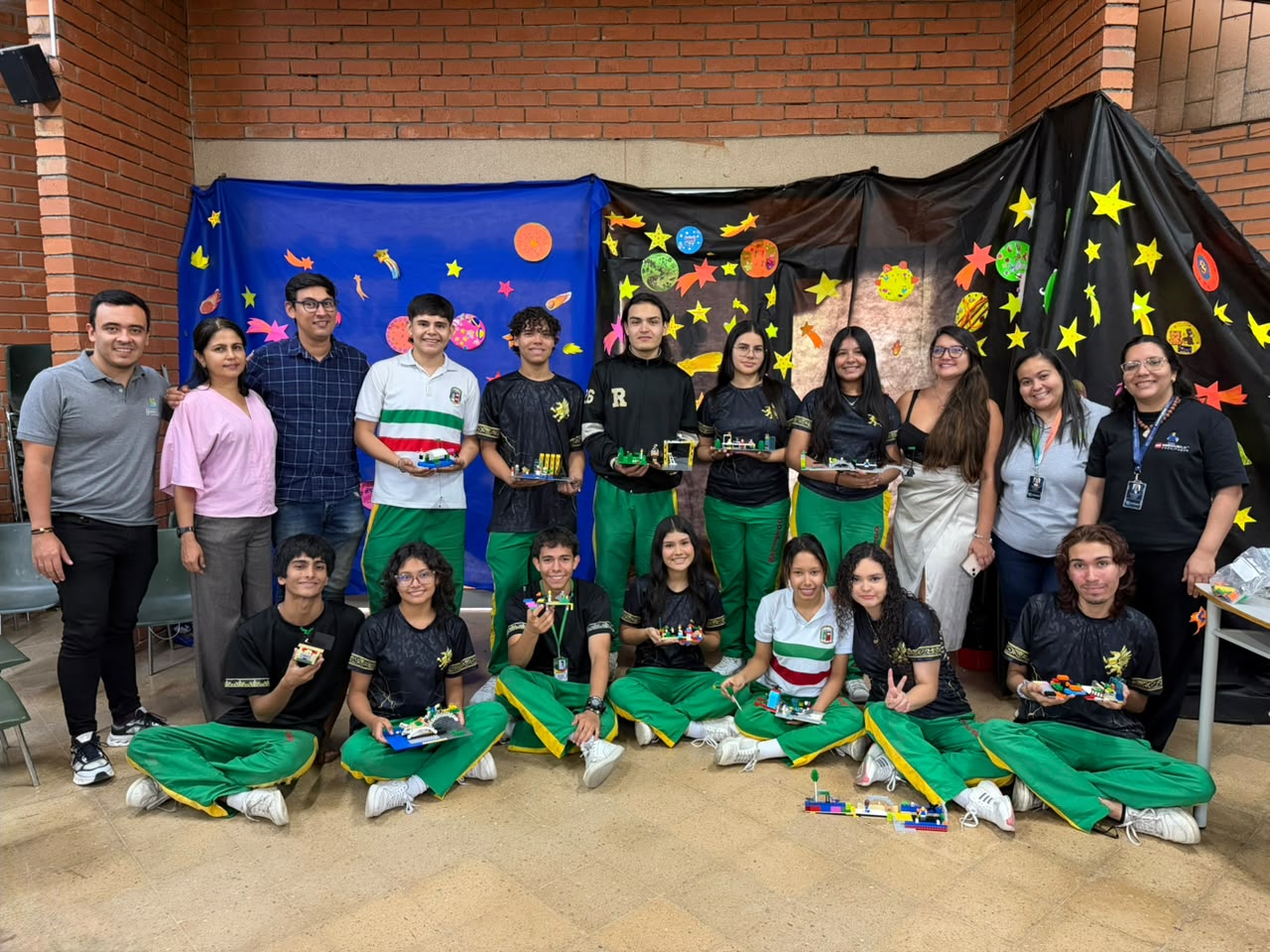
The perspective of young people was also present. Antonella Coronel, a student at the Fundación Colegio UIS, highlighted the importance of youth participation in building possible futures: “The territory in 2050 will depend on the new political, social, and economic contexts that emerge, but I see it as full of opportunities. We have a solid foundation in students and young people, who are very involved in these processes.”
With this first day, the UIS marked the beginning of a meeting that will continue tomorrow with new discussions, with the aim of further strengthening regional dialogue and the collective construction of strategic routes for the future of the department.