
The Proinapsa Institute at the Industrial University of Santander participated in FIKA LIV 2026, an international conference organized by the National Open and Distance University (UNAD), which took place in Bucaramanga under the theme “Caring Communities: Conscious, Healthy, and Sustainable.”
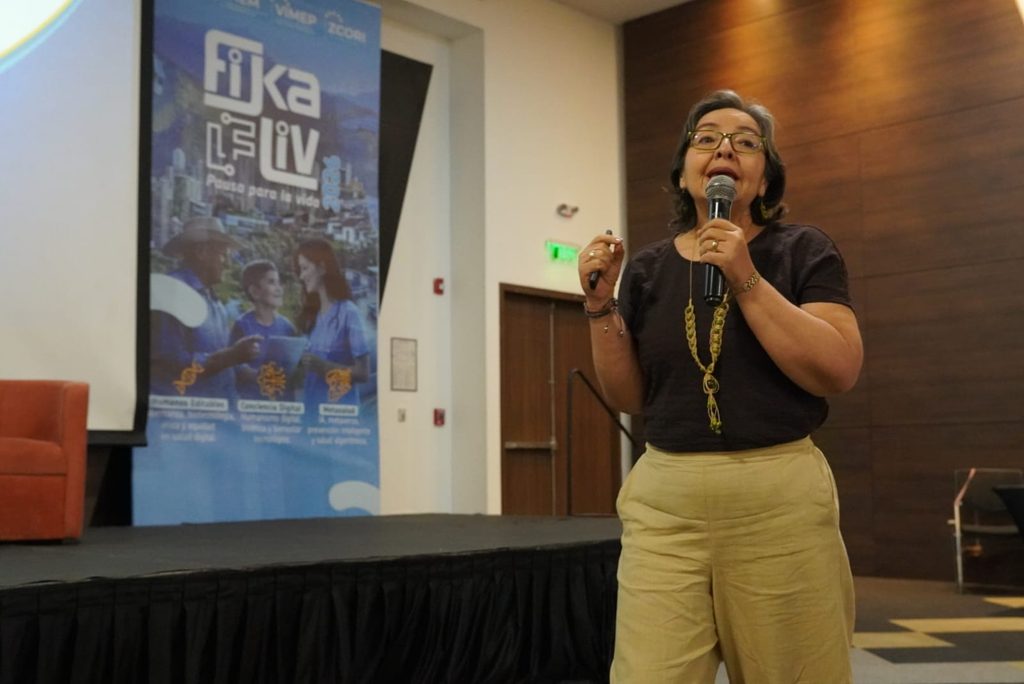
At the event, Alba Yaneth Rincón Méndez, a health promotion researcher and coordinator of the Research Department at the Proinapsa UIS Institute, presented the paper “Health Promotion in Schools: Lessons Learned and Best Practices,” in which she shared insights from the Institute’s work with educational communities.
One of the central aspects of her presentation was the importance of recognizing that health promotion requires the participation and coordination of different sectors and stakeholders. In this context, schools play a fundamental role, not only as educational spaces but also as settings with knowledge and experiences that must be acknowledged in health promotion processes.
“Best practices in health promotion become a reality through the recognition of all key sectors and stakeholders—especially schools—by valuing and respecting their history and knowledge,” emphasized Alba Yaneth.
This ties in with Proinapsa UIS’s 40-year history, during which it has developed initiatives aimed at strengthening health promotion in various settings and communities. For the speaker, this experience confirmed the importance of maintaining a continuous learning mindset in the face of social and technological changes.
One of the current challenges relates to the emergence of new settings for interaction—especially those mediated by digital technologies—which open up possibilities that are being explored across various fields of health and also raise questions for those working in health promotion.
Rather than viewing these technologies solely as tools, the event encouraged participants to recognize that digital spaces are already part of everyday life, particularly for children and adolescents. Meaning, relationships, and ways of understanding health and well-being are also constructed within these spaces.
“Today, the space where people—especially children and adolescents—live is a continuum between the physical and digital worlds. In this digital space, meanings and ways of being, thinking, and feeling about health and life are shaped,” noted Rincón Méndez.
From this perspective, in-person and digital environments are not necessarily separate worlds; for the Institute, this represents a new challenge for health promotion and the development of strategies that respond to the realities of communities.
Through its participation in FIKA LIV 2026, Proinapsa UIS reaffirmed the importance of continuing to generate knowledge, learning from communities, and incorporating new tools to strengthen health promotion in the settings where daily life takes place.