

With the aim of strengthening efficient, sustainable agriculture that is resilient to the effects of climate change, the International Symposium on Plant Stress was launched at the Guatiguará Technology Park, the scientific headquarters of the Industrial University of Santander (UIS).
Under the slogan ‘Bases for the development of efficient, sustainable and climate change-resilient production systems’, the three-day event brings together national and international researchers, academics and experts in a space for scientific and technical exchange on plant responses to environmental stress and their implications for modern agriculture.
The symposium is led by the Colombian Agricultural Research Corporation (AGROSAVIA), in partnership with the UIS School of Biology, with the aim of consolidating a regional scientific community that addresses the challenges of climate change in the agricultural sector through research and innovation.
‘For the Guatiguará Technology Park, hosting this event represents a further consolidation of its role as a venue where the university comes into contact with the productive sector. The symposium addresses a very specific issue, namely plant stress, which is directly related to agricultural sustainability,’ said Jaime Alberto Camacho Pico, coordinator of the PTG.

The event features renowned speakers from countries such as the United States, Brazil, Ecuador, the United Kingdom, and Colombia, who will present advances and innovative proposals on plant physiology, crop resilience, and biotechnological strategies for dealing with biotic and abiotic stresses.
“This first international symposium reflects the knowledge that AGROSAVIA has developed in plant physiology. We are grateful to the UIS and the Guatiguará Technology Park for providing us with this important space for science, innovation and agricultural development in the region,” said Diego Alejandro Zárate Caicedo, AGROSAVIA’s regional director for Santander.
Academic contributions from the UIS
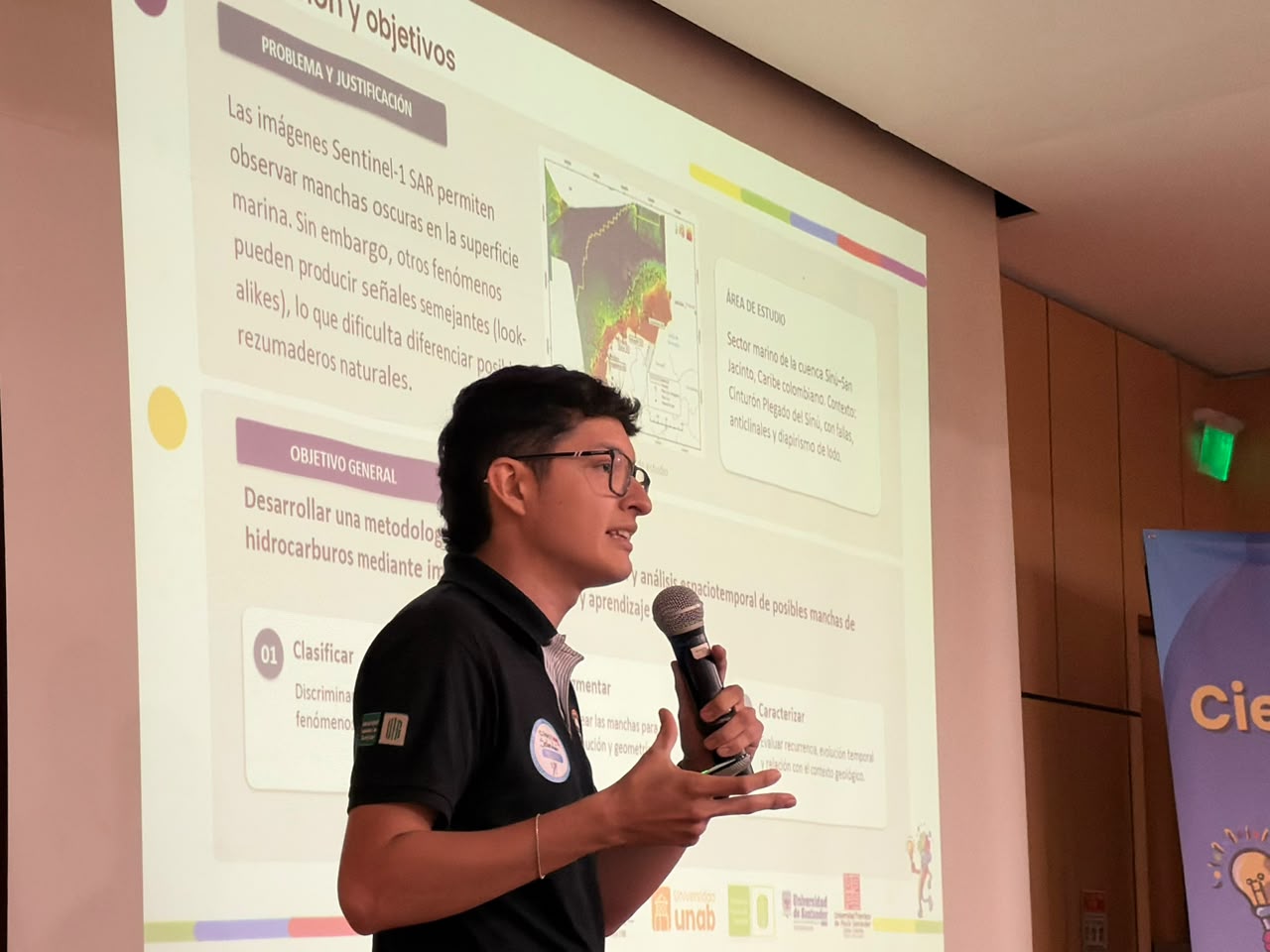
The Industrial University of Santander is actively participating in this meeting with outstanding presentations. Professor Nelson Rodríguez, from the School of Biology, presented the paper ‘Can the stimulation of phenotypic variation in crops improve their physiological tolerance to abiotic stress conditions?’, in which he proposed nature-based solutions and sustainable technologies to induce resistance in crops to factors such as drought, flooding or excessive solar radiation.

‘AGROSAVIA has been an important ally for the UIS in agricultural sector projects. My presentation addresses strategies to enhance the adaptive capacity of plants in the face of environmental stresses,’ said Rodríguez.
Likewise, Professor Luz Nayibe Garzón will present her research on ‘Strategies for improving bean resistance to ring spot’ on Tuesday, a key contribution to the development of more disease-resistant varieties.
From an international perspective, Professor Miguel González Meller of the University of Illinois at Chicago highlighted Colombia’s role in advancing sustainable agricultural models: ‘The UIS is a university that does not turn its back on new technologies. Colombia has made significant progress in sustainable models such as cocoa cultivation, and events like this reinforce that path.’

Connection with the territory and local knowledge
The symposium also represents an opportunity to bring academia and rural communities closer together, with the participation of representatives from regions such as Catatumbo, in the department of Norte de Santander.
‘Universities must work hand in hand with producers. When these spaces are created, they foster an exchange of knowledge that can transform work in the field,’ said José Franco Villegas, a resident of the municipality of Teorama.
This symposium has established itself as a key meeting point for international scientific cooperation and the formulation of solutions that strengthen food security and agricultural resilience. Thanks to the coordination between academia, the productive sector and rural communities, new paths are opening up towards a more adaptive agriculture in the face of climate change.
To view the full programme of the event, interested parties can visit the following link: