
Science from Santander once again earns a place of honor on the world stage. Five researchers affiliated with the Industrial University of Santander (UIS) were included in the 2025 edition of the prestigious Stanford List, the exclusive ranking that recognizes the top 2% most-cited scientists on the planet.
The academics are Vladímir V. Kouznetsov, Claudia Cristina Ortiz, Elena E. Stashenko, Laura A. Rodríguez-Villamizar, and Henry Arguello, who today represent not only UIS, but also Colombia in one of the most rigorous and respected indicators of scientific impact in the world.
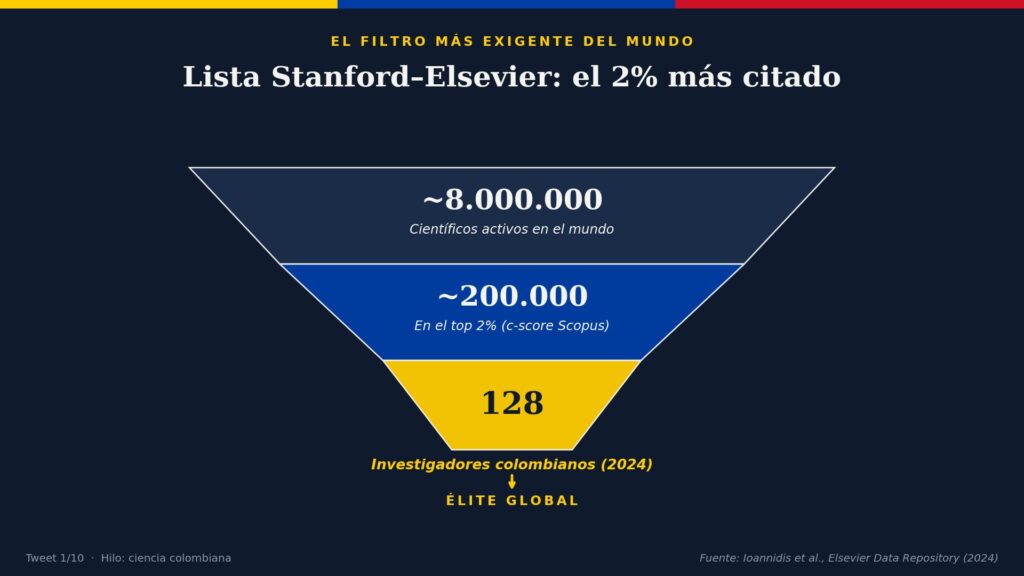
The ranking, coordinated by renowned epidemiologist John P. A. Ioannidis, annually evaluates more than eight million active researchers worldwide. Around 200,000 manage to enter this international scientific elite each year.
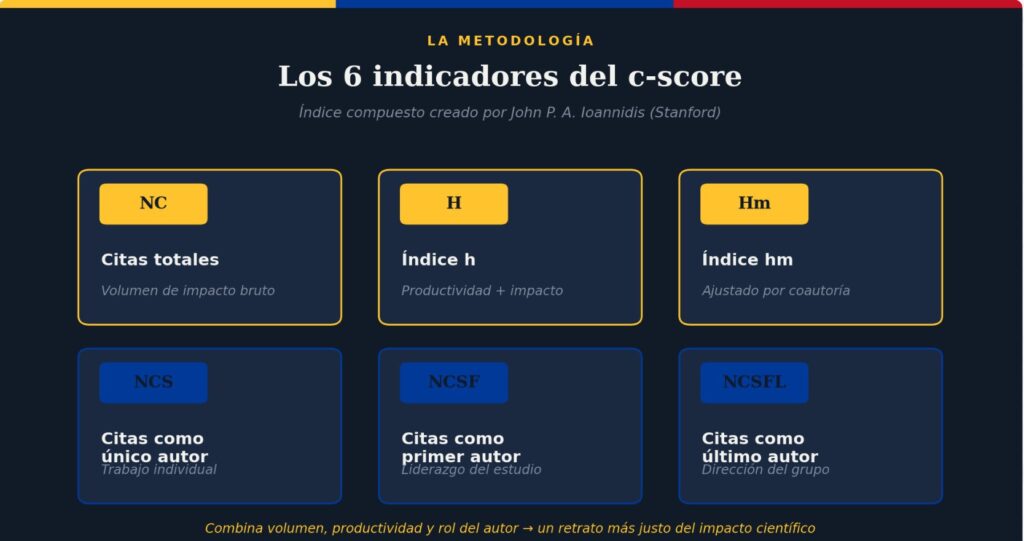
The recognition is not merely symbolic. The Stanford List uses a complex composite index known as the c-score, built from six metrics derived from the Scopus database: total number of citations, h-index, co-authorship-adjusted hm-index, citations as a single author, as first author, and as last author. The model measures not only how often a scientific work is cited, but also the leadership and actual contribution of the researcher in each publication.

The presence of these five names in the 2025 edition confirms the growing importance of research developed in Santander and consolidates UIS as one of the leading scientific hubs in Latin America.
“It is a tremendous honor to count them as colleagues and friends,” said Professor Luis Núñez, who shared the information along with data on the impact of the international ranking.
He added that “the list filters for those who produce knowledge that other scientists around the world use. Appearing on this list is a solid sign of real impact, not self-promotion or inflated local metrics. At UIS, we went from having three researchers on the list in 2024 to five in 2025.”
The news takes on even greater significance in a context where Latin American science faces budget limitations, brain drain, and structural difficulties competing on the global stage. Even so, from the laboratories and research groups in Bucaramanga, these scientists managed to carve out a place among the world elite of academic production.
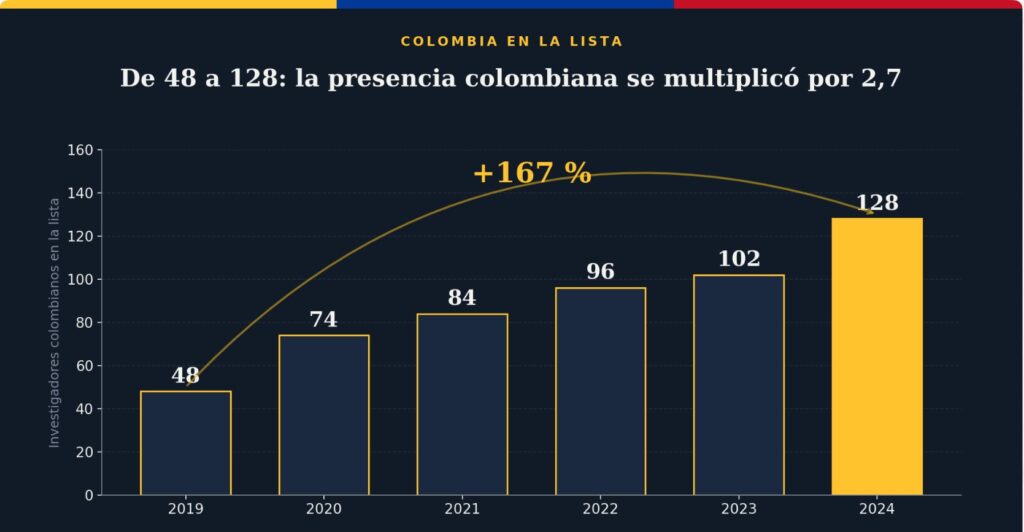
“Another important element emerging from the analysis of these data is the beginning of decentralized scientific growth in Colombia. In 2019, the names on the list were predominantly from Bogotá. Today, Medellín, Barranquilla, Cali, and Bucaramanga are emerging as centers of knowledge,” Professor Núñez explained.
Inclusion on the Stanford List not only raises the institutional prestige of UIS; it also positions Colombia in high-level scientific discussions in areas such as chemistry, public health, engineering, and applied technologies.
While thousands of universities around the world struggle to secure even one representative in this ranking, UIS celebrates five distinguished names who are now making history in Colombian science.