

From the municipality of Málaga, Santander, researchers from the Universidad Industrial de Santander (UIS) have discovered a new species of parasitic plant in the Loranthaceae family, identified as Aetanthus confusus, located in the Eastern Cordillera of the Andes. This finding, which once again places Colombia’s biodiversity on the global scientific stage, is the result of rigorous research conducted in collaboration with scientists from the Universidad de Antioquia.
The discovery was recently published in the international scientific journal Phytotaxa, one of the most recognized publications in plant taxonomy, and represents a key contribution to the knowledge of Colombian Andean flora—one of the richest and most diverse in the world.


A Discovery with the UIS Seal from the Territory
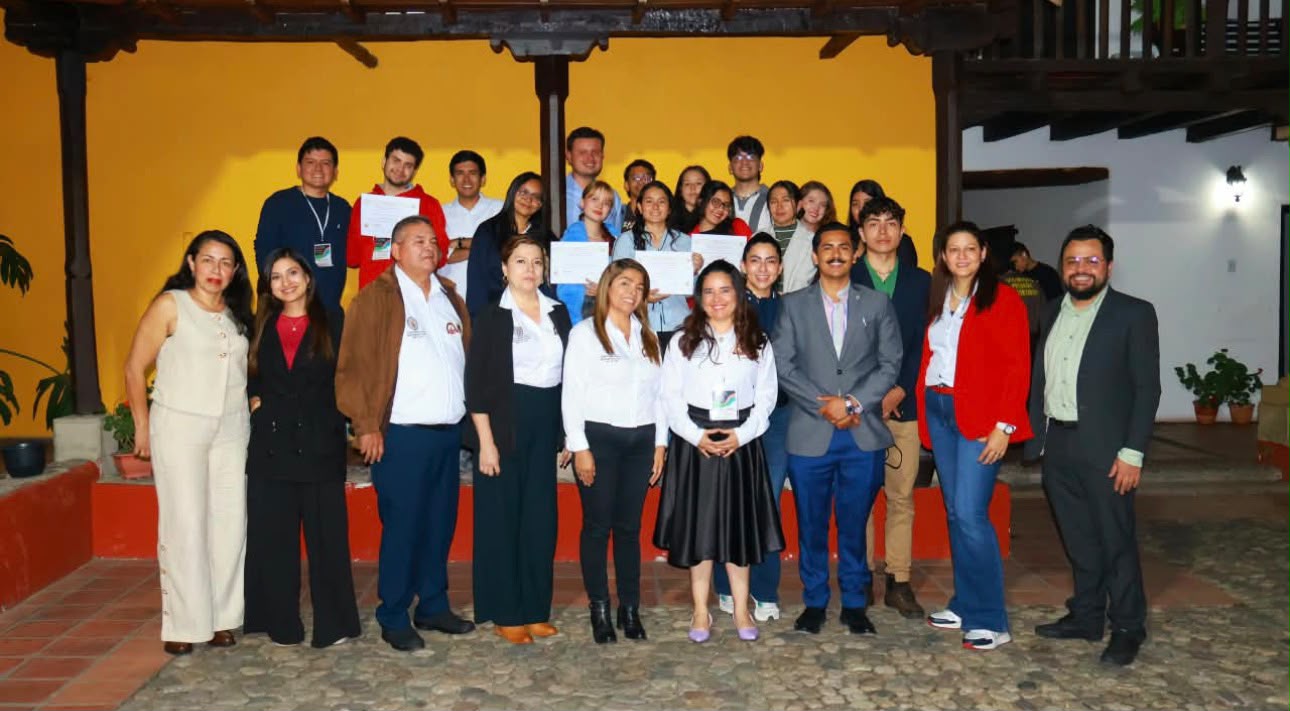
The finding was made as part of the undergraduate thesis of Susana Arango and Heidy Caro, with the collaboration of Jhon Murillo and under the supervision of Professor Diego Suescún. Research and fieldwork activities were carried out in the rural district of Pescaderito, in the municipality of Málaga, Santander. The results reaffirm the role of the Universidad Industrial de Santander as an institution committed to regional research, environmental conservation, and the generation of knowledge rooted in local territories.
The new species was identified through field expeditions and exhaustive reviews of national and international herbarium collections, which confirmed that it was a taxon previously undescribed by science. According to the article, “several specimens clearly assignable to the genus Aetanthus did not match any of the recognized species,” leading to its formal description.
The Villabona family hosted the young researchers responsible for this discovery, and their property is now home to this new species. Beyond being a source of personal pride, the finding is a point of regional pride as well, adding to the growing number of discoveries that position the García Rovira province as one of eastern Colombia’s focal points for forest exploration.

What Makes Aetanthus confusus Unique?
Aetanthus confusus belongs to the Loranthaceae family, commonly known as mistletoes, and is characterized as a hemiparasitic plant—meaning it grows on other trees without harming their development, but partially depends on them for nutrients.
According to the scientific description, the species stands out due to a unique combination of morphological traits, including young trigonal stems that become pseudo-quadrangular as they mature, oblanceolate to lanceolate leaves, and inflorescences composed of flower triads—an uncommon feature within the genus.
The study states that “the most similar species is Aetanthus colombianus, but it clearly differs in stem shape, leaf morphology, and inflorescence structure,” supporting its recognition as a new species to science.
Endemic to Santander and Endangered
One of the most significant aspects of the discovery is its extremely limited distribution. Aetanthus confusus has only been recorded in the municipalities of Málaga and Piedecuesta, between 3,029 and 3,210 meters above sea level, making it endemic to Santander and Colombia’s Eastern Cordillera.
The article warns that the species faces a critical situation, as it “is known from only two localities and its area of occupancy is less than 10 km².” Researchers also note that its habitat is being affected by deforestation, agricultural expansion, and mining activities. For this reason, they propose classifying it as Endangered (EN) according to the criteria of the International Union for Conservation of Nature (IUCN).
This discovery not only expands the inventory of Colombian flora—becoming the eleventh species of the genus Aetanthus recorded in the country—but also underscores the importance of protecting high-Andean ecosystems and strengthening regional scientific research.
The participation of the Universidad Industrial de Santander, Málaga campus, in this discovery demonstrates that science conducted from the regions is essential to understanding, valuing, and conserving biodiversity. Aetanthus confusus thus becomes a symbol of Santander’s scientific potential and an urgent call to protect Colombia’s natural heritage.