


Colombia’s president-elect, Abelardo de la Espriella, took office on August 7, beginning a four-year term in which he must turn his campaign proposals into public policies. However, the path to implementing his governing agenda will be marked by significant constitutional, legal, and institutional challenges that will test the capacity for dialogue among the branches of government and respect for Colombia’s constitutional framework.
According to Miguel Francisco Contreras, a professor in the UIS Law program, one of these challenges is the failure to recognize international human rights treaties in accordance with the Constitution. “For example, the proposal to downsize the state to reduce spending: we must start from the premise that most national-level authorities have been created by law for the purpose of providing public services in various areas—such as education, the environment, and security. Abolishing these agencies requires a law passed by Congress, and it must also ensure that the state’s presence is not absent in sectors where international human rights obligations exist.”
He also warns that proposals involving the prohibition of regression in rights—such as announcing that the minimum wage or living wage will be reduced—are measures that run counter to the principle of the progressive nature of rights.

Congressional Support
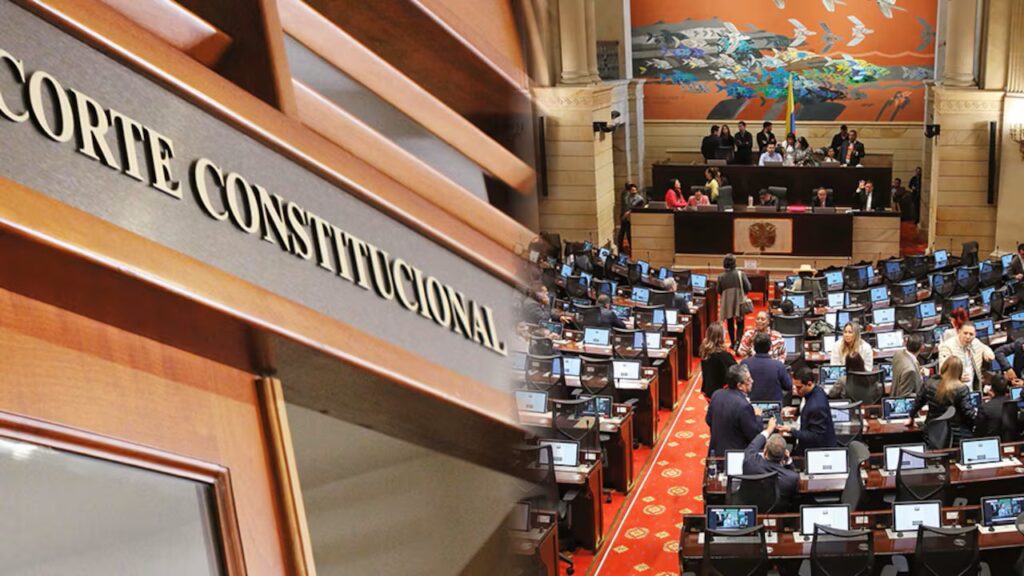
It is important to note that, from a constitutional law perspective, several of the initiatives announced by the president-elect will require not only political support in the Congress of the Republic but also must pass any constitutionality reviews by the Constitutional Court and comply with the international commitments entered into by Colombia.
However, even before taking office, Rodrigo Lara, the interior minister in Abelardo de la Espriella’s administration, began working to secure majorities in Congress. For now, he has the support of Cambio Radical, Salvación Nacional, and Centro Democrático. It is assumed that he could also secure the support of the Liberal, Conservative, and “La U” parties. If this is achieved, he would have the necessary majorities to push through the first initiatives he will present to the legislature.
However, Contreras points out that even if he manages to secure these majorities, there are many issues that raise red flags and will likely be subject to a constitutional review by the Constitutional Court, such as the peace policy, the legal carrying of firearms, fracking, mining in areas sensitive to climate change, prior consultation, euthanasia, and tax reform; Most of these issues have already been addressed by rulings from this guardian of the Constitution, creating an additional barrier to the new government’s legislative autonomy.
“Political rules stipulate that political parties can take three paths: allied with the government, independent, or in opposition; if the new government wants to move its proposals forward and turn them into law while respecting the autonomy of the branches of government, it must ensure that the majority of political parties are allied with the government—and even maintain good relations with independent parties on certain issues,” Contreras explains.
The Espriella administration proposed reducing the size of the state as a strategy to cut public spending; however, experts assert that this will not be so straightforward, since a large portion of national-level entities were created by law to ensure the provision of essential services in sectors such as education, security, the environment, and social protection. Consequently, any modification or abolition of these institutions must be processed through Congress and must ensure that the state continues to fulfill its obligations under international human rights treaties.
Some economic proposals could spark constitutional debates. Among them is the possibility of adjusting the minimum wage—a measure that, if implemented in a regressive manner, could conflict with the principle of the progressive nature of social rights recognized by the Constitution.
“As for areas of continuity, this government may move aggressively to impose a more liberal economic model, with fewer state restrictions. This could involve relaxing environmental laws to make more extractive projects viable, amending labor laws to allow for hourly hiring, modifying corporate tax collection, and ensuring that individuals bear the greatest tax burden,” says Contreras.
Restoring Relations
In the area of international relations, another issue that could spark legal debate is a potential restoration of diplomatic relations with the State of Israel. According to the expert, Article 9 of the Constitution establishes that Colombian foreign policy must be based on the recognition of the principles of international law accepted by the country; therefore, decisions in this area would have to be analyzed in light of the pronouncements issued by international organizations regarding the conflict in the Gaza Strip.
Undoubtedly, the new government’s legislative success will depend, in large part, on building political consensus. The Colombian system allows parties to declare themselves as part of the government, independent, or in opposition, which requires the executive branch to forge alliances to advance its key initiatives.
The president-elect will also face the challenge of governing in a highly polarized political climate. For this reason, building consensus through dialogue with the various political forces and social sectors will be key to ensuring governability and facilitating the passage of the reforms he intends to promote during his four-year term.