
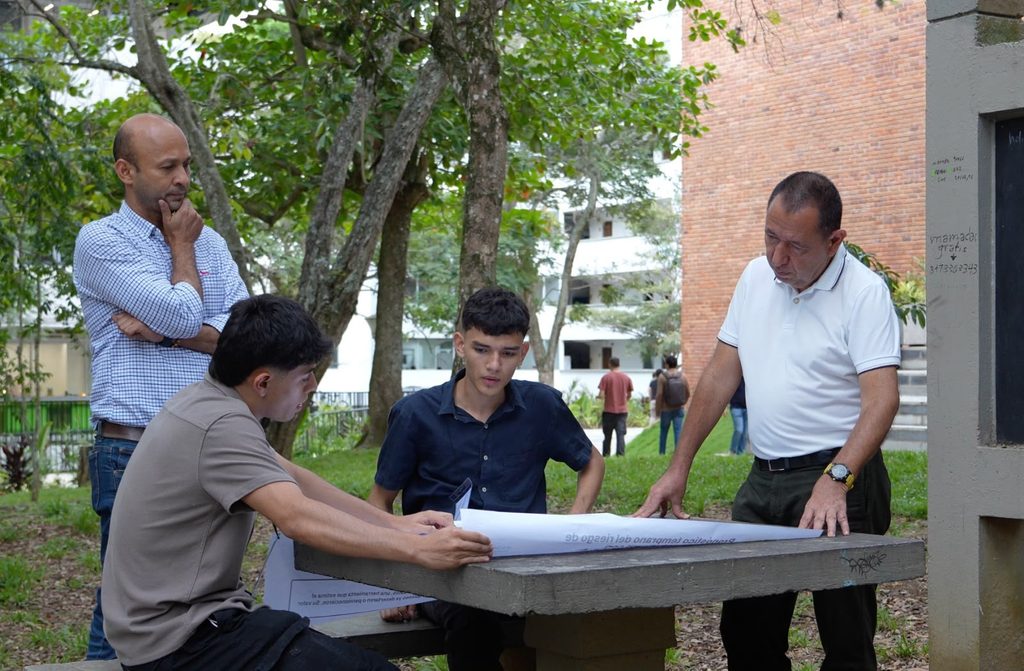
Students in the Artificial Intelligence Engineering program at the Universidad Industrial de Santander (UIS), Saravena campus, presented two research projects addressing the risks of flooding along the Cravo Norte River and university dropout rates. The projects were showcased during the event “AI & Science: Researching with Machines,” organized by the Faculty of Sciences at the Universidad Industrial de Santander.
The projects focus on specific challenges facing the department of Arauca and explore how artificial intelligence (AI) can help analyze data, identify risks, and guide decisions that respond to community needs.
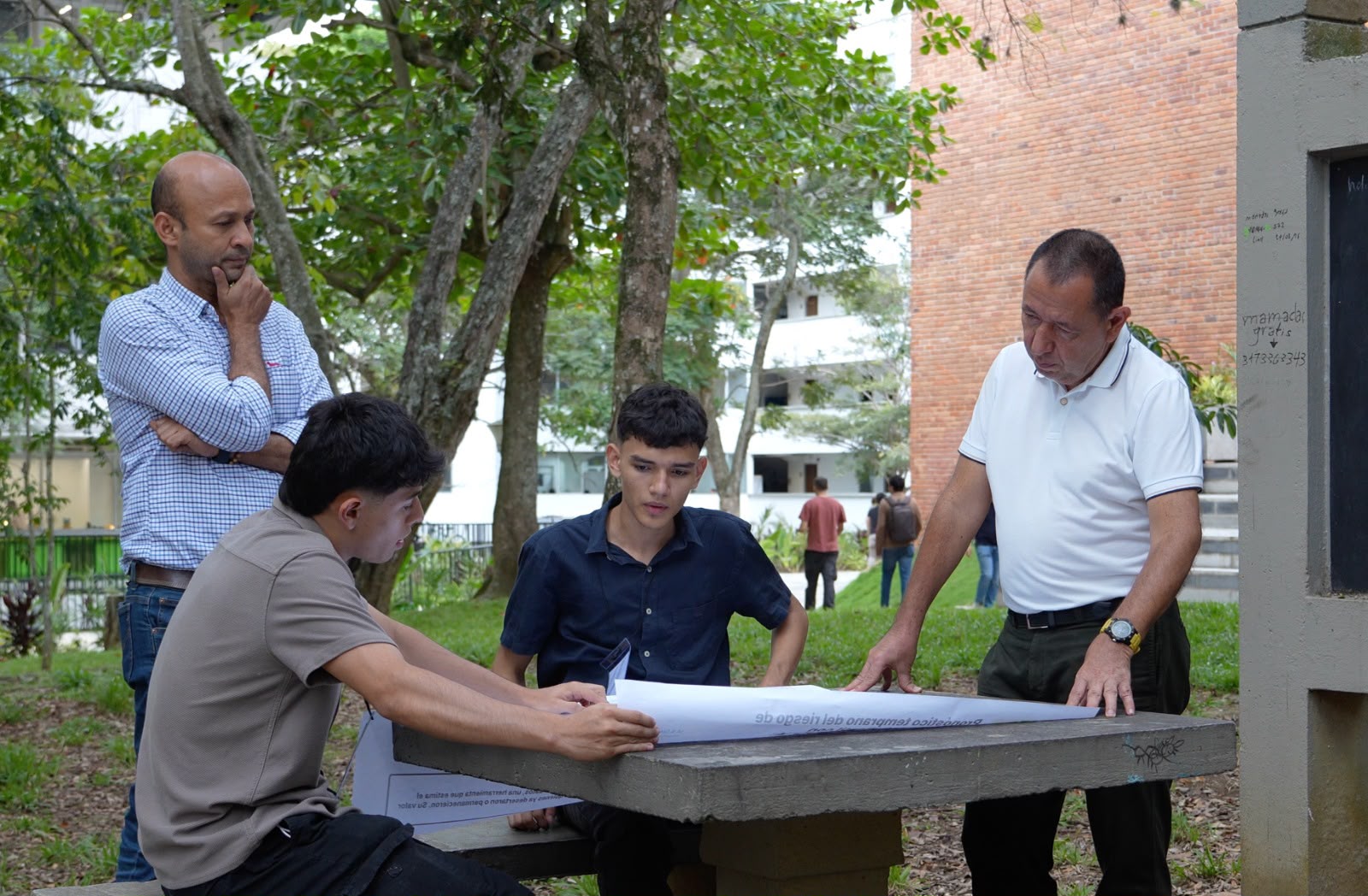
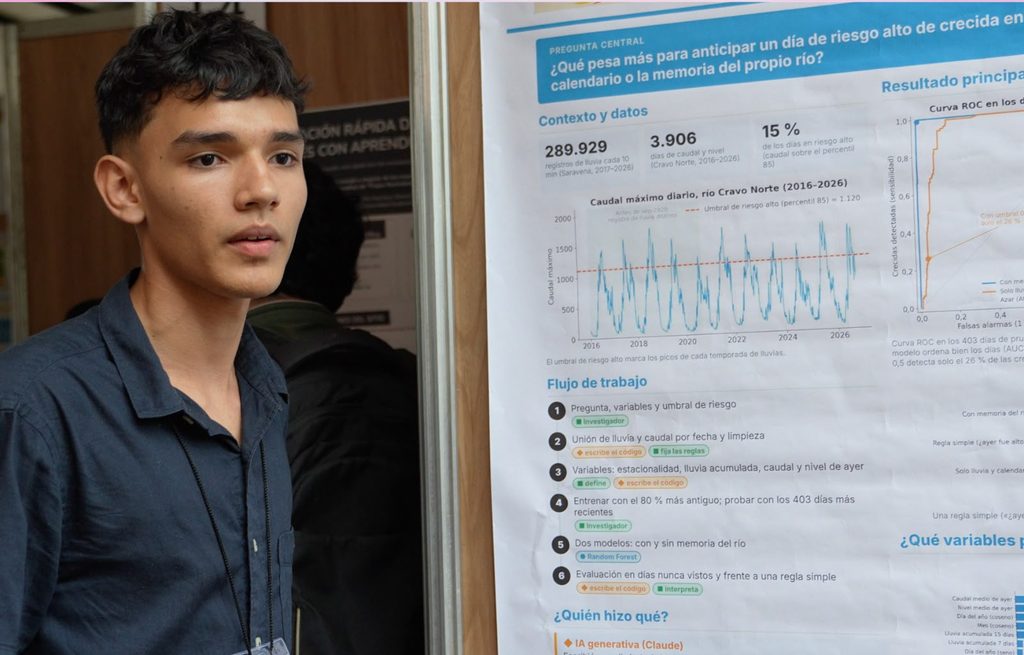
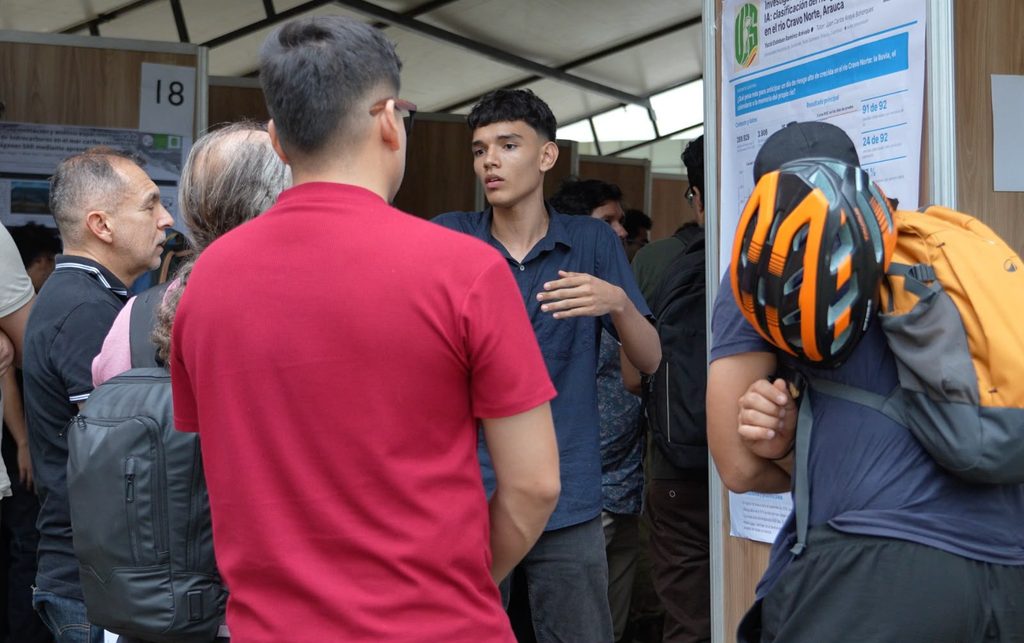
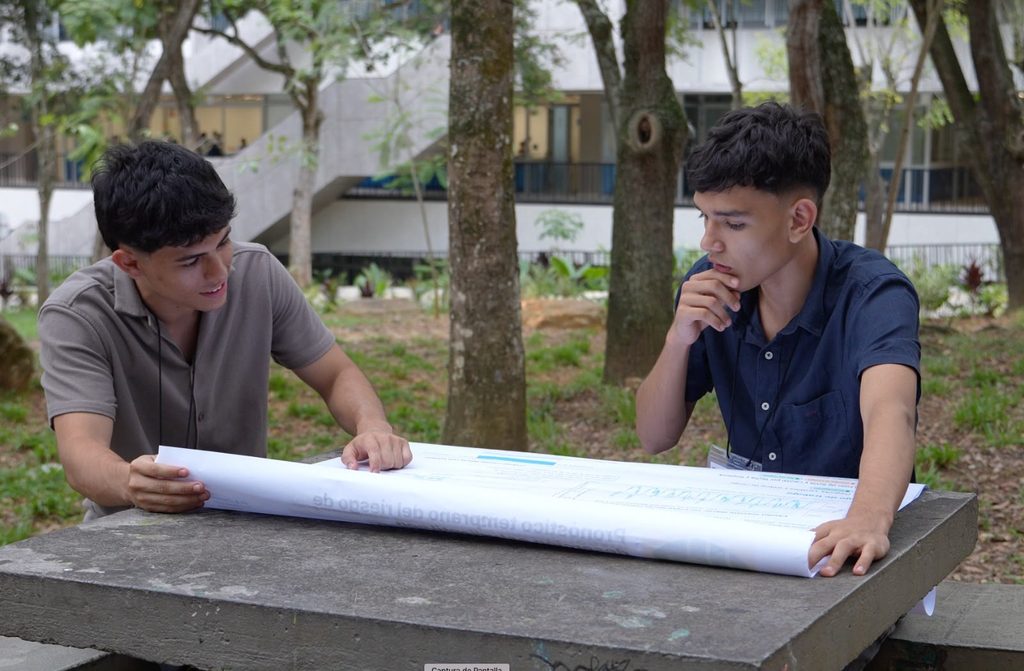
Yazid Esteban Ramírez Arévalo, a third-semester student, presented the research project titled “AI-Assisted Hydrological Research: Flood Risk Classification for the Cravo Norte River, Arauca.” The study aims to identify patterns associated with high river flows and facilitate the identification of days when flooding risks are elevated.
To conduct the analysis, the research team compiled records from various monitoring stations, including data on river discharge, rainfall, and water levels. The initial dataset contained approximately 289,929 raw data points, which were processed using artificial intelligence to clean and organize the information.
Based on available data covering the period from 2016 to 2026, the team analyzed 3,906 days. The results showed that 15% of those days were classified as having a high risk of elevated river discharge and flooding, according to the statistical threshold established in the study.
“The goal of this work is to make it much easier to detect high-flow risks and take action to prevent these disasters,” Ramírez Arévalo explained.
The student noted that having access to information does not always translate into timely action. For this reason, the research proposes making better use of available records to identify potentially dangerous situations and help prevent emergencies that could affect communities and regional mobility.
Preventing Student Dropout Through Data Analysis
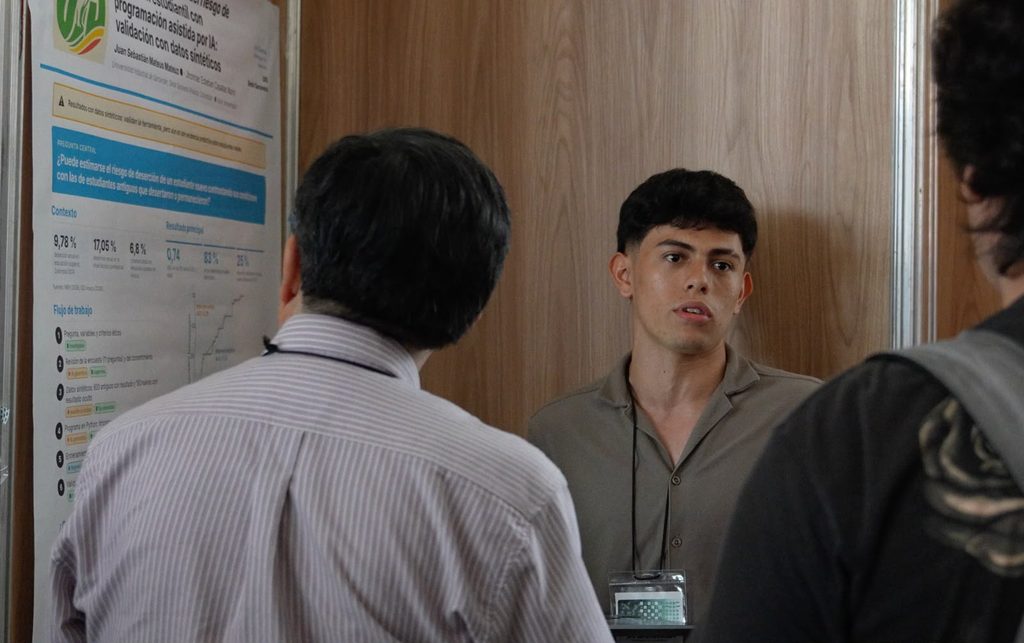
The second project, titled “Early Prediction of Student Dropout Risk Using AI-Assisted Programming: Validation with Synthetic Data,” was presented by Juan Sebastián Mateus Mateus, also a third-semester Artificial Intelligence Engineering student at the UIS Saravena campus.
The project examines whether it is possible to estimate the dropout risk of a new student by comparing their circumstances with those of students who previously dropped out or continued their studies. For this initial validation, the team used synthetic data generated with the assistance of artificial intelligence to assess the model’s performance before working with real-world information.
Among the factors identified, the student highlighted employment as one of the main circumstances associated with dropout risk in the region. He also mentioned transportation and connectivity challenges, as well as family circumstances and motivational factors that require qualitative analysis.
The proposal includes evaluating potential support measures, such as providing technological equipment and transportation alternatives for students facing these difficulties. The goal is to develop the research further as an undergraduate thesis that could be implemented at the UIS Saravena campus using real-world data.
Research Connected to Local Needs
Jhonnier Esteban Casallas Marín, an adjunct lecturer who teaches mathematics and computational mathematics, highlighted the importance of introducing students to scientific environments and demonstrating that regional campuses can also develop relevant research questions.
“More than talent, I believe there are many diamonds waiting to be polished,” Casallas Marín said, referring to the potential of young people in Arauca and the opportunities that university education can create for them.
Participation in “AI & Science: Researching with Machines” allowed students to share their progress and present their proposals to an academic audience. Both projects demonstrate how training in artificial intelligence can be connected to local challenges, from anticipating river floods to identifying the circumstances that make it difficult for students to remain in higher education.