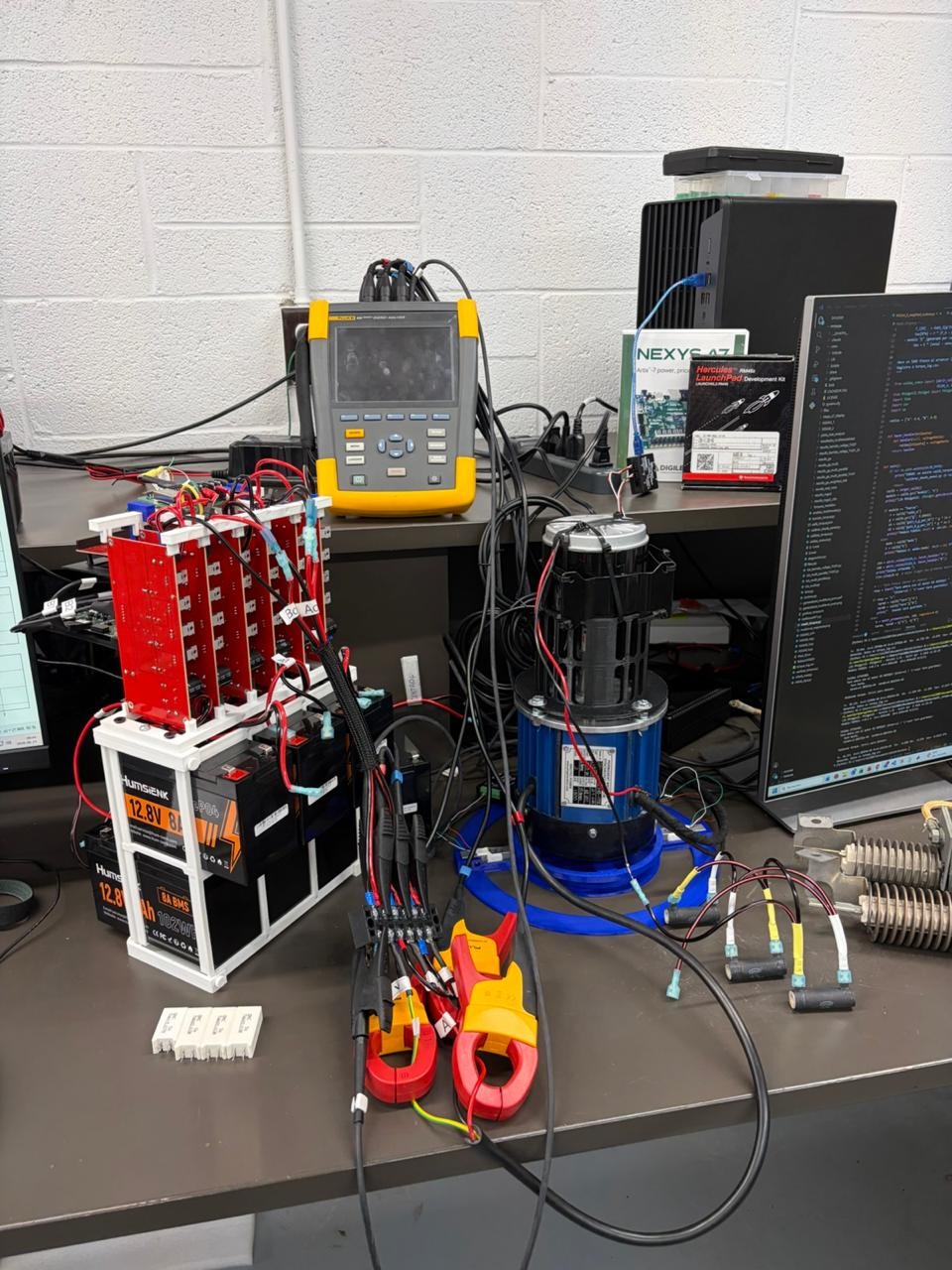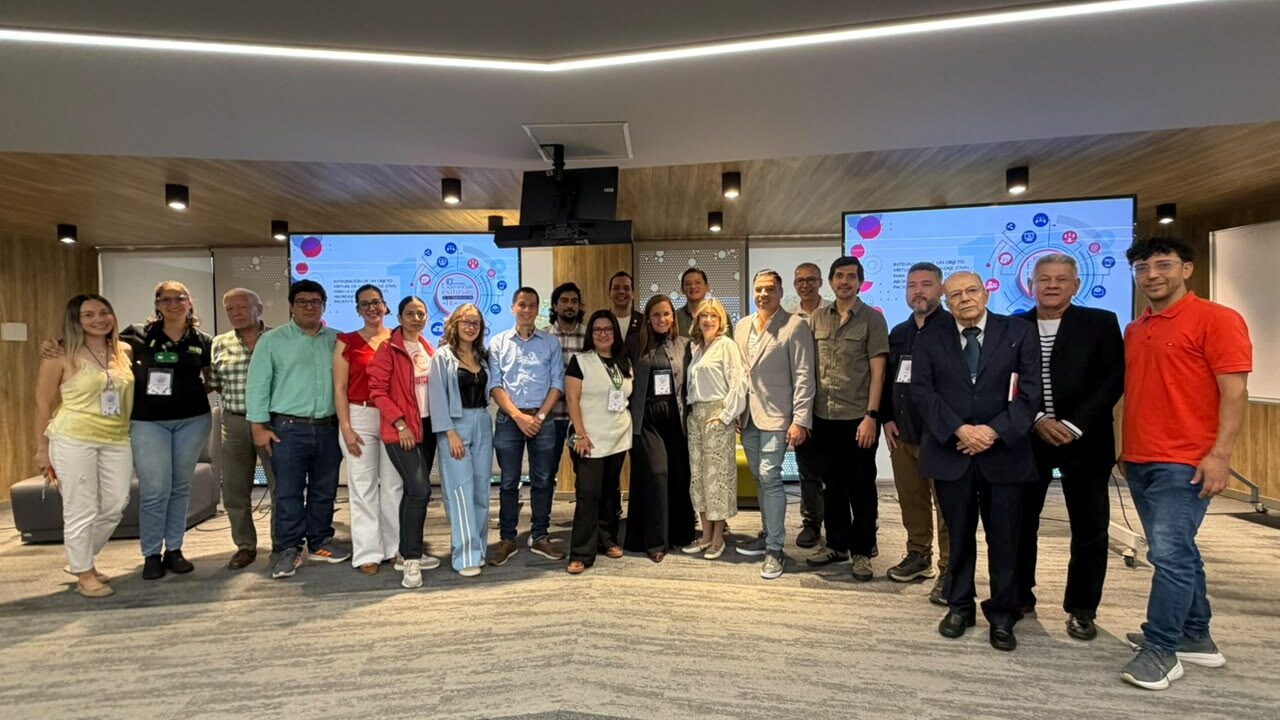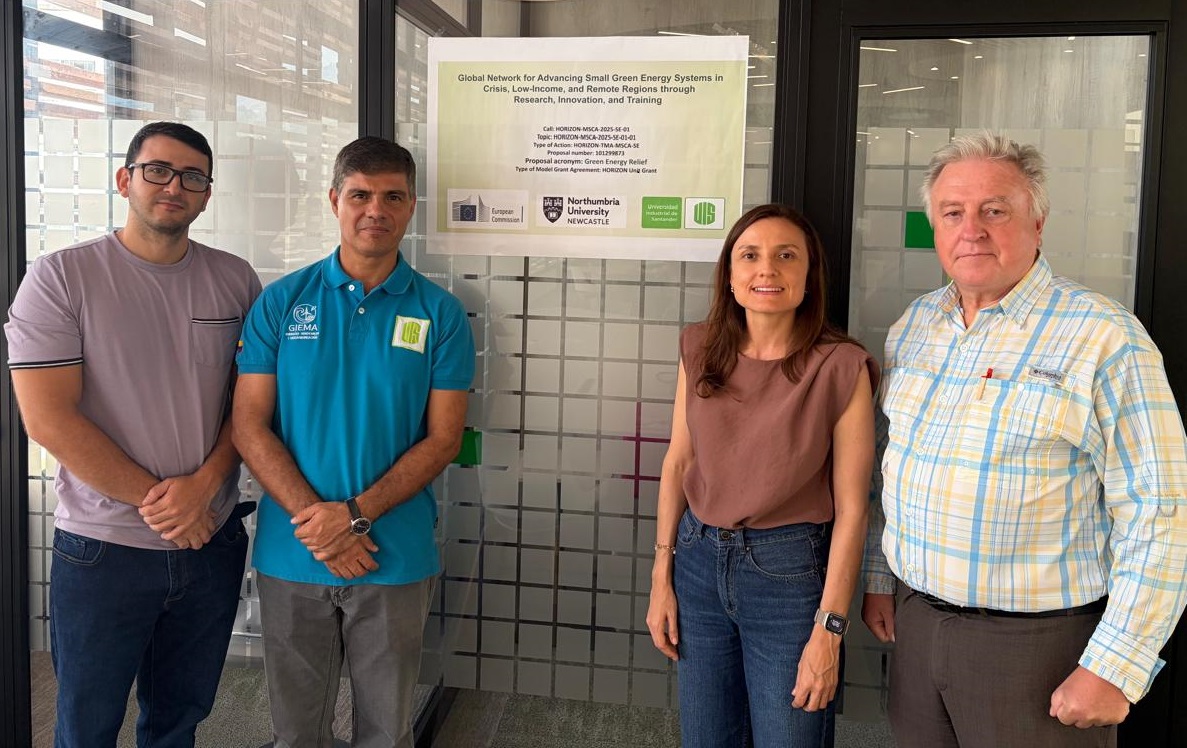

The search for more efficient alternatives for electric mobility is driving the development of new technologies capable of optimizing energy conversion and use. In this vein, research conducted by Aldo Marcel Rizo Casadiegos, a master’s student in electrical engineering at the Industrial University of Santander (UIS), advanced the design and control of an electric mobility system based on a multilevel cascaded H-bridge inverter with silicon carbide (SiC), intended to power a surface-mounted permanent magnet motor.
The project, carried out between January and July 2026, was part of a research internship at the Université du Québec à Trois-Rivières (UQTR) in Canada. The work addresses one of the main challenges of energy conversion systems: improving the quality of the power delivered by the inverter to the motor. Conventional systems typically use three-level inverters that require passive filters to transform the output signal into a quasi-sinusoidal waveform, a characteristic necessary for the proper operation of electric machines such as permanent magnet motors.
“The problem this internship sought to solve was related to improving the quality of the power delivered by the inverter. Conventionally, three-level square-wave inverters are used, which require passive filters to deliver quasi-sinusoidal waves—the type required by machines such as permanent magnet motors. Now, a multilevel inverter can produce a signal closer to a sine wave thanks to the greater number of levels it can achieve due to its structure, improving power quality and, in some cases, eliminating the need for a passive filtering stage between the inverter and the machine,” explained Rizo Casadiegos.
The proposed solution employs a multilevel architecture that generates a voltage signal closer to a sine wave. To achieve this, two cascaded H-bridges were implemented per phase—a configuration that yields five voltage levels at the inverter output, compared to the three levels of a conventional configuration. When analyzing the line voltage between phases, the system achieves nine levels, which helps improve waveform quality and, potentially, reduces or eliminates the need for an additional passive filtering stage between the inverter and the motor.
This feature represents one of the main advantages of multilevel inverters: by increasing the number of voltage levels, it is possible to more accurately approximate a sinusoidal signal, reducing distortion and promoting more efficient operation of the electric machine.
More Efficient Conversion
Complementing this architecture is the use of silicon carbide (SiC) semiconductors, a technology that offers advantages over traditional silicon-based devices. In power electronics applications, these materials enable the development of equipment with lower energy losses, reduced heat generation, and higher voltage operating capabilities.
In the developed system, SiC devices were used in the H-bridges that make up the inverter. Their incorporation opens the door to more compact and efficient conversion systems—features of particular interest for electric mobility applications, where weight, size, and energy efficiency are critical factors.
“The advantage of using cascaded H-bridges lies in the ability to obtain more voltage levels at the inverter output and, therefore, better waveform quality. In this case, a configuration of only two cascaded H-bridges per phase was used, which allowed for five voltage levels at the output instead of the conventional three, and when analyzing the line voltage signal between phases, nine levels were obtained,” explains Rizo Casadiegos.
The project also incorporated a current-limited reactive power control algorithm, designed in accordance with operating modes established in standards such as IEEE 1547. This strategy allows for the control of the reactive power that the inverter can inject into or draw from the grid when connected to it, helping to improve its operating parameters at the point of connection.
The proposed strategy also aims to simplify the control system by reducing certain elements and, thereby, lowering the computational cost of the algorithm. However, the results obtained must be supplemented with further analysis to allow for a more comprehensive comparison of these advantages against other control alternatives.
According to the student researcher, eliminating these elements from the control system helps reduce computational cost and simplify the algorithm. However, a more thorough comparison and analysis is still needed to fully appreciate and weigh these advantages.
Control to Maximize Motor Performance
Another key component of the development was the control strategy for the surface-mounted permanent magnet motor. The design drew on conventional techniques such as field-oriented control, direct torque control, and sensorless control.
The strategy aims to maximize the quadrature current—which is directly related to the machine’s torque generation—while seeking to reduce the direct-axis current to zero, since, in this type of motor, it does not effectively contribute to torque production.
In this way, the system seeks to make more efficient use of the energy supplied to the motor. A harmonic reduction technique was also integrated into this strategy, using modulation based on tables preloaded into an FPGA—a device that enables rapid execution of the inverter’s commutation commands.
The results obtained show voltage and current signals with distortion levels below 8 percent, a value established as a benchmark by standards related to harmonic distortion, including IEEE 519. These results demonstrate the proposal’s potential for advancement toward implementation in electric mobility systems.
A Development with Application Potential
Although the system still requires further research and development, the results obtained provide a foundation for moving toward a functional electric mobility prototype. Among the upcoming challenges are strengthening the control strategy and establishing an operating range consistent with the characteristics of the intended mobility application.
It will also be necessary to first optimize the switching angles offline in order to generate the switching tables that will subsequently be loaded into the FPGA. In parallel, a mechanical prototype must be designed to convert the electrical power provided by the system into mechanical power for traction.
With these advances, Rizo Casadiegos proposes a technological alternative that integrates power electronics, next-generation semiconductors, advanced control strategies, and electric motors, with the aim of contributing to the development of more efficient electric mobility systems with improved characteristics.
More than just a laboratory exercise, this development serves as a starting point for continued work on integrating these technologies and advancing the system toward an electric mobility application capable of making more efficient use of available energy.
International Internship
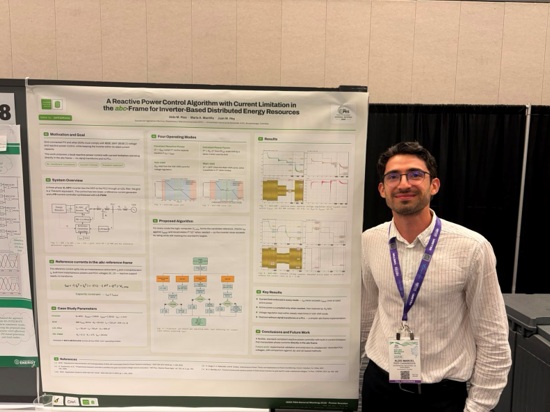
As part of this research, Aldo Marcel completed a research internship at the Université du Québec à Trois-Rivières (UQTR) in Canada. This also allowed him to participate in the 2026 IEEE PES General Meeting, held in Montreal, where he presented the paper “A Reactive Power Control Algorithm with Current Limitation in the abc-Frame for Inverter-Based Distributed Energy Resources.”
The research was conducted in collaboration with professors María A. Mantilla and Juan M. Rey of the Electrical Power Systems Research Group (GISEL) at E3T-UIS.