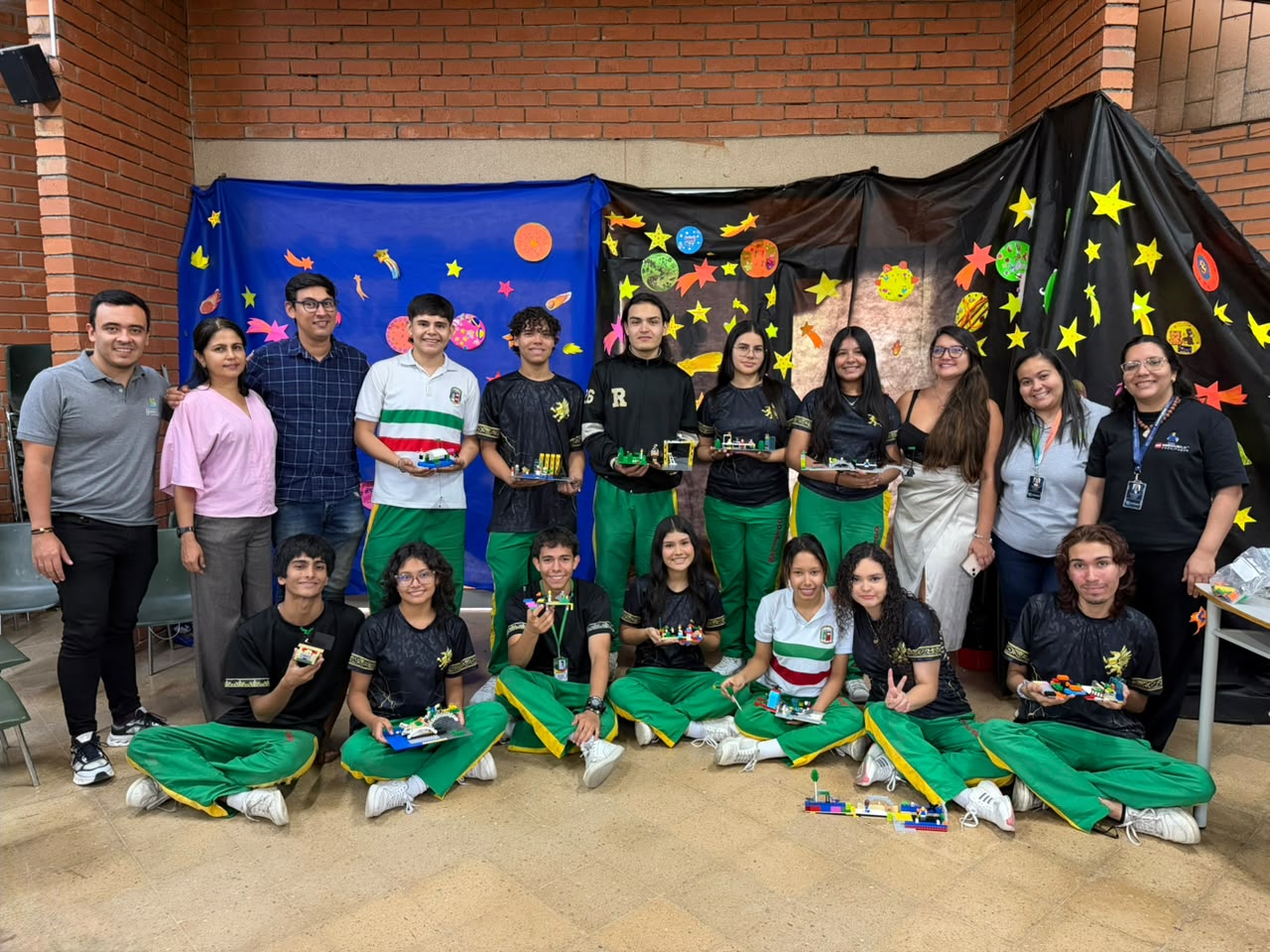


The Institute for Regional Outreach and Distance Education (IPRED) at the Industrial University of Santander (UIS) welcomed more than 700 new students with an orientation day, during which they met members of the Academic Council and received information about the institution’s academic, pedagogical, and disciplinary guidelines.
“This is an achievement and, at the same time, a great challenge for us as a state, as a society, and as a university. Especially for the Institute’s staff, welcoming more than 700 students from different regions of the country and even from abroad, thanks to our 100% remote virtual programs, represents a real success,” said Carlos Alberto Villarreal, coordinator of Technology in Judicial Management and Criminal Investigation.
For the new members of IPRED, this space was essential, as it allowed them to learn about tools, guidelines, and key aspects that will facilitate their adaptation and performance in this new stage of academic training.

“It was undoubtedly the most comprehensive orientation day I have had at the two universities I have attended. We received very clear and detailed information about everything we need to take into account when entering university,” said David Navas, a student of Pharmacy Technology.
Gloria Núñez, a Business Management student, highlighted the motivational aspect of the meeting. “I thought it was a very positive session because it encourages us to move forward now that we are starting this process and motivates us to successfully complete the training we are beginning,” she said.
The day ended with a guided tour of the Central Campus, where the new members of the UIS community got to know some of the most representative buildings and spaces of what is now their place of study.
“I find the campus very modern and pleasant. I would highlight the large number of green areas and a contemporary infrastructure that invites you to study,” said Salomé Pérez, a student of Agroindustrial Technology.

The IPRED UIS offers technical, technological, and professional programs in distance and virtual formats, expanding access to higher education and strengthening academic training in different regions of the country.