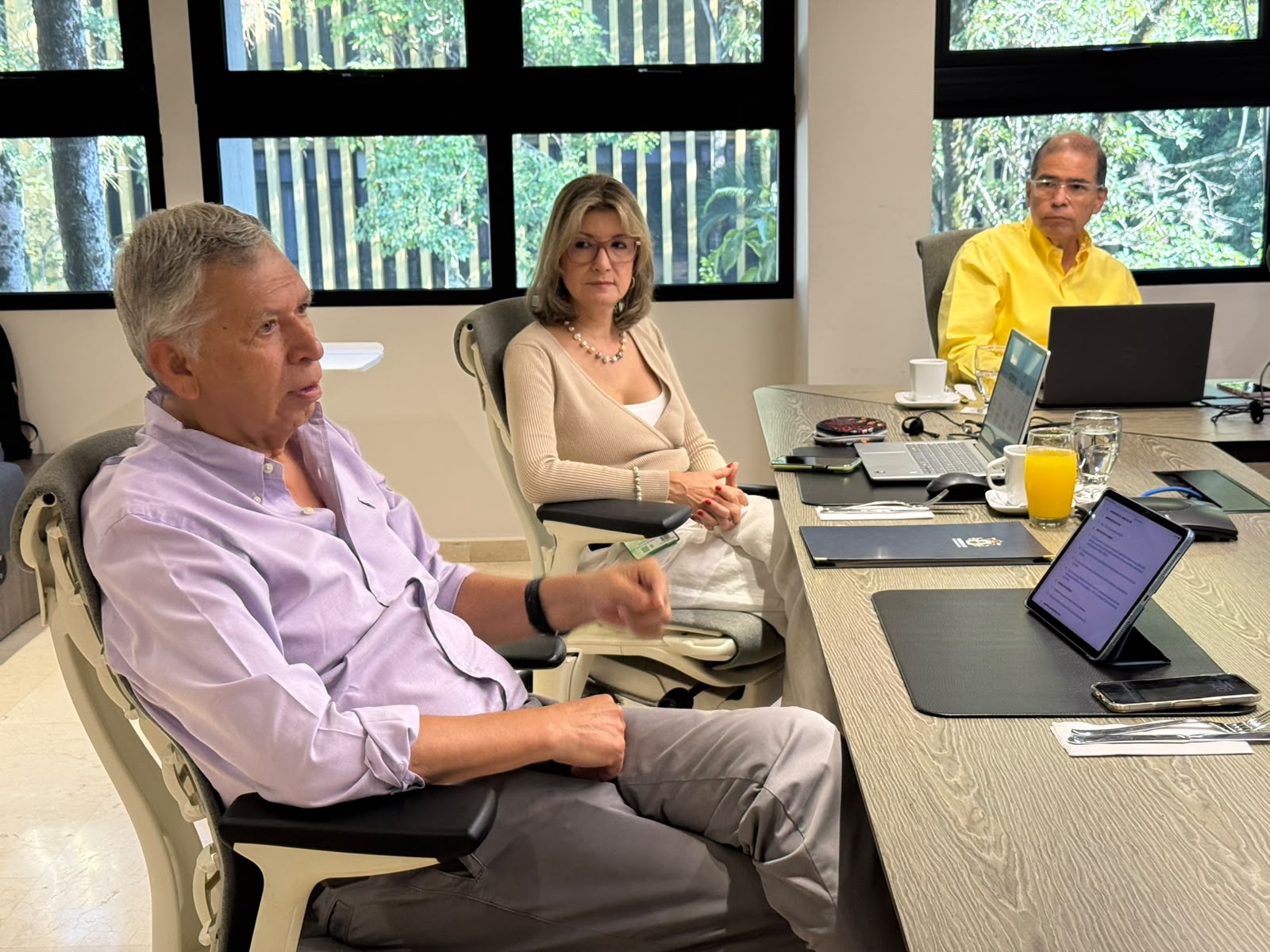


The Universidad Industrial de Santander (UIS) analyzed two strategic issues during the most recent session of its Academic Council for strengthening research and institutional life: the continuation of calls from the Ministry of Science, Technology and Innovation of Colombia (Minciencias) corresponding to the 2023–2024 biennium, and the assessment of actions carried out by the institution within the framework of its gender equity policy. The discussions highlighted the institution’s commitment to the country’s scientific development and to consolidating a university culture based on inclusion and equal opportunities.
The Vice-Rector for Research and Extension, Cristian Blanco Tirado, explained that several calls opened during the previous biennium are facing administrative difficulties after extending beyond the corresponding fiscal period. Although the resources remain valid and could be transferred to subsequent biennia, the situation affects projects that have been under evaluation for nearly two years and are highly ranked. “We spent almost two years managing these proposals, and it would be very unfortunate if the processes were cut short at this stage,” the official noted. Among UIS’s highlighted initiatives are a community tourism proposal linked to the Comuneros Route and the Socorro Route, aimed at territorial development, as well as a project focused on food sustainability with strong funding potential.

In this context, the country’s public universities, through the Colombian Association of Universities and the State University System, requested that Minciencias resume the processes from their current stage in order to ensure the allocation of approximately 2 billion pesos to strengthen the National System of Science, Technology, and Innovation. “What we have respectfully requested is that the calls continue as they had been progressing, so that projects already evaluated can complete their funding process,” Blanco Tirado stated.
In the same setting, the Academic Council presented a positive assessment of the Gender Equity Month, an initiative that brought together academic activities, discussions, and spaces for reflection led by faculties and institutional units. Among them, the participation of Professor Débora Nabarlatz from the School of Chemical Engineering stood out, as she emphasized the need to strengthen female leadership in science. “It is essential to continue motivating new generations of women to actively participate in science, technology, and innovation,” the vice-rector said. As a result of the recent allocation of doctoral scholarships funded by royalties (Call 35), 14 out of 31 awarded positions went to women, representing nearly 45% of beneficiaries.
Finally, the outgoing student representative to the Academic Council, Diana Ariza, presented a summary of two years of work characterized by close engagement with the university community. “It was not an individual project, but a collective effort aimed at maintaining a permanent connection between the university, students, and society,” she stated. Ariza also highlighted that the gender equity policy fostered initiatives promoted both by the institution and by students, consolidating actions that go beyond the commemorative month and strengthen a culture of equality and inclusion at UIS and in its regional environment. “Gender equity cannot be limited to a single month; it must be a permanent practice in university life,” she concluded.