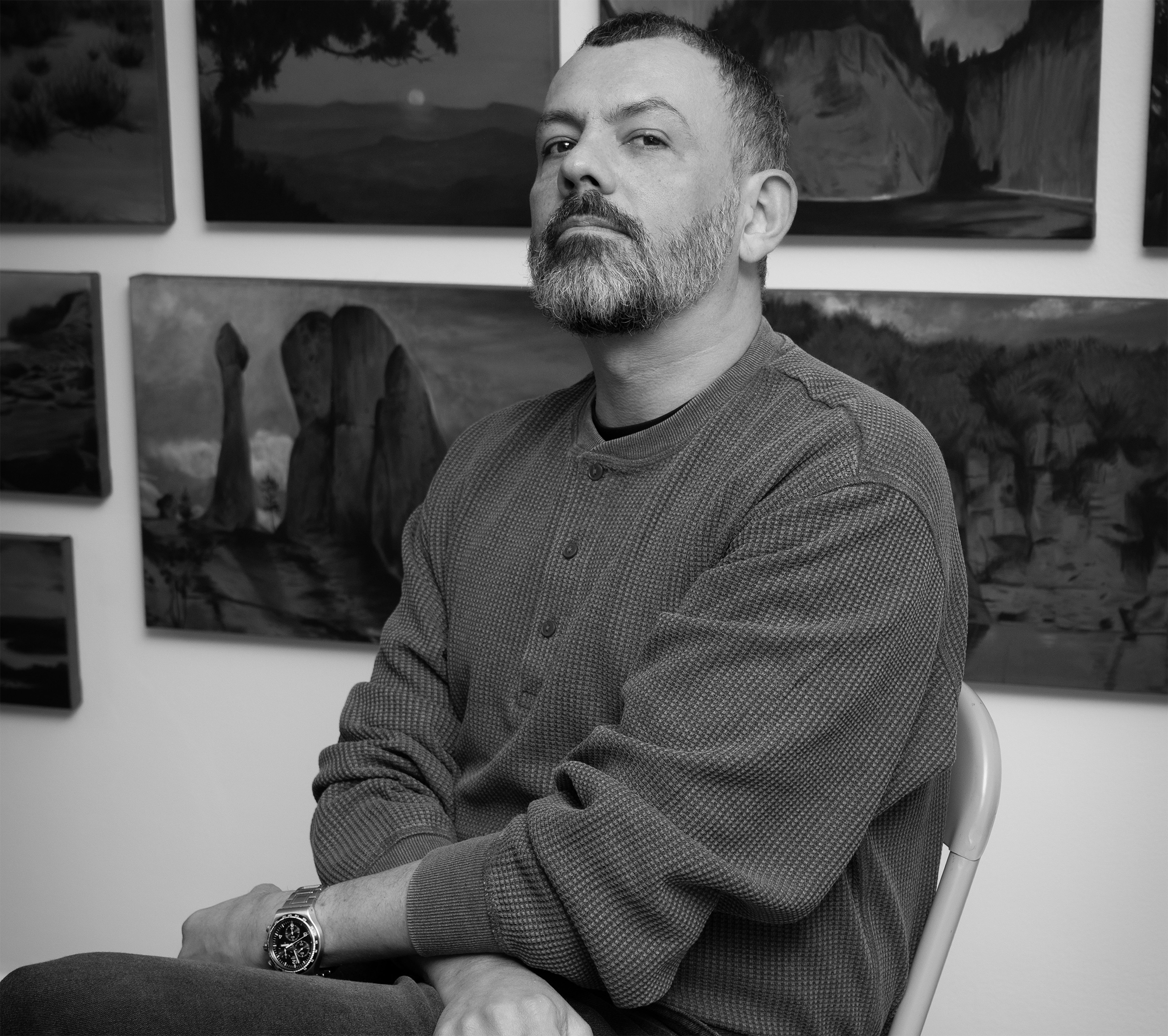

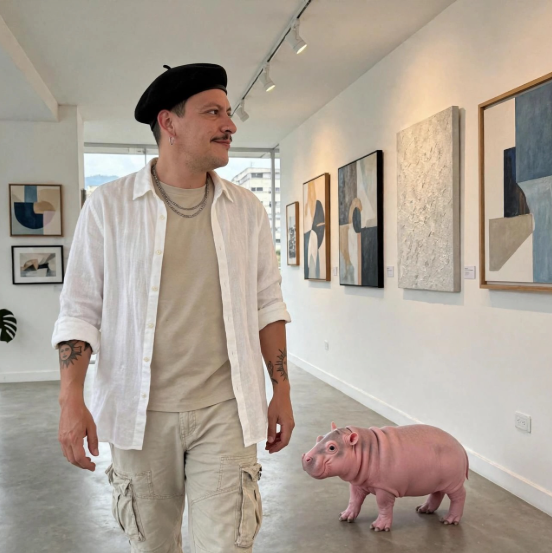
Visual artist and researcher Michael Angarita Tarzona, known as Divino Maik and a Master of Fine Arts graduate from Universidad Industrial de Santander, took part in the international exhibition Madness as Method: Disassembling Empire, held on Governors Island in New York.
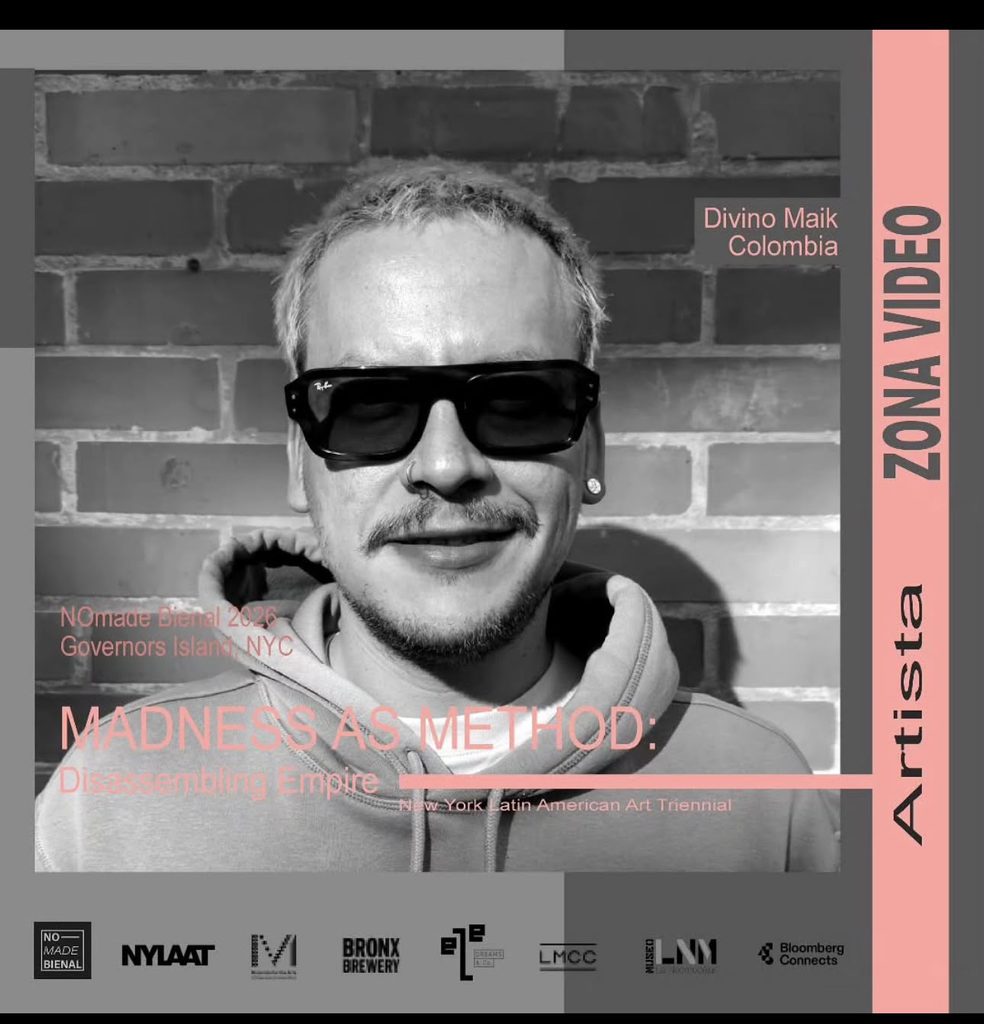
Colombian contemporary art reached one of New York’s cultural stages through the participation of Michael Angarita Tarzona, known as Divino Maik, a graduate of the Institute for Regional Outreach and Distance Education (IPRED) at Universidad Industrial de Santander (UIS), in Madness as Method: Disassembling Empire, an international exhibition of the Nomadic Biennial.
The exhibition brought together artists and curators from different countries to reflect on power, imperialism, the body, resistance, and the critical possibilities of contemporary art. The project was presented at the NYLAAT – New York Latin American Art Triennial venue on Governors Island in New York.
Divino Maik was part of the Video Zone, a section dedicated to audiovisual practices from different contexts. His participation placed Colombian artistic production within an international conversation about the possibilities of contemporary art and audiovisual practices to question cultural, political, and symbolic structures.
The Colombian selection in this section also included Nadia Granados, Alfonso Aguas Negras, and Marcelo Verastegui, with Santiago Rueda Fajardo serving as curator.
A career built around the image
Divino Maik holds a Master’s degree in Fine Arts from UIS and developed his artistic and research practice around the image, with a particular interest in the forms it took within popular Catholic religiosity, visual culture, and contemporary systems of representation.
Through the appropriation, displacement, and transformation of existing images, objects, and signs, the artist developed projects that brought together different languages and media, including painting, sculpture, installation, performance, photography, video, archives, and digital imagery.
His work stemmed from observing cultural practices and everyday experiences, establishing relationships between religious imagery, popular culture, mass media, technology, and collective experience.
One of the central focuses of his research was the persistence and circulation of images: how they were reproduced, intervened, displaced, and reloaded with meaning as they moved from one context to another.
This approach shaped an artistic practice that explored the ways images construct meaning and influence contemporary ways of understanding and representing the world.
From Bucaramanga to international art spaces
His participation in the Nomadic Biennial added to a career that had taken Divino Maik’s work to different contemporary art spaces in Colombia and abroad.
The artist had participated in exhibitions and projects at venues such as the Museum of Modern Art of Bogotá (MAMBO), the Museum of Contemporary Art of Bogotá (MAC), Galería Nueveochenta, the Museum of Modern Art of Bucaramanga, the 18th Regional Artists’ Salon, and the Latin American Art Triennial in New York.
His career also included recognitions such as First Place at the Prosantander Visual Arts Salon in 2022, participation in the 4 Afiches, 60 Años del MAMBO initiative in 2023, a nomination for the 10th Sara Modiano Award in 2024, and selection as a finalist for the Colsanitas Young Art Award in 2025.
These achievements positioned his participation in the Nomadic Biennial as another chapter in the international circulation of an artistic practice that has used the image and its multiple transformations as a tool for investigating culture and contemporary experience.
Art as a tool to challenge established ideas
Madness as Method: Disassembling Empire proposed madness as a method of creation and critical thought. The exhibition challenged the traditional separation between reason and madness, exploring the latter as a way of questioning the discourses and structures that determine what a society considers normal, legitimate, or possible.
From this perspective, the selected works did not simply represent social conflicts or denounce structures of power. The curatorial project presented art as a practice capable of creating ruptures in dominant discourses through the body, image, affect, and experimentation.
Víctor Hugo Bravo, director of NUCLEO CURATORIAL NOmade Bienal Pacurucu/Bravo, served as curator, while Ezequiel Taveras, director of NYLAAT, coordinated the exhibition.
Artists and curators from Cuba, Colombia, Chile, Argentina, Brazil, the United States, and Sweden came together for the edition, creating a space for exchange around contemporary Latin American practices and their dialogues with other territories.
A UIS graduate projecting his work beyond Colombia
Divino Maik’s participation in the Nomadic Biennial represented a new opportunity for the international circulation of his work and allowed an artistic practice developed in Colombia to engage with creators, researchers, and discourses from different contexts.
For Universidad Industrial de Santander, the presence of one of its graduates in this international setting highlighted the trajectory of artists who have found in university education a foundation for developing research and creative processes with national and international reach.
Through his training as a Master of Fine Arts graduate from UIS, Michael Angarita Tarzona built an artistic practice that turned the image into a subject of research, creation, and critical thought. His participation in New York added a new international stage to the career of an artist trained in Santander whose work has reached relevant spaces within Colombian and Latin American contemporary art.