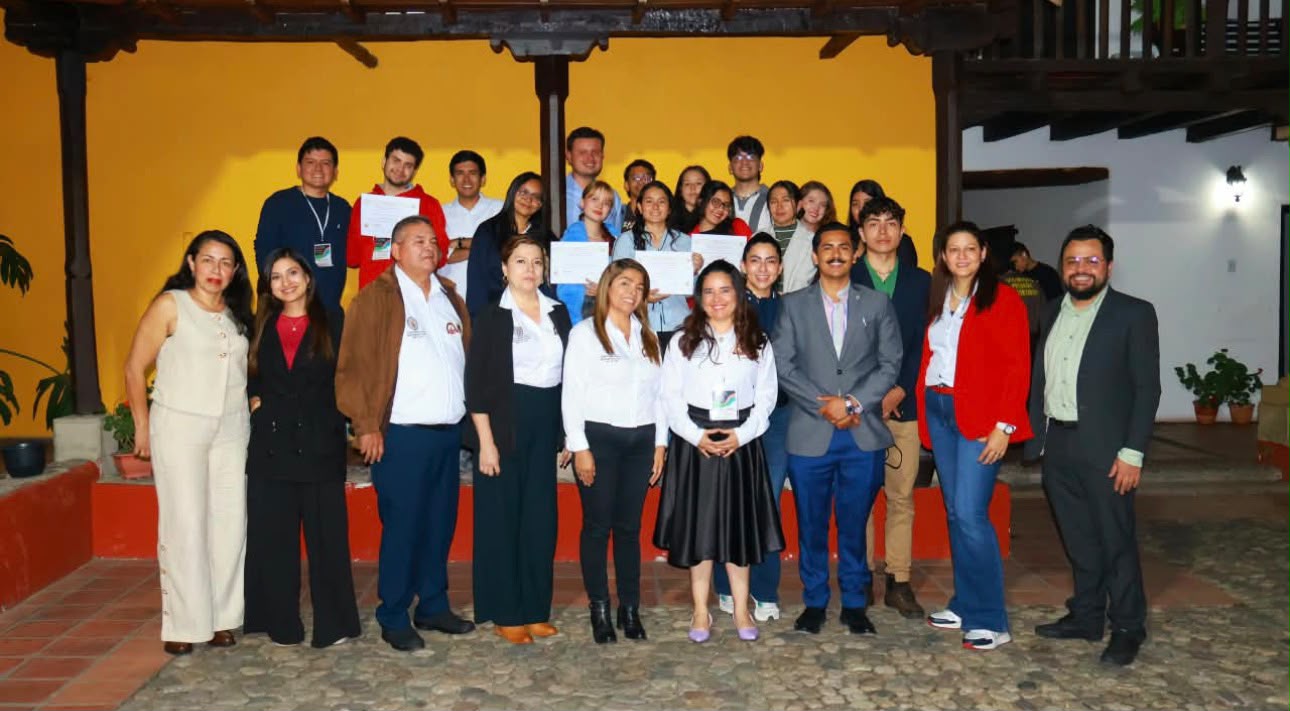

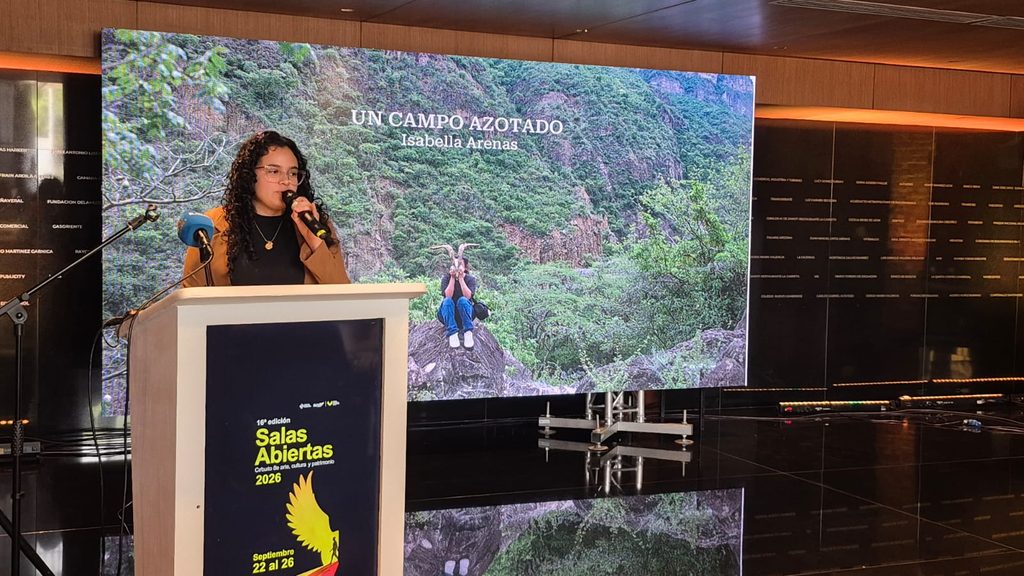
For four years, María Isabella Arenas Hernández—a UIS Fine Arts graduate—has participated in *Salas Abiertas* (Open Galleries), a project where art, culture, and heritage converge; the event reached its 16th edition in 2026.
She began in this circuit as a gallery mediator. “I was interested in learning not only how to talk about my own work but also how to discuss the work of other artists; that was my initial entry point into this space. I have also worked as a mediator for *Visitarte*, a program dedicated to younger audiences. For several years, I had wanted to be part of the circuit with a solo exhibition—I wanted it to be conceptually and visually strong enough to warrant its own dedicated gallery space. That opportunity finally came together this year, supported by a grant from the National Portfolio of Incentives (Portafolio Nacional de Estímulos) in the youth category, specifically for artistic research-creation in the Eastern Region,” explains María Isabella Arenas.
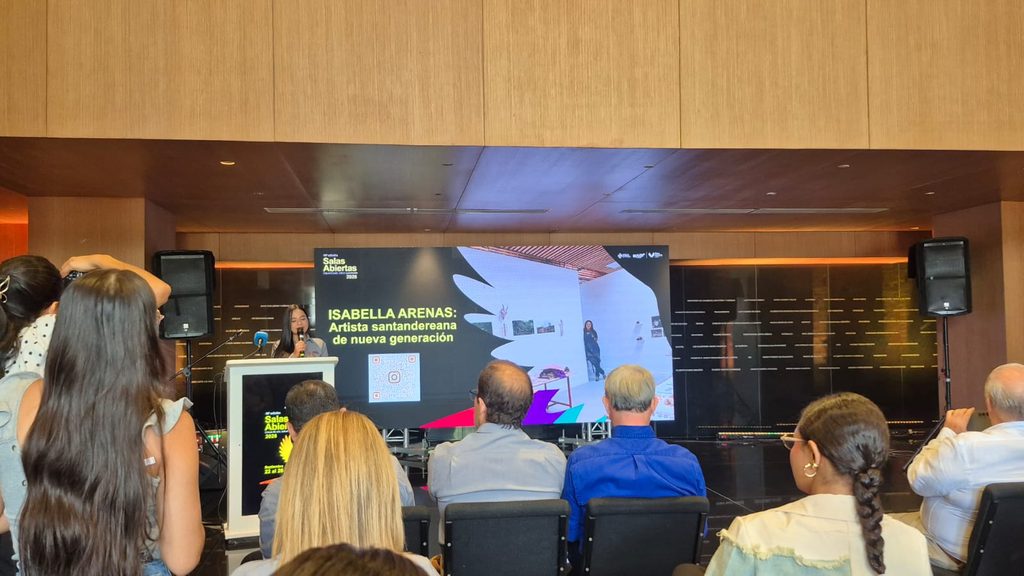
The exhibition—on view during the circuit and running until October 18, 2026—brings together photography, sculpture, drawing, video, and found objects. Titled *Un campo azotado* (“A Whipped Field”), the show is the culmination of a research process begun in 2022; it is hosted at the Centro Colombo Americano, part of Circuit 3 of *Salas Abiertas*.
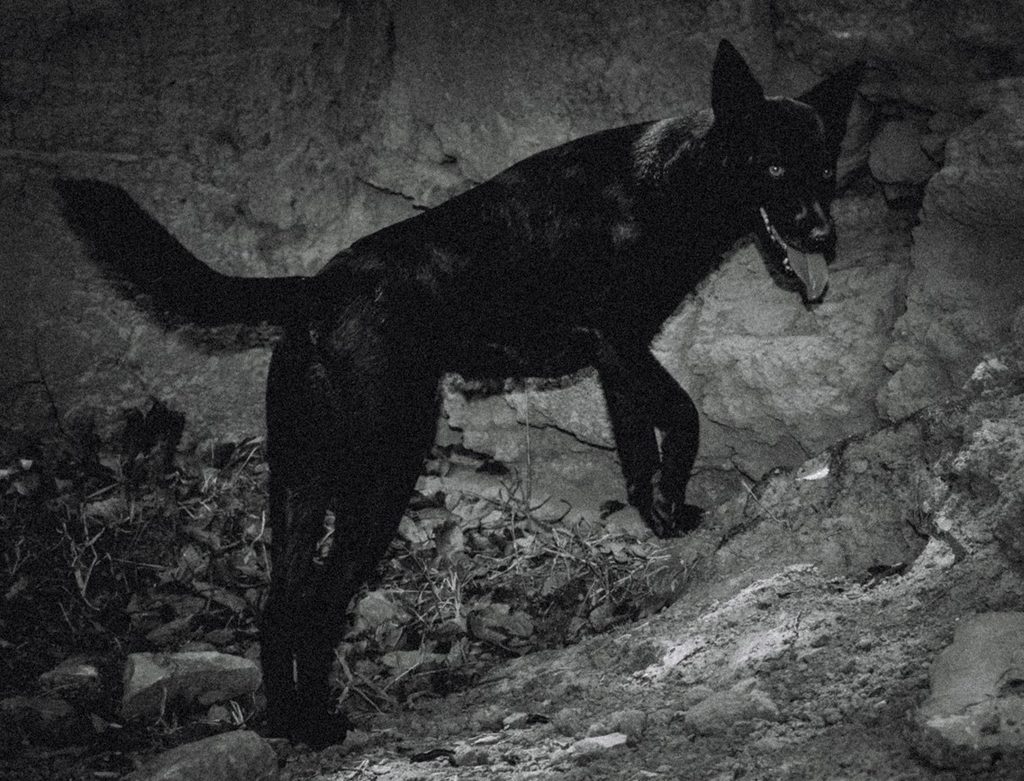
The story originated from a comment she overheard while visiting the market in San Gil, Santander, with her father—a remark alluding to a “curse” affecting her paternal family. Drawing on these narratives, Isabella Arenas explores the interplay of memory, fiction, landscape, and mystery.
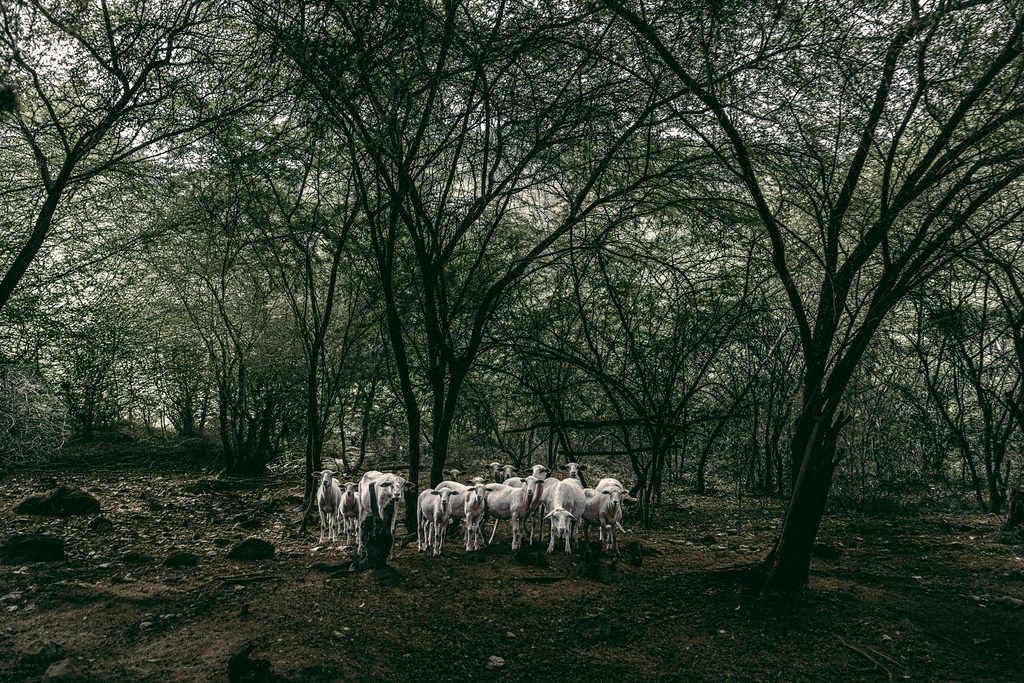
Local fauna plays a significant role in her artistic proposal; the *Camuro* (a breed of hair sheep) allows her to symbolically address themes of life and death. A Researcher Always Learning
A Researcher Always Learning
Since graduating from the Universidad Industrial de Santander, she has taken steps to deepen her understanding of concepts and methodologies. As she explained: “I graduated in 2023, and in 2025 I began postgraduate studies at the Universidad Nacional. It is important for me to keep strengthening my conceptual foundation and acquiring more tools for artistic research methodology; the Nacional gave me the opportunity to learn a range of techniques that—due to specific requirements—aren’t feasible in Bucaramanga.”
This exhibition and her work with complex themes like suicide stem from her desire to “find anomalies in my immediate surroundings—as close to home as possible—things I know well but might have ignored for a long time, yet which eventually stand out, like that remark I heard at the market… The goal is to create a project that blurs the line between fiction and reality, so that when people enter the gallery space, they can’t tell where reality ends and fiction begins. It is my way of grappling with heavy subjects, knowing that I am constructing a fiction out of reality.”
You are invited to visit her exhibition and the *Salas Abiertas* (Open Galleries) circuit.