
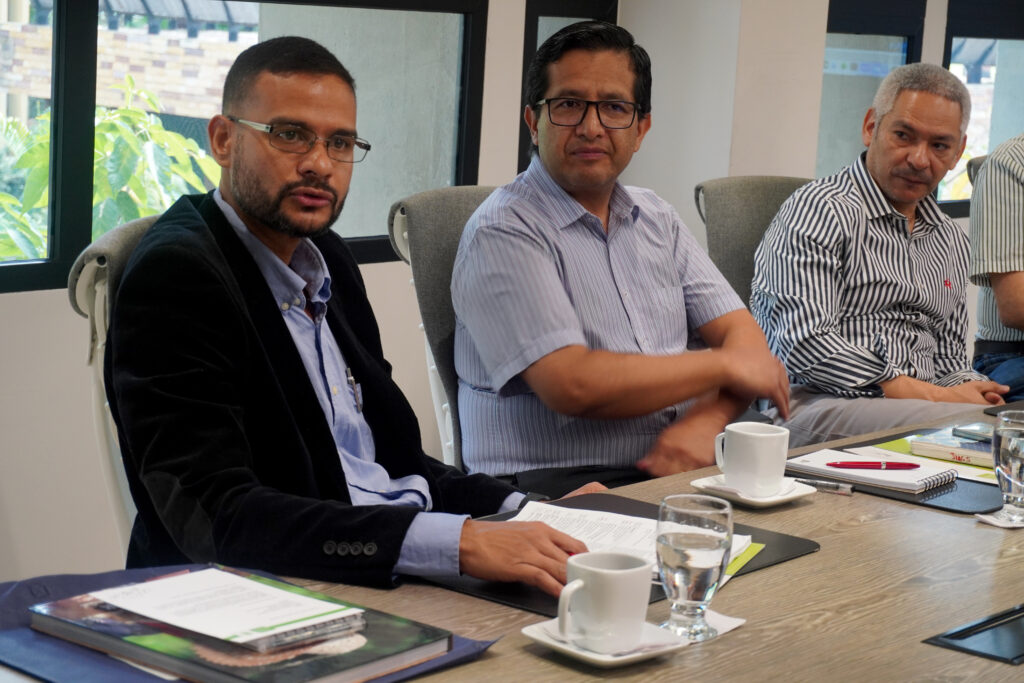
The UIS Master’s in Physics is advancing through the renewal process for its high-quality accreditation with a visit from academic peers appointed by the National Accreditation Council (CNA), who are conducting an external evaluation of the program.
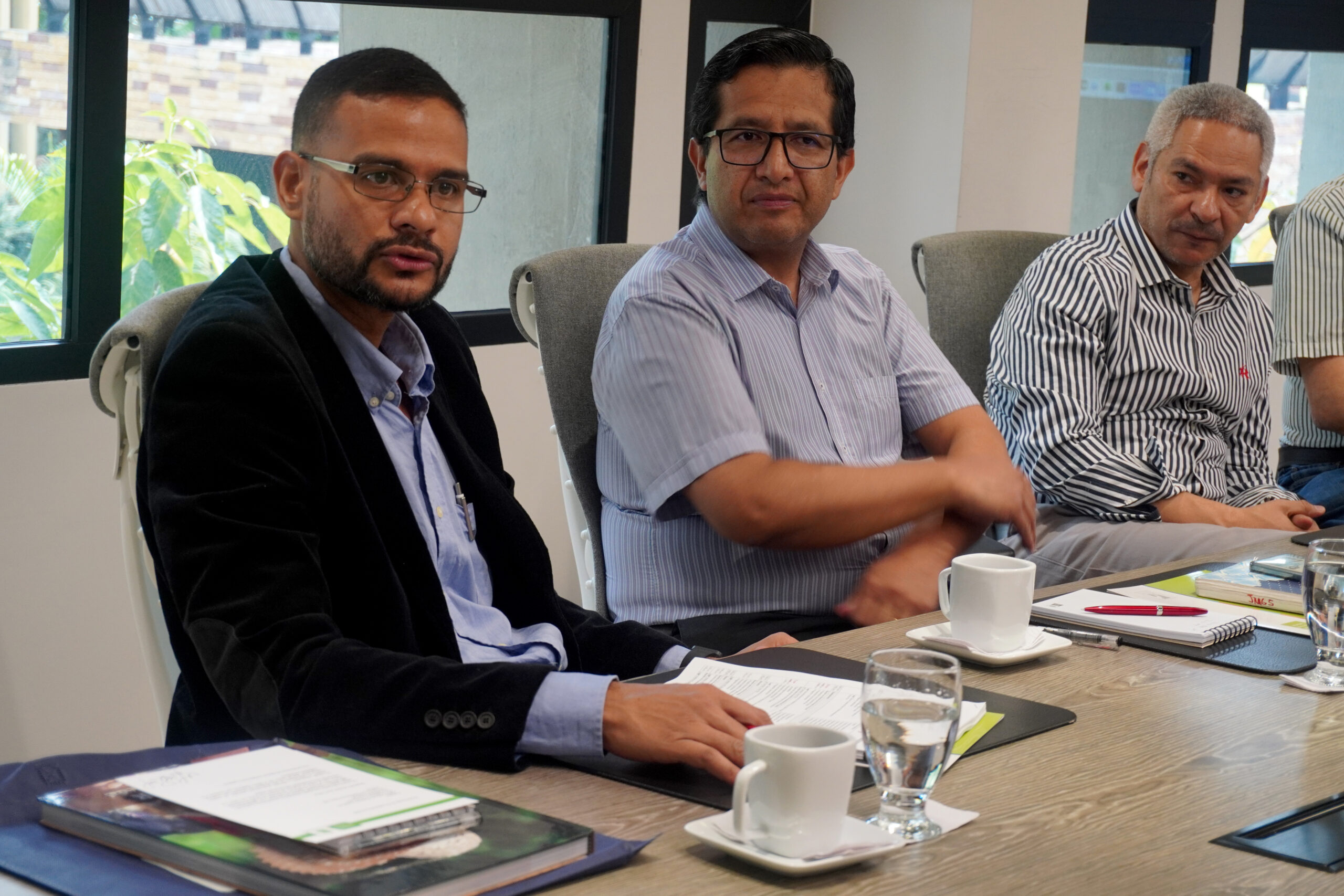
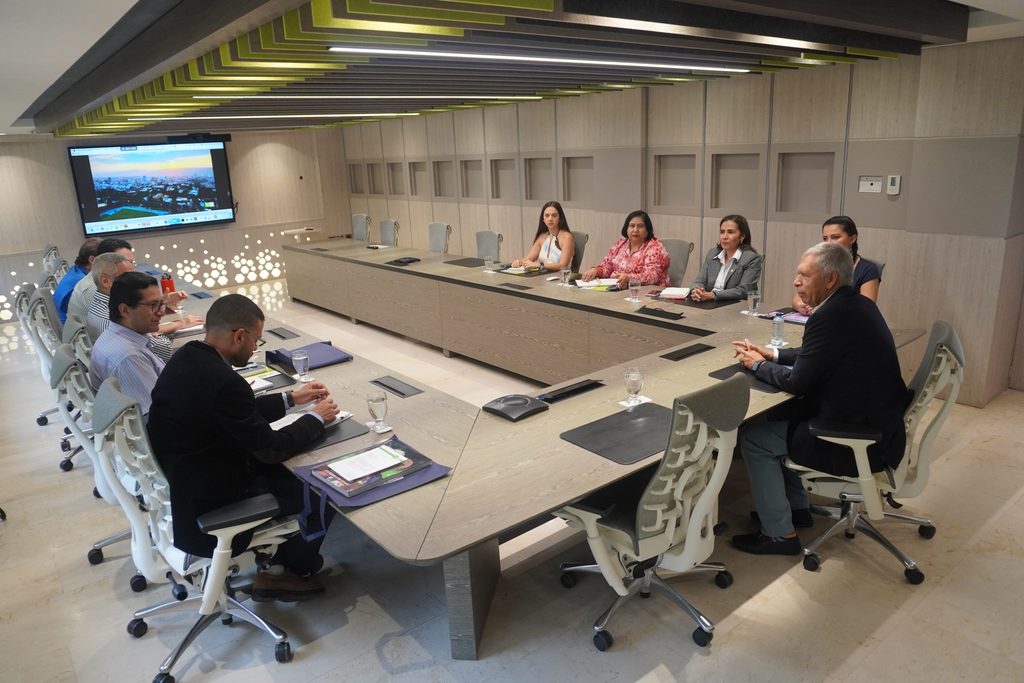
The evaluation committee is composed of Juan Carlos Muñoz Cuartas, coordinating peer, and José Alejandro García Valera, academic peer. During their visit, the evaluators review different aspects related to the program’s academic, research and educational development.
The external evaluation is part of the process through which the program’s quality conditions are assessed, comparing the results of its self-evaluation with the perspectives of members of the university community.
A history that predates undergraduate Physics education
For Luis Núñez, who previously served as coordinator of the Master’s and Doctoral programs in Physics and led the self-evaluation processes carried out for both programs, accreditation provides an opportunity to demonstrate processes that are already part of the Master’s regular academic activities.
“Accreditation has become an established practice because it is now part of the national system, ensuring that programs have certified processes, effectively carry out their activities, maintain contact with students, have active relationships with external sectors, and achieve international impact. So, accreditation is simply a way of stating what we normally do.”
Núñez also highlighted the historical trajectory of the Master’s in Physics within Colombian higher education and the UIS’s role in advancing graduate education in this field.
“It is important to put this into perspective: this is the longest-standing Master’s program in Colombia. It predates the undergraduate Physics program and the teaching degree. There was a Master’s program before those programs existed. The UIS has always been a pioneer in these kinds of initiatives. So, what we are doing here is essentially validating the quality we have.”
The history of the Master’s in Physics is closely linked to the development of advanced education in Physics at the UIS and to the consolidation of an academic community that later contributed to the creation of new educational opportunities in the field.
A program seeking broader international reach
The external evaluation also takes place at a time when the School of Physics is identifying new challenges for the Master’s program. Rafael Ángel Torres Amariz, director of the School of Physics, highlighted the program’s role within the School and the work currently underway to address areas that could be improved.
“For me, the Master’s in Physics has been one of the School’s most successful programs. We are currently taking steps to improve the details that we believe can be strengthened in order to achieve a much broader influence, particularly at the international level.”
The visit by the academic peers therefore provides an opportunity to review the Master’s trajectory, its results and its current academic processes, while also identifying areas for improvement and opportunities to expand its reach.
The external evaluation involves different members of the academic community and constitutes one of the stages in the renewal process for the program’s high-quality accreditation before the National Accreditation Council.