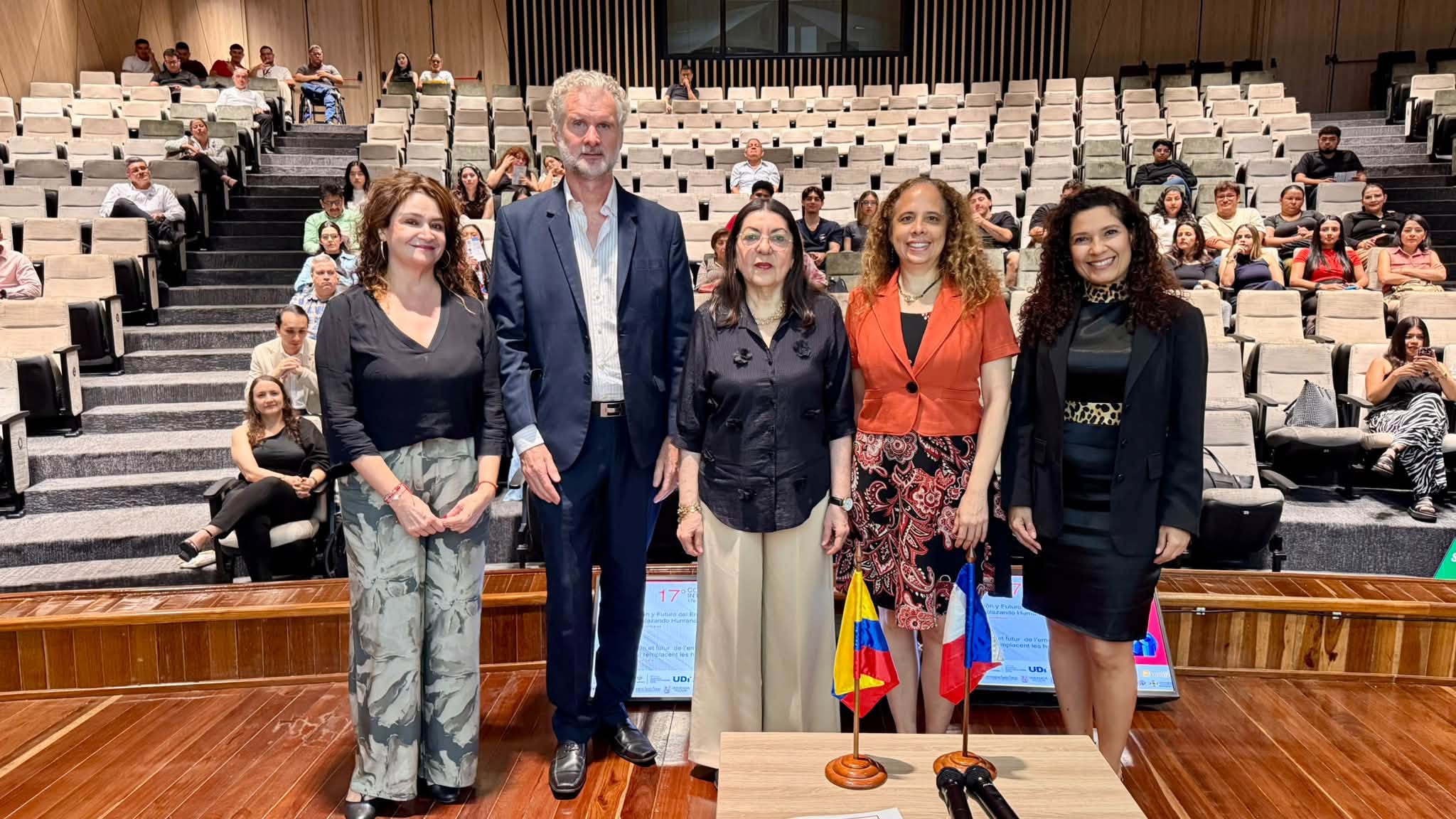

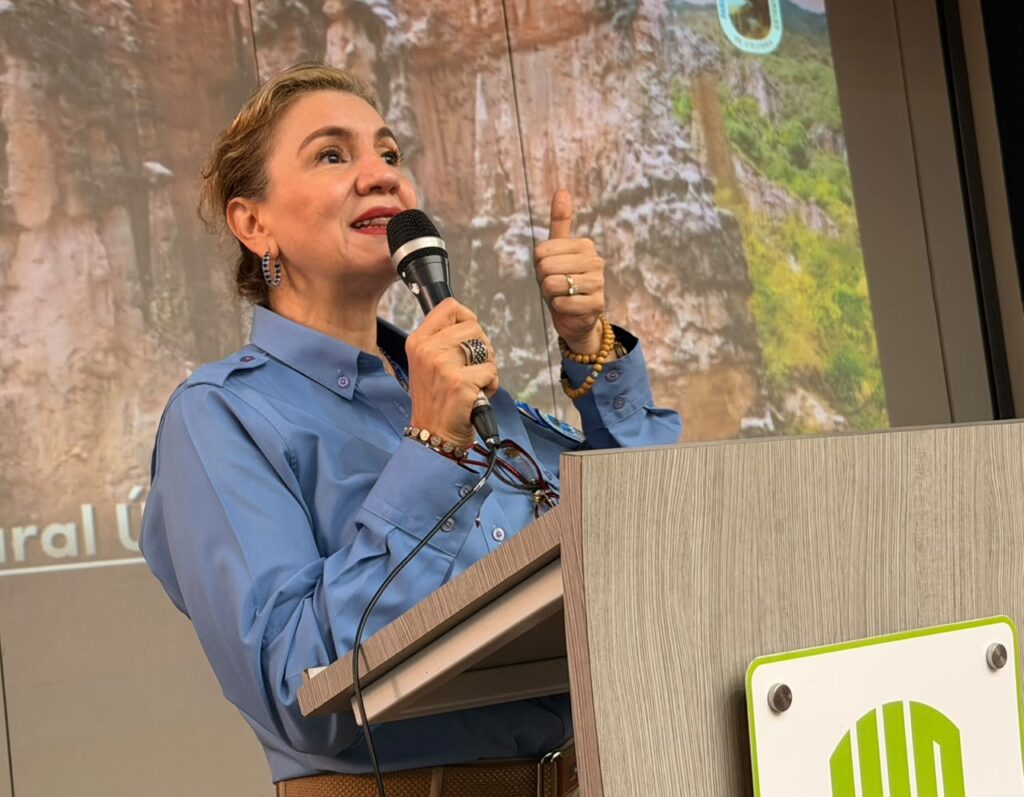
With the aim of bringing the scientific and academic expertise of the Universidad Industrial de Santander (UIS) closer to the conservation challenges facing local territories, the Academic Exchange Day between UIS and the Northeastern Andes Territorial Directorate of Colombia’s National Natural Parks was held. The event brought together representatives from protected areas, researchers, and students to identify opportunities for joint work in research, community outreach, environmental education, and biodiversity conservation.
The meeting, led by the Office of the Vice President for Research and Outreach (VIE), was held within the framework of the Memorandum of Understanding signed between UIS and Colombia’s National Natural Parks. It provided a space for dialogue between academia and those working directly to protect the region’s ecosystems.
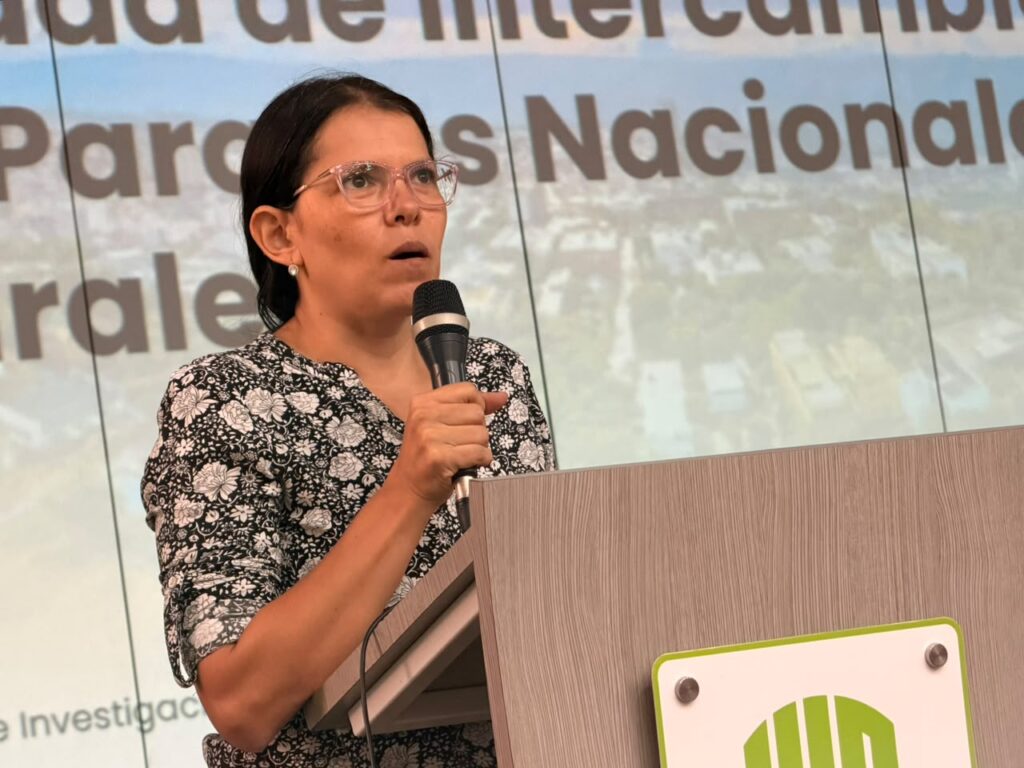
During the event, representatives from the eight protected areas under the Northeastern Andes Territorial Directorate shared their main areas of work, conservation challenges, and needs in their respective territories with the university community. This exchange led to the identification of opportunities for collaboration in areas such as research, environmental education, ecotourism, prevention, monitoring and enforcement, as well as the design and implementation of joint projects.
For Emiliana Pino Torres, Territorial Director of the Northeastern Andes Directorate of Colombia’s National Natural Parks, the meeting represents an important step toward strengthening the partnership with the University and, particularly, bringing students closer to the work carried out by the agency.
“Our primary goal is to introduce students to the eight protected areas of the Northeastern Andes and begin creating opportunities for collaboration in research, projects, environmental education, ecotourism, and prevention, monitoring, and enforcement,” she said.
The director also emphasized that the partnership goes beyond conducting research and seeks to make concrete contributions to the realities of the territories in Santander, Norte de Santander, Boyacá, and Arauca.
“The main idea and what we seek through this initiative is to work together to transform territories—alongside academia, its students, and Colombia’s National Natural Parks—to transform territories together, but above all, to transform lives,” she stated.
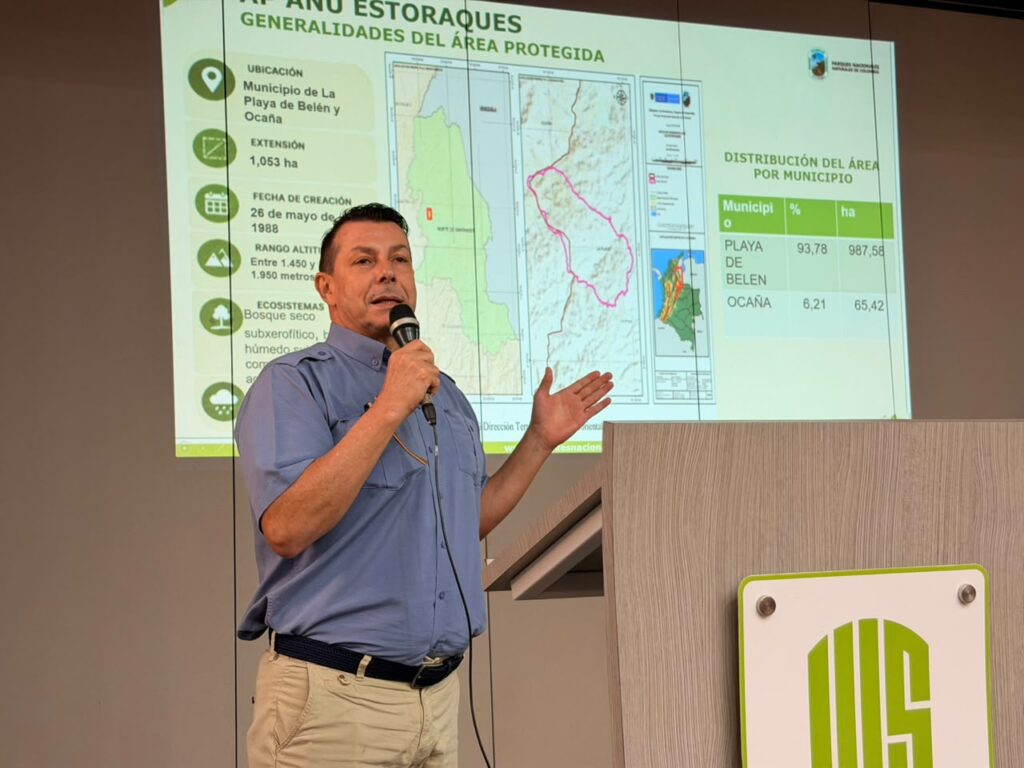
Knowledge as an Ally in Conservation
During the afternoon session, UIS Schools presented their scientific capabilities, research areas, and academic interests, with the goal of identifying points of convergence with the needs outlined by National Parks and moving toward a collaborative agenda.
For students, this engagement also represents an opportunity to gain firsthand knowledge of the challenges associated with conservation and the professional opportunities available in this field.
Mariana Quiroga Ríos, a student at the School of Biology, highlighted the value of learning about the strategies developed by National Parks to protect the country’s biodiversity.
“This engagement between National Parks and the University is very important and highly relevant because it allows us to gain a closer understanding of the strategies being implemented to conserve biodiversity in our country,” she said.
From her perspective, collaboration between academia and National Parks also gives students the opportunity to experience real-world professional settings, particularly in areas such as ecology, conservation, and research.
“It shows us that conservation is not limited to studying a single species, but also involves understanding its interactions within its ecosystem. It also depends largely on working with communities and understanding how that species interacts with the different stakeholders in the territory,” she explained.
For his part, Cristian Javier, a student at the School of Biology, emphasized the importance of these initiatives in expanding knowledge about the region’s strategic ecosystems, particularly its páramos, or high-altitude Andean wetlands.
“All the knowledge shared by professional staff helps us better understand the biodiversity of our country, especially ecosystems that are so important to us as residents of Bucaramanga and Santander, such as the páramos,” he said.
The student also highlighted the importance of transferring knowledge to new generations and communities.
“All this knowledge that they share with us can later be passed on to communities, allowing us to continue growing as a country and strengthening our awareness of the conservation of our ecosystems,” he stated.
The next step is to move beyond these initial meetings toward the development of concrete projects and actions in which researchers, faculty members, and students can put their knowledge and expertise at the service of conservation challenges.